
Last Updated: 19 July 2026
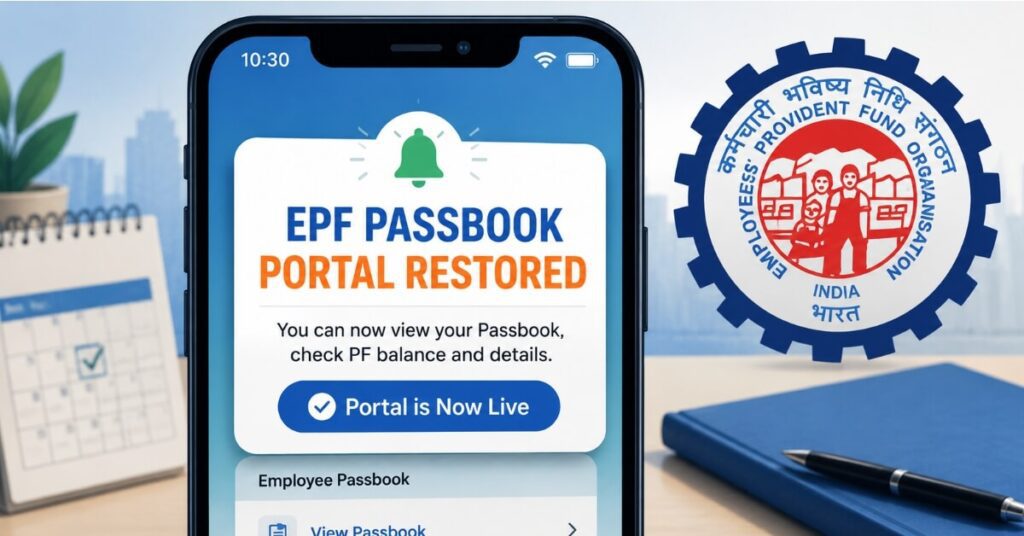
The Employees’ Provident Fund Organisation has brought welcome relief to millions of subscribers as the EPF Passbook Portal Restored status was officially confirmed after a prolonged technical suspension. For nearly fifteen days, members across India were unable to check their contribution history, employer deposits, or interest updates, creating widespread concern among salaried employees who depend on this facility for financial planning. Now that the EPF Passbook Portal Restored update has been rolled out, subscribers can once again log in and view their complete account details without interruption.
Why the EPF Passbook Portal Was Suspended
Before discussing the EPF Passbook Portal Restored development in detail, it helps to understand why the outage happened in the first place. The organization undertook a major software upgrade as part of implementing new EPF-2026 rules, which required temporary suspension of several digital services, including the member portal and passbook access. While the member portal itself was made available about a week earlier, the passbook facility remained offline for a longer duration because it involved deeper backend synchronization with employer contribution records. This is a routine but necessary process whenever a large public sector financial institution transitions to updated compliance frameworks.
During this period, many subscribers took to social media and customer service channels to express frustration, since the passbook is often required for loan applications, tax filing, and general financial record-keeping. The announcement that the EPF Passbook Portal Restored has finally happened comes as a relief to this large user base, many of whom rely on the document for verifying years of service and total corpus accumulation.
What the EPF Passbook Portal Restored Update Means for Members
With the EPF Passbook Portal Restored, subscribers can now log in through the official unified member portal using their Universal Account Number and password to download or view their passbook instantly. This restoration also includes resolution of claims that were submitted online during the suspension window, meaning that withdrawal and transfer requests filed over the past week are now being processed as per the updated EPF-2026 rules. The organization has indicated that backlog clearance is a priority, so members who filed claims during the outage should expect updates on their application status soon.
The EPF Passbook Portal Restored announcement also brings clarity on how future maintenance windows will be handled. Officials have hinted that similar upgrades may be rolled out periodically, but with shorter downtime, as the current transition was described as a one-time large-scale migration rather than a recurring event. This should offer some reassurance to subscribers who were worried about frequent disruptions going forward.
Step-by-Step Guide to Access Your EPF Passbook After Restoration
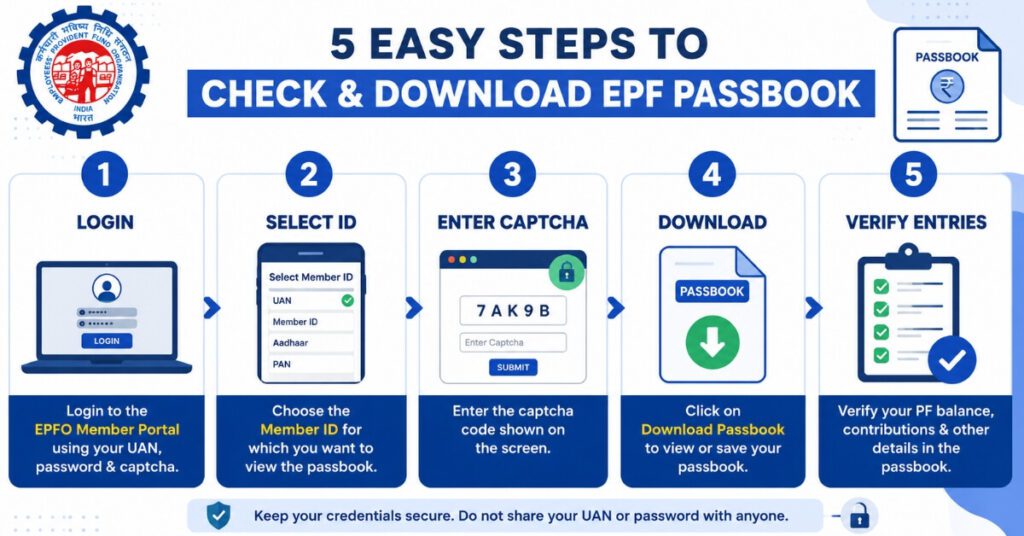
Now that the EPF Passbook Portal Restored process is complete, here is how members can check their updated passbook:
Visit the official EPFO member portal and log in using your Universal Account Number and registered password.
Navigate to the “Download Passbook” section available on the dashboard.
Select your establishment ID if you have worked with multiple employers.
Enter the captcha code and click submit to generate your passbook in PDF format.
Verify that recent contributions, including employer and employee shares, are reflected accurately.
Since the EPF Passbook Portal Restored update follows a period of suspended services, members are advised to cross-check their latest entries carefully. Occasionally, backend synchronization delays mean that the most recent month’s contribution may take a few extra days to appear, even though the portal itself is functioning normally again.
Impact on Loan Applications and Financial Planning
One of the most practical consequences of the outage was its effect on loan seekers. Many banks and non-banking financial companies request an updated provident fund passbook as proof of income stability and employment continuity. During the suspension, applicants faced delays in submitting these documents, which in turn slowed down personal loan and home loan approvals for salaried individuals. With the EPF Passbook Portal Restored, this bottleneck has been cleared, and members can now generate current passbooks whenever required by lenders.
Financial planners also use passbook data to help clients estimate retirement corpus and evaluate whether voluntary provident fund contributions should be increased. The temporary unavailability of this data made such planning exercises difficult for a couple of weeks. Now that the EPF Passbook Portal Restored notice has been issued, advisors and account holders alike can resume these calculations with accurate, up-to-date figures.
Understanding the New EPF-2026 Rules Behind the Upgrade
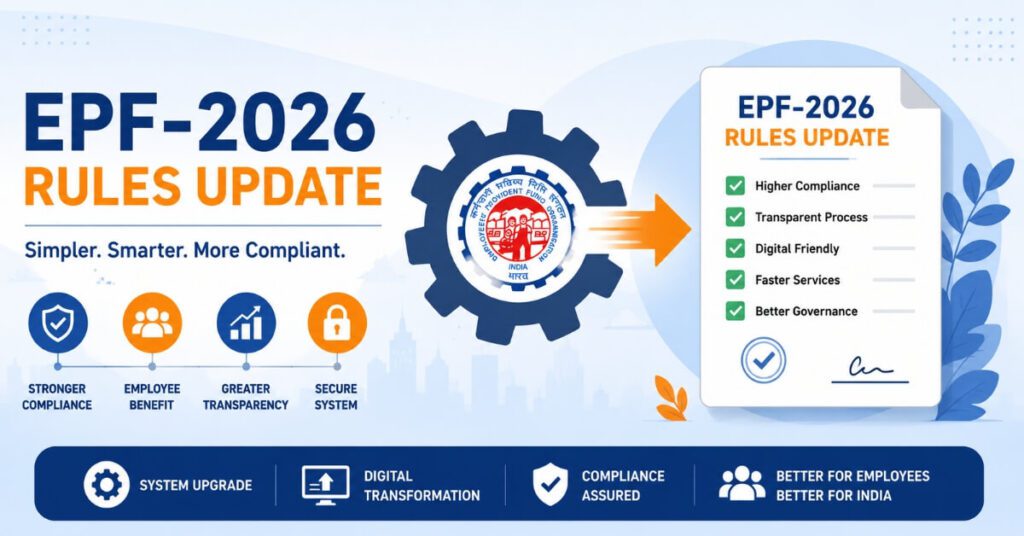
The technical overhaul that led to the EPF Passbook Portal Restored announcement was tied directly to compliance with new EPF-2026 regulations. These rules introduce changes to how contributions are recorded, how interest is calculated on a monthly reducing balance basis, and how claims are validated against Aadhaar-linked records. The backend migration was necessary to ensure that historical data remains accurate while new entries follow the revised computation method.
Members should note that the EPF Passbook Portal Restored update does not change their accumulated balance or eligibility for withdrawal in any way; it simply reflects the technical readiness of the overall system to handle transactions smoothly under the new regulatory framework. Anyone confused about how the new rules affect their specific account is encouraged to reach out to their regional EPFO office or check official circulars for clarification.
Why Passbook Access Matters for Long-Term Savings
The provident fund passbook is more than a transaction record; it is a tool for tracking long-term wealth accumulation. Since EPF contributions are mandatory for most salaried employees in the organized sector, the passbook serves as a running ledger of retirement savings built over an entire career. The recent disruption, followed by the EPF Passbook Portal Restored update, is a reminder of how dependent modern financial planning has become on uninterrupted digital access.
Subscribers are encouraged to periodically download and archive their passbook, especially after major updates like this one, so that they have an offline record in case of future technical issues. This habit becomes particularly useful when switching jobs, applying for loans, or filing income tax returns, all of which may require historical contribution proof.
While this article focuses specifically on passbook access, the passbook is just one part of a much larger update. If you want the complete picture of everything that changed — including claims processing, KYC updates, and employer services — check out our detailed guide on EPFO online services restored for a full breakdown.
If you are also exploring other areas of personal finance, such as understanding market volatility, you may find it useful to read about why gold price is falling, which explains recent trends affecting precious metal investments in India. Diversifying your understanding across different asset classes, from fixed-income instruments like provident fund savings to market-linked options like gold and equities, can help you build a more balanced long-term financial strategy rather than relying on a single avenue for wealth accumulation.
Broader context on public financial infrastructure upgrades, including how government bodies worldwide handle large-scale digital transitions, can be found through resources like the World Bank’s coverage of digital public infrastructure, which offers useful comparative insight into similar modernization efforts.
Precautions to Take While Using the Restored Portal
Even though the EPF Passbook Portal Restored status confirms that services are back to normal, members should still exercise some caution while accessing their accounts:
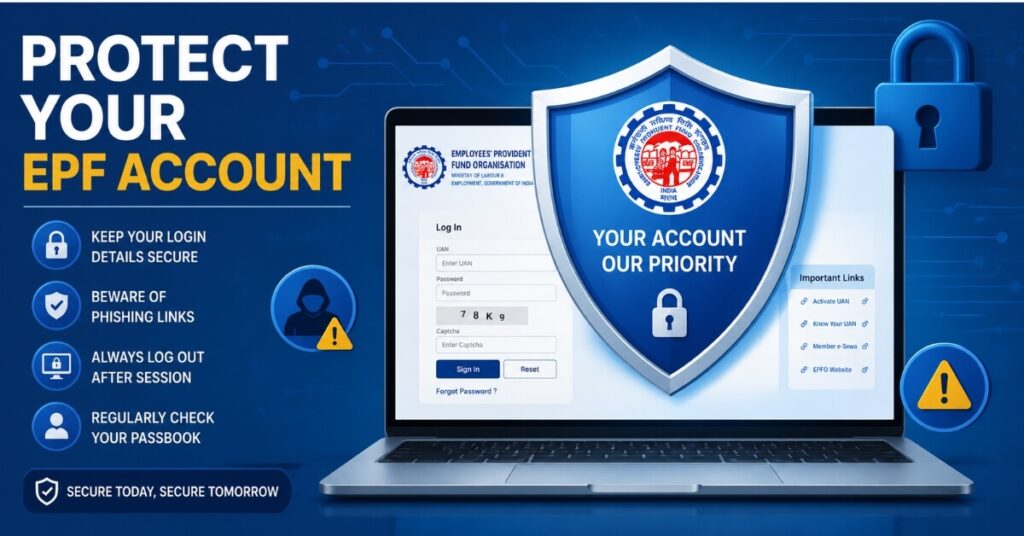
Always log in through the official EPFO website or app to avoid phishing links that may circulate during high-traffic periods following a restoration announcement.
Keep your Universal Account Number and password confidential, and avoid sharing OTPs with anyone claiming to assist with passbook issues.
Cross-verify contribution entries against your salary slips to ensure employer deposits match reported figures.
Report discrepancies promptly through the official grievance portal rather than third-party intermediaries.
These precautions are especially relevant right after the EPF Passbook Portal Restored rollout, since increased user traffic on the portal can sometimes attract fraudulent actors attempting to exploit confusion during the transition period.

How Employers Are Responding to the EPF Passbook Portal Restored Update
Employers who deposit provident fund contributions on behalf of their staff also felt the impact of the earlier suspension. HR and payroll teams frequently reference the passbook when reconciling monthly filings or responding to employee queries about deposit status. With the EPF Passbook Portal Restored, payroll departments can resume their regular reconciliation cycle without relying on manual workarounds or delayed confirmations from regional EPFO offices.
Several companies had temporarily advised employees to hold off on passbook-based documentation requests until services stabilized. Now that this update has been made public, HR departments are communicating it internally so that pending employee requests, such as loan verification letters or provident fund statements for internal audits, can be processed without further delay.
Regional EPFO offices have also reported a reduction in walk-in queries and phone-based complaints since the EPF Passbook Portal Restored announcement, as most subscribers prefer resolving passbook issues digitally rather than visiting physical branches. This shift reflects a broader trend toward self-service financial management, which the organization has been encouraging through continuous digital upgrades.
What Members Should Do Next
While the EPF Passbook Portal Restored update is largely a positive development, subscribers should not assume that every issue has been resolved instantly. It is advisable to wait a few days after the announcement before assuming full data accuracy, particularly if you made contributions or filed claims during the exact period of suspension. Checking your passbook periodically over the next month, rather than relying on a single check right after the EPF Passbook Portal Restored notice, will help you catch any discrepancies early and report them through proper channels.
Members who had urgent requirements during the outage, such as processing a home loan or verifying employment history for a new job, should revisit those pending tasks now that the EPF Passbook Portal Restored update confirms full functionality. Keeping a downloaded copy of your passbook after each significant update is a simple habit that can save considerable time during future emergencies or documentation requests.
A Closer Look at Interest Computation Under the Updated System
One area subscribers frequently ask about is how interest is credited to their account following any major backend change. Provident fund interest is calculated on a monthly running balance, and the annual rate is declared by the Central Board of Trustees, typically toward the end of the financial year.
During a system-wide upgrade, the underlying computation engine may be revised to align with newer regulatory requirements, but the fundamental method of crediting interest on the lowest balance between the fifth and last day of each month generally remains unchanged. Members should not be alarmed if interest figures for the most recent quarter appear slightly delayed in their passbook, as this is typically a processing lag rather than an indication of any calculation error.
It is worth noting that interest credited each year is added to the principal only once annual accounts are finalized, which sometimes happens months after the close of the financial year. This means that even during a period of technical disruption, the underlying interest accrual continues uninterrupted; only the visibility of that accrual through the online passbook was temporarily affected. Now that the EPF Passbook Portal Restored update is live, subscribers who are anxious about missing out on interest due to the outage can be reassured that provident fund interest calculations are handled independently of the portal’s availability.
Comparing This Upgrade to Previous EPFO System Changes
This is not the first time EPFO has undertaken a significant technical transition. Over the past decade, the organization has moved from largely offline, employer-mediated processes to a fully digital, member-centric system that allows individuals to manage claims, transfers, and KYC updates without depending heavily on their employer’s HR department. Each major transition, including the introduction of the Universal Account Number system and the shift to Aadhaar-linked verification, has involved a period of temporary service disruption similar to what members experienced recently.
Historically, such transitions have improved long-term reliability even though they caused short-term inconvenience. The current upgrade tied to EPF-2026 compliance appears to follow the same pattern: a defined period of reduced functionality, followed by a more robust and streamlined system once the transition is complete. Members who have been through previous EPFO upgrades may recognize this cycle and can take some comfort in knowing that short-term disruptions have generally led to improved digital services over time.
Tips for Avoiding Future Disruption to Your Financial Documentation
Beyond the immediate steps of checking your passbook, there are broader habits that can help subscribers stay prepared for any future service interruptions, whether related to provident fund accounts or other financial platforms. Maintaining updated digital and physical copies of key documents, registering a current mobile number and email address with your provident fund account, and periodically reviewing your KYC details can all reduce the impact of unexpected downtime.
It is also useful to diversify how you track your retirement savings. While the passbook remains the primary official record, many subscribers also maintain a personal spreadsheet or use financial planning apps to log their monthly contributions as a secondary reference. This kind of redundancy ensures that even if an official platform experiences downtime, you still have a reasonably accurate picture of your accumulated savings for planning purposes.
Frequently Asked Questions
Q1. What does the EPF Passbook Portal Restored update mean for existing members?
It means the passbook download and viewing facility, which was suspended for nearly fifteen days due to a software upgrade, is now fully functional again for all subscribers.
Q2. Will my contribution history be missing after the EPF Passbook Portal Restored announcement?
No, your historical contribution data should remain intact. However, the most recent month’s entries may take a few additional days to reflect due to backend synchronization.
Q3. Can I still submit withdrawal or transfer claims now that the portal is working again?
Yes, claims can be submitted normally, and pending claims filed during the outage are being processed under the updated EPF-2026 rules.
Q4. Is there any risk to my account balance due to the recent suspension?
No, the suspension was purely a technical and administrative process related to system upgrades. Your accumulated balance remains unaffected.
Q5. How can I confirm that the EPF Passbook Portal Restored status applies to my specific account?
Simply log in to the official member portal with your Universal Account Number and attempt to download your passbook. If it generates successfully, the restoration applies to your account as well.
Q6. How to check EPF passbook status?
To check your EPF passbook status, log in to the official Member Passbook portal using your UAN and password. Once logged in, select your Member ID from the dropdown list, and your complete passbook with contribution history will be displayed instantly.
Q7. Is the UAN password and passbook password the same?
Yes, the UAN password and passbook password are the same. EPFO uses a single login system, so once you set up your UAN login credentials, you can use the same username and password to access your passbook, claim status, and other member services.
Conclusion
The confirmation that the EPF Passbook Portal Restored has taken effect brings much-needed relief to millions of subscribers who rely on timely access to their provident fund records. Whether for loan applications, tax filing, or general retirement planning, uninterrupted passbook access plays a crucial role in everyday financial management. As the organization continues to align its systems with the new EPF-2026 rules, members are encouraged to stay updated through official channels and periodically download their passbook for safekeeping.
Staying informed about such regulatory and technical developments, and periodically reviewing your account statements, remains one of the simplest yet most effective habits for long-term financial security in the organized workforce.
Disclaimer
This article is for informational purposes only and should not be considered financial or legal advice. Readers are advised to verify details through official EPFO channels or consult a certified financial advisor before making any decisions based on this information

Pingback: Sukanya Samriddhi Yojana 2026: Best 8.2% Return Guide
Pingback: EPFO Online Services Restored: Huge Relief for 7 Crore