
If you are looking for a safe investment option that saves tax and gives guaranteed returns, understanding the Tax Saving FD Interest Rate 2026 is the first step. Tax saving fixed deposits are one of the most trusted instruments for conservative investors who want to reduce their tax outgo under the old tax regime while earning fixed, predictable returns. In this article, we will break down everything you need to know about it, including the latest bank-wise rates, Section 80C benefits, eligibility rules, and how it compares with other tax-saving instruments like ELSS and PPF.
What Is a Tax Saving Fixed Deposit?
A tax saving fixed deposit is a special category of FD offered by banks and post offices that comes with a mandatory five-year lock-in period. Unlike regular FDs, these deposits qualify for a deduction of up to ₹1.5 lakh under Section 80C of the Income Tax Act. Because of this dual benefit of tax saving plus fixed returns, tracking the Tax Saving FD Interest Rate 2026 has become a priority for millions of Indian taxpayers, especially senior citizens and salaried individuals who prefer low-risk investments over market-linked options.
Why the Tax Saving FD Interest Rate 2026 Matters
Every year, banks revise their fixed deposit rates based on RBI’s monetary policy, inflation trends, and liquidity conditions. In 2026, the Tax Saving FD Interest Rate 2026 has become an important benchmark for investors because rates have shown a noticeable shift compared to previous years. Choosing a bank with the highest rate in this category can make a real difference to your overall returns over the five-year tenure, since even a 0.5% difference compounds meaningfully on a ₹1.5 lakh investment.
Latest Tax Saving FD Interest Rate 2026: Bank-Wise Comparison
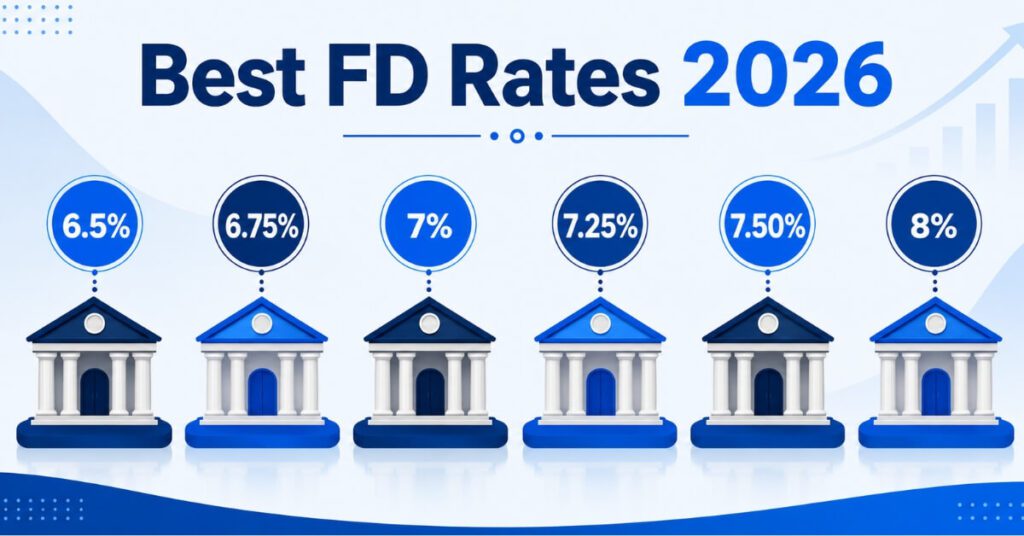
Here is a general overview of the Tax Saving FD Interest Rate 2026 offered by major banks in India (rates are indicative and subject to change; always confirm with the bank before investing):
ICICI Bank: Around 6.5% for general citizens and up to 7.1% for senior citizens
HDFC Bank: Competitive five-year tax saving FD rates, revised periodically
Axis Bank: Offers tax saver fixed deposits with online account opening facility
SBI: One of the most preferred banks for tax saving FDs due to trust and reach
Post Office Time Deposit: Around 5.5% to 7.5% depending on tenure and scheme
Small Finance Banks: Some offer up to 8% or more, though with slightly higher risk profile
When comparing the Tax Saving FD Interest Rate 2026 across these institutions, senior citizens typically get an additional 0.25% to 0.75% over the general public rate, making tax saving FDs an even more attractive option for retirees looking for stable income.
Key Features of Tax Saving FDs in 2026
Minimum investment: Usually ₹100, with a maximum of ₹1.5 lakh per financial year
Lock-in period: Fixed at five years, with no premature withdrawal allowed
Tax deduction: Up to ₹1.5 lakh under Section 80C
Interest payout: Can be chosen as monthly, quarterly, or on maturity
Interest taxability: Interest earned is fully taxable as per your income slab
No loan or overdraft facility against these deposits during the lock-in period
Understanding these features alongside the current Tax Saving FD Interest Rate 2026 helps investors make an informed decision before locking in their money for five years.
Section 80C Benefits Explained
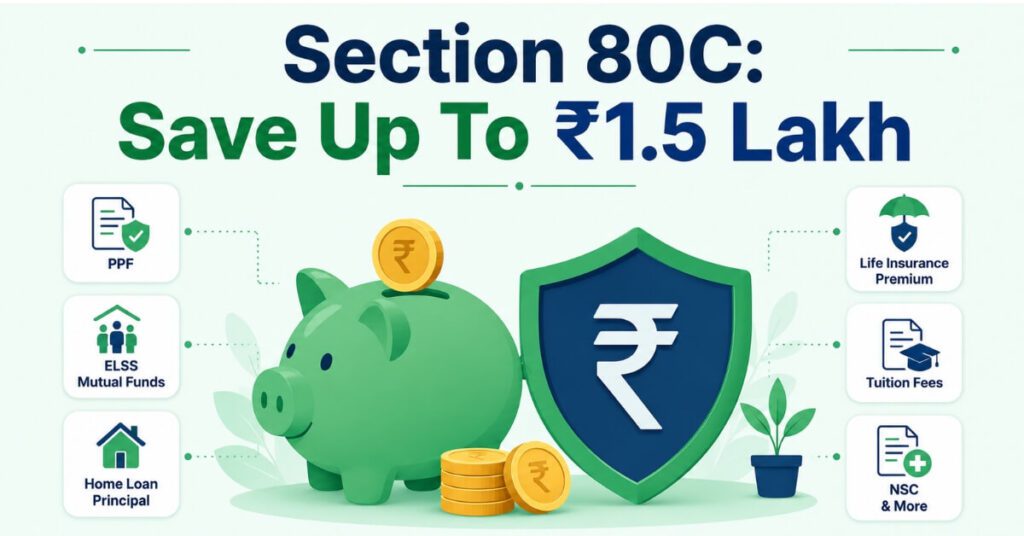
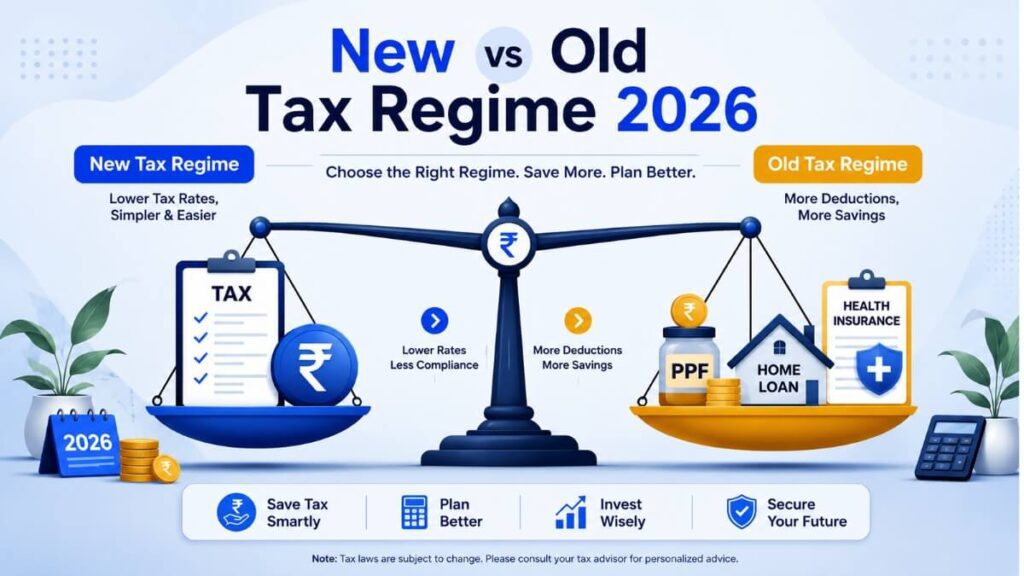
Under Section 80C of the Income Tax Act, taxpayers can claim a deduction of up to ₹1.5 lakh in a financial year by investing in eligible instruments, including tax saving fixed deposits. This deduction reduces your taxable income, which in turn lowers your overall tax liability. However, this benefit is only available if you opt for the old tax regime, since the new tax regime does not allow most Section 80C deductions. This is an important consideration when evaluating the Tax Saving FD Interest Rate 2026, because the effective post-tax benefit depends heavily on which regime you choose.
Is Tax Saving FD Allowed in the New Tax Regime?
This is one of the most frequently asked questions among readers researching the Tax Saving FD Interest Rate 2026. The answer is that tax saving FDs remain a valid investment product under the new regime, but the Section 80C deduction benefit is not available. This means if you have already switched to the new tax regime, you can still open a tax saving FD, but you will not get the tax deduction advantage, and your decision should be based purely on the interest rate and safety of the deposit.
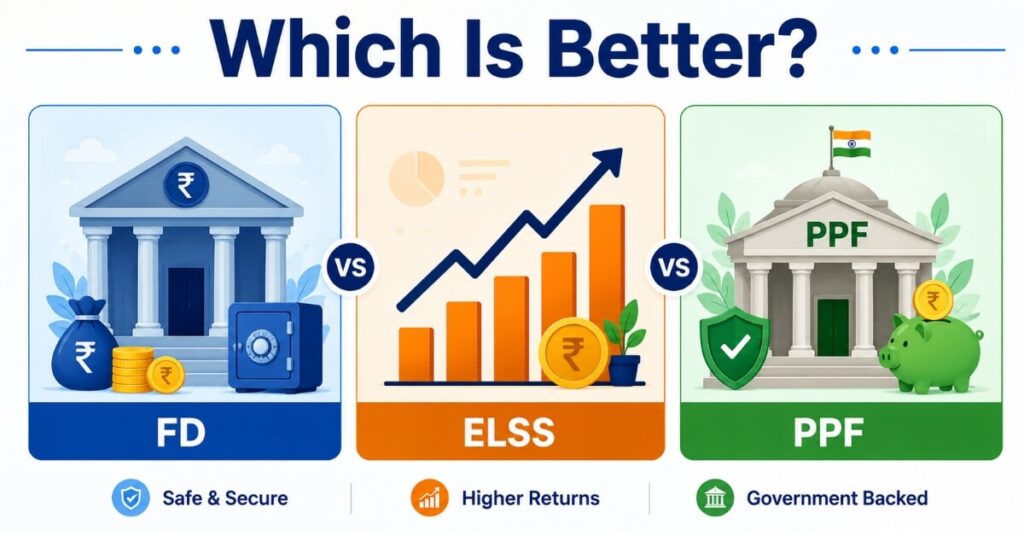
Tax Saving FD vs ELSS vs PPF: Which Is Better?
Investors often compare tax saving FDs with Equity Linked Savings Schemes (ELSS) and Public Provident Fund (PPF) before finalising their Section 80C investment. Unlike ELSS and PPF, tax saving FDs offer guaranteed, market-independent returns with a five-year lock-in, compared with three years for ELSS and fifteen years for PPF.
ELSS: Market-linked returns, potential for higher gains, shortest lock-in of three years, but comes with market risk
PPF: Government-backed, tax-free returns, but a long lock-in of fifteen years
Tax Saving FD: Fixed, predictable returns tied to the Tax Saving FD Interest Rate 2026, moderate five-year lock-in, but interest is taxable
For risk-averse investors who prioritise capital safety over higher returns, tax saving FDs remain the preferred choice, especially when the Tax Saving FD Interest Rate 2026 offered by a reputed bank is competitive.
Eligibility Criteria for Tax Saving FD
Must be a resident individual or Hindu Undivided Family (HUF)
Minors can also invest jointly with a guardian, though the 80C benefit applies to the first holder
NRIs are generally not eligible for the Section 80C tax benefit on FDs
Joint account holders: only the first or primary holder can claim the deduction
Before investing, always check the eligibility rules alongside the current Tax Saving FD Interest Rate 2026 offered by your chosen bank, since terms can vary slightly between banks and post offices.
How to Open a Tax Saving FD
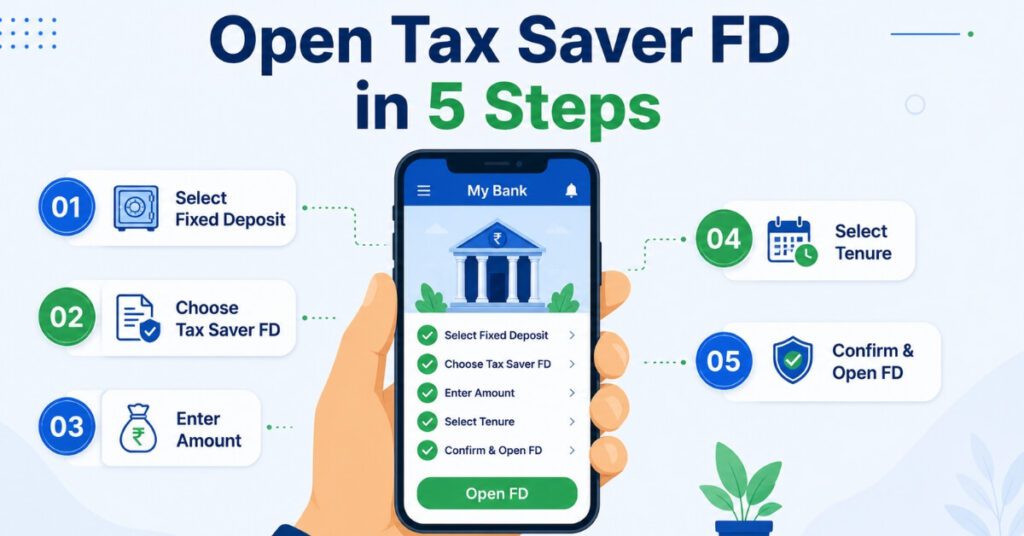
1.Choose a bank offering a competitive Tax Saving FD Interest Rate 2026 based on your research
2.Visit the bank’s net banking portal or mobile app, or visit a branch in person
3.Select the “Tax Saver FD” option specifically, as it differs from a regular FD
4.Enter the deposit amount (up to ₹1.5 lakh for the financial year)
5.Choose your interest payout preference (monthly, quarterly, or on maturity)
6.Submit KYC documents if not already updated, and confirm the deposit
Once your account is set up, the interest rate applicable on your date of deposit will remain fixed for the entire five-year tenure, regardless of future rate changes.
Factors to Consider Before Investing
Compare the Tax Saving FD Interest Rate 2026 across at least three to four banks before finalising
Check whether the interest payout suits your cash flow needs (monthly income vs lump sum at maturity)
Remember that premature withdrawal is not allowed under any circumstances during the five-year lock-in
Factor in the tax on interest earned, since it will be added to your taxable income every year
If you are in a high tax bracket, calculate the post-tax return before committing your funds
Pros and Cons of Tax Saving FDs
Pros:
Guaranteed, safe returns unaffected by market volatility
Simple to open both online and offline
Deduction of up to ₹1.5 lakh under Section 80C
Available at almost every bank and post office in India
Cons:
Interest earned is fully taxable, unlike PPF
Strict five-year lock-in with no premature withdrawal
Returns may be lower compared to equity-linked options like ELSS over the long term
No loan facility against the deposit during the lock-in period
Recent Trend in Tax Saving FD Interest Rate 2026
Over the past few months, the Tax Saving FD Interest Rate 2026 has fluctuated slightly in response to changes in the broader interest rate environment. Small finance banks continue to offer the most attractive rates, sometimes crossing 8%, while large public and private sector banks maintain more moderate but stable rates. Investors tracking these rate movements closely should also keep an eye on RBI policy announcements, as any repo rate change typically influences future FD rate revisions across the banking sector.
If you are also exploring other investment-related processes, such as checking allotment status for recent listings, you can read our detailed guide on how to check NSE IPO allotment status online for a complete step-by-step walkthrough.
For official and updated information on Section 80C provisions and income tax rules, you can refer to the Income Tax Department of India’s official website.
How TDS Works on Fixed Deposit Interest
Many investors are surprised to learn that banks deduct Tax Deducted at Source (TDS) on FD interest once it crosses a certain threshold in a financial year. For most individuals, this threshold is ₹40,000, and for senior citizens it is ₹50,000. If your total interest income across all your fixed deposits with a bank exceeds this limit, the bank will deduct TDS at 10% (or 20% if PAN is not linked to the account) before crediting the interest to you.
If your total income is below the taxable limit, you can submit Form 15G (or Form 15H for senior citizens) to avoid this deduction. It is important to factor this in while calculating your actual take-home returns from any fixed deposit scheme.
Documents Required to Open a Tax Saver FD
PAN card (mandatory for all fixed deposit investments above a certain limit)
Aadhaar card or any other valid address proof
A recent passport-size photograph
Existing bank account details for interest crediting
Nomination form, which is highly recommended to avoid complications later
Most banks now allow you to complete this entire process digitally through net banking or a mobile app, which means you can open a tax saver deposit within a few minutes without visiting a branch physically.
Common Mistakes to Avoid While Investing
Not comparing rates across banks before locking in your money for five years
Ignoring the taxability of interest income while calculating expected returns
Choosing a payout frequency that does not match your actual cash flow needs
Forgetting to add a nominee, which can create issues for family members later
Investing the entire ₹1.5 lakh limit in a tax saver FD without considering other Section 80C options that may better suit your financial goals, such as a mix of PPF, ELSS, and insurance premiums
Impact of RBI Policy on Fixed Deposit Rates
The Reserve Bank of India’s monetary policy decisions play a significant role in determining how banks price their deposit products. When the RBI raises the repo rate to control inflation, banks typically respond by increasing deposit rates to attract more funds. Conversely, when the RBI cuts rates to boost economic growth, deposit rates tend to soften over the following months. Because tax saver deposits lock in the applicable rate for a full five years, timing your investment around favourable policy cycles can meaningfully improve your effective returns compared to investing during a low-rate phase.
Can NRIs Invest in Tax Saver Fixed Deposits?
Non-Resident Indians (NRIs) are generally not eligible to claim the Section 80C deduction on fixed deposits under NRO or NRE accounts, since this benefit is reserved for resident Indian taxpayers. However, NRIs can still open regular fixed deposits with Indian banks to earn interest, just without the associated tax-saving benefit under this specific scheme. If you are an NRI looking for tax-efficient investment options in India, it is advisable to consult a tax professional familiar with cross-border taxation rules before making a decision.
Who Should Invest in Tax Saving FDs?
Tax saving FDs are best suited for:
First-time investors who prefer simplicity and safety
Senior citizens looking for stable income with slightly higher rates
Conservative investors who already have market exposure through other instruments and want a safe component in their portfolio
Taxpayers under the old regime looking to complete their Section 80C limit quickly without market risk
If you fall into any of these categories, comparing the Tax Saving FD Interest Rate 2026 across multiple banks before investing can help you maximise your guaranteed returns while also saving tax.
How Much Can You Actually Save Under Section 80C?
If you fall in the 30% tax bracket and utilise the full ₹1.5 lakh limit under Section 80C through a tax saver deposit, you can save up to ₹45,000 in taxes in that financial year (plus applicable cess), depending on your total taxable income and applicable slab rate. For someone in the 20% bracket, the saving would be around ₹30,000, and for the 5% bracket, it would be approximately ₹7,500. While this deduction only applies to the amount invested and not the interest earned, it still represents a meaningful reduction in your annual tax outgo, making the scheme worth considering as part of a broader, well-diversified tax-saving strategy alongside equity, insurance, and retirement-focused instruments.
Frequently Asked Questions (FAQs)
Q1. What is the current Tax Saving FD Interest Rate 2026?
The Tax Saving FD Interest Rate 2026 varies by bank, generally ranging between 5.95% and 8% per annum for general citizens, with senior citizens earning slightly higher rates.
Q2. Can I withdraw my tax saving FD before five years?
No, premature withdrawal is not allowed under any circumstances during the five-year lock-in period, which is a key rule to remember when evaluating the Tax Saving FD Interest Rate 2026.
Q3. Is the interest earned on tax saving FD taxable?
Yes, interest earned is fully taxable as per your income tax slab, regardless of the Tax Saving FD Interest Rate 2026 you receive.
Q4. Which bank offers the best Tax Saving FD Interest Rate 2026?
Rates vary and change periodically, so it is advisable to compare at least three to four banks, including small finance banks, before finalising your investment.
Q5. Is tax saving FD better than ELSS?
It depends on your risk appetite. Tax saving FDs offer guaranteed returns tied to the Tax Saving FD Interest Rate 2026, while ELSS carries market risk but has the potential for higher returns and a shorter lock-in period.
Conclusion
Understanding the Tax Saving FD Interest Rate 2026 is essential for anyone looking to combine tax savings with safe, predictable returns. While tax saving FDs may not offer the highest returns compared to market-linked instruments, their guaranteed nature and Section 80C benefit make them a reliable choice for conservative investors, senior citizens, and anyone looking to complete their tax-saving investments without taking on market risk. Before you invest, always compare rates across multiple banks, check the payout options, and calculate your post-tax returns to make the most informed decision.
Disclaimer
This article is for informational and educational purposes only and should not be considered financial or investment advice. Interest rates mentioned are indicative and subject to change; please verify the latest Tax Saving FD Interest Rate 2026 directly with your respective bank or financial institution before making any investment decision. Readers are advised to consult a certified financial advisor before making any investment or tax-related decisions.

Pingback: Home Loan Tax Benefits 2026: Save Up to ₹5 Lakh Now