
The stock market buzz around new IPOs often leaves investors anxiously refreshing their phones, waiting to know if they got lucky with the allotment. If you have applied for a recent IPO and want to know how to do an nse ipo allotment status check online, you are in the right place. This guide walks you through every method available, so you never have to wonder or worry about your application again.
Whether you are a first-time investor or someone who applies for every new listing, learning how to complete an nse ipo allotment status check online can save you a lot of time and stress. In this article, we will explain what IPO allotment means, why checking it matters, and the exact steps you need to follow to get your results in minutes.
What Is IPO Allotment and Why Does It Matter?
When a company launches its Initial Public Offering (IPO), thousands of investors apply for shares, but the number of shares available is usually far less than the demand. Because of this mismatch, the allotment of shares is decided through a lottery-based or proportionate system, especially in the retail category. This is why performing an nse ipo allotment status check online becomes important, since it tells you clearly whether you have been allotted shares, partially allotted, or not allotted at all.
Knowing your allotment status early also helps you plan your finances better. If shares are not allotted, the blocked amount in your bank account through ASBA (Applications Supported by Blocked Amount) gets released quickly, and you can use those funds elsewhere without unnecessary delay.
How Does the NSE IPO Allotment Process Work?
The National Stock Exchange (NSE), along with the registrar appointed for the IPO, manages the entire allotment process. After the subscription window closes, the registrar finalises the basis of allotment based on SEBI guidelines. Once this is done, investors can perform an nse ipo allotment status check online through multiple official channels, including the NSE website itself, the registrar’s portal, and various broking platforms.
The entire process typically takes a few days after the IPO closes, and the allotment date is usually announced in advance in the IPO prospectus and on the NSE website.
Step-by-Step Guide: NSE IPO Allotment Status Check Online via NSE Website
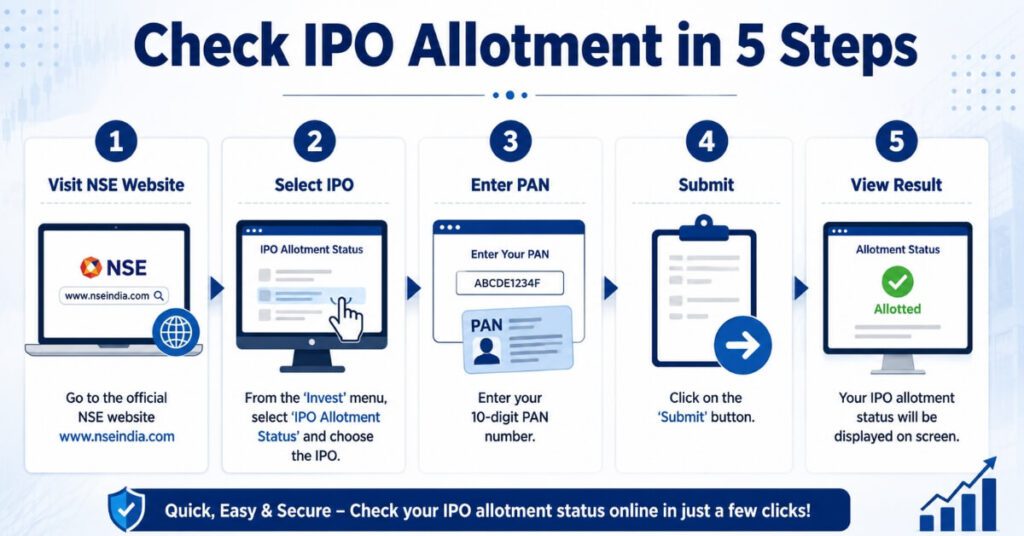
Here is the simplest way to complete your nse ipo allotment status check online directly from the exchange’s own portal:
Step 1: Visit the Official NSE Website
Open your browser and go to the official NSE India website. Navigate to the “Invest” section, where you will find the option for checking bid and allotment details.
Step 2: Select the IPO Bid Verification Option
Look for the “Verify IPO Bid/Allotment Details” link. This tool is specifically designed for investors who want to complete an nse ipo allotment status check online without visiting a third-party website.
Step 3: Choose the Equity Segment
Select the equity segment and pick the relevant IPO company name from the dropdown list provided on the page.
Step 4: Enter Your Application Details
Enter either your PAN number or your application number, along with the required captcha code, to proceed with your nse ipo allotment status check online.
Step 5: Submit and View Results
Click on the submit button, and the system will instantly display whether shares have been allotted to you, along with the exact quantity, if applicable.
How to Do an NSE IPO Allotment Status Check Online via the Registrar’s Website
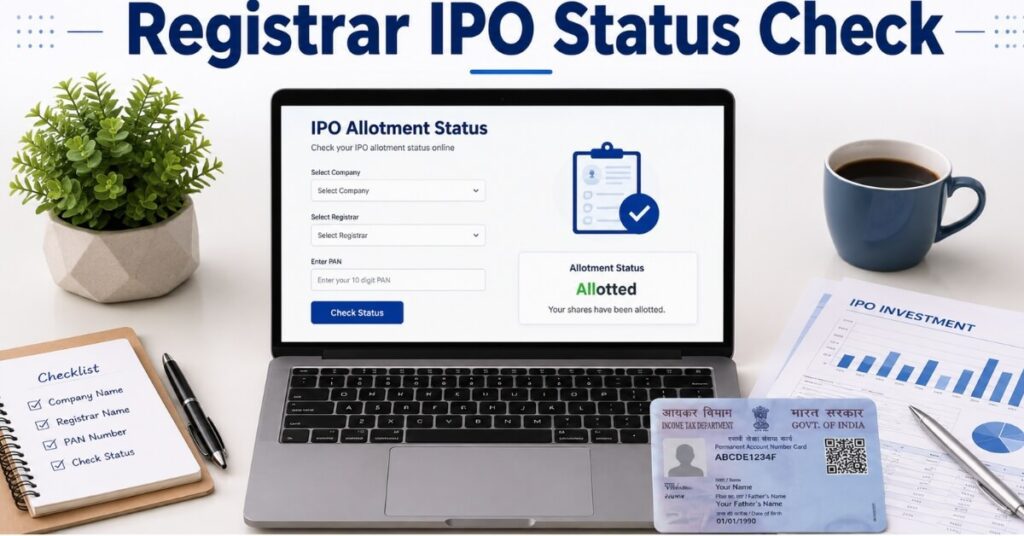
Apart from the NSE portal, every IPO has a designated registrar, commonly KFin Technologies or Link Intime, who also allows investors to check their allotment status.
Step 1: Identify the Registrar
Check the IPO prospectus or the company’s official announcement to identify which registrar has been appointed for that particular issue.
Step 2: Visit the Registrar’s IPO Status Page
Go to the registrar’s dedicated IPO allotment status page, which is usually a simple and quick way to complete your nse ipo allotment status check online.
Step 3: Select the Company Name
From the dropdown menu, select the specific IPO for which you want to check your allotment.
Step 4: Enter PAN, Application Number, or DP Client ID
You can typically choose any one of these three options to verify your details and complete the process.
Step 5: View Your Allotment Result
The result will show your allotment status instantly, along with details of shares credited to your demat account, if applicable.
Checking NSE IPO Allotment Status Online Through Broking Apps
Most modern broking platforms such as Zerodha, Groww, and Kotak Neo also allow investors to complete an nse ipo allotment status check online directly within their apps. This is often the most convenient method since you do not need to leave the platform where you originally applied.
Simply log in to your broking app, navigate to the IPO section, select the relevant issue from your application history, and the app will fetch your allotment status directly, often pulling data from the registrar or the NSE database in real time.
What Do the Different Allotment Statuses Mean?
When you complete your nse ipo allotment status check online, you may see a few different outcomes:
Fully Allotted: You received the full number of shares you applied for.
Partially Allotted: You received fewer shares than you applied for, which is common in oversubscribed IPOs.
Not Allotted: You did not receive any shares this time, and your blocked amount will be released back to your bank account.
Understanding these outcomes helps you avoid confusion and plan your next steps, whether that means selling on listing day or applying for the next available IPO.
When Should You Check Your NSE IPO Allotment Status Online?
The finalisation of allotment typically happens a day or two after the IPO subscription closes. It is best to check your nse ipo allotment status check online on the specified allotment date mentioned in the IPO timeline, since checking too early may not show updated results. Most companies also announce the listing date shortly after allotment, so keeping an eye on both dates helps you stay informed throughout the process.
Common Problems Faced While Checking IPO Allotment Status
Sometimes investors face minor hiccups while trying to complete an nse ipo allotment status check online. Here are a few common issues and how to resolve them:
Website Traffic Overload: On allotment day, official portals can get slow due to heavy traffic. Trying during off-peak hours or using the registrar’s website as an alternative can help.
Incorrect PAN or Application Number: Double-check the details you enter, since even a small typo can lead to a “no record found” message.
Application Not Reflecting: If your application does not show up, verify with your broker or bank to confirm that your bid was successfully submitted before the IPO closed.
Confusion Between Registrars: Different IPOs use different registrars, so make sure you are checking on the correct platform for that specific company.
Tips to Improve Your Chances of IPO Allotment
While allotment in oversubscribed IPOs is largely based on a lottery system, there are a few practical steps that may help improve your chances:
Apply using multiple demat accounts under different family members, where each application is treated independently.
Apply for the minimum lot size in the retail category, as this often has a slightly better allotment ratio compared to applying for larger amounts.
Ensure your bank account has sufficient balance and that the ASBA mandate is approved promptly to avoid your application getting rejected.
Apply early during the subscription window rather than waiting until the last day, to avoid technical glitches caused by heavy last-minute traffic.
Understanding the Refund Process After Checking Allotment Status
If your nse ipo allotment status check online shows that you were not allotted shares, or if you received a partial allotment, the remaining blocked amount is automatically released from your bank account. Since most investors apply through the ASBA process, this means the money was never actually debited; it was only blocked, and the block is simply lifted once the allotment is finalised. This usually happens within a day or two of the allotment announcement, well before the listing date.
If you notice that your funds have not been released even after a few days, it is advisable to contact your bank or broker directly, since delays can occasionally occur due to technical issues on their end rather than the exchange or registrar.
If you’re also managing your other financial documentation, our detailed guide on mutual fund nominee rules explains how AMFI has simplified the process of transferring investments to nominees, which is equally useful once your IPO investments start growing into a long-term portfolio.
For official verification, you can always rely on the NSE India website, which remains the most trusted source for checking your allotment directly from the exchange itself.
Why You Should Rely on Official Sources for Allotment Status
With so many third-party websites claiming to offer IPO allotment information, it is important to stick to verified sources. Performing your nse ipo allotment status check online through the NSE website, the official registrar, or your trusted broking app ensures that the information you receive is accurate and updated in real time, without any risk of misinformation or scams that sometimes circulate on social media during high-demand IPOs.
Difference Between Allotment Status and Listing Gains
Many first-time investors confuse allotment status with listing performance, but these are two completely different things. Your nse ipo allotment status check online only tells you whether you have received shares in the IPO, not how the stock will perform once it lists on the exchange. Listing gains depend on market sentiment, demand-supply dynamics, and overall investor confidence on the day of listing, which can vary significantly from the subscription numbers seen during the IPO window.
It is a common mistake to assume that a heavily oversubscribed IPO will automatically deliver strong listing gains. While high subscription numbers often indicate strong investor interest, actual listing day performance depends on broader market conditions at that specific time. This is why it is important to treat your nse ipo allotment status check online as just the first step, followed by careful monitoring of market news closer to the listing date.
How Different Categories Affect Your Allotment Status
IPO applications are generally divided into categories such as Retail Individual Investors (RII), Non-Institutional Investors (NII), and Qualified Institutional Buyers (QIB), and the allotment process differs slightly for each. For retail investors applying within the standard lot size limits, allotment is usually done through a computerised lottery system when the issue is oversubscribed, which is exactly why your nse ipo allotment status check online result may show a “not allotted” status even if you applied well within the deadline.
For NII and QIB categories, allotment is typically done on a proportionate basis rather than a straightforward lottery, meaning investors in these categories may receive partial allotment more frequently compared to retail investors. Understanding which category your application falls under can help you interpret your nse ipo allotment status check online result more accurately and set realistic expectations for future IPO applications.
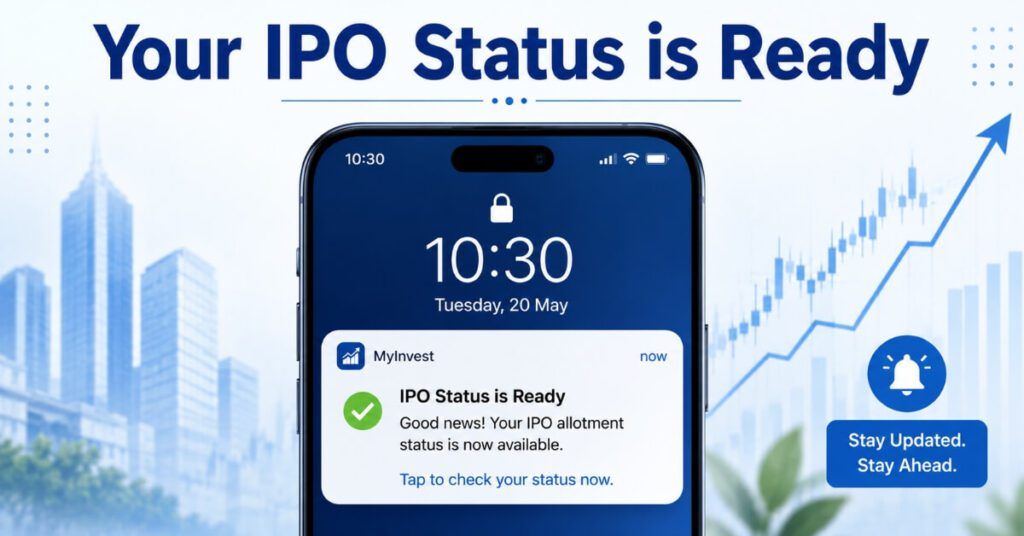
Mobile Apps and SMS Alerts for Allotment Updates
In addition to manually visiting a website, many registrars and stock exchanges now send SMS or email alerts once the allotment process is finalised, so investors do not always need to actively perform an nse ipo allotment status check online themselves. If you have provided a valid mobile number and email address at the time of application, keep an eye on your inbox and messages around the expected allotment date.
Several broking apps also send push notifications the moment allotment results are declared, making it even easier to stay updated without repeatedly refreshing a webpage. Enabling notifications on your trading app during an active IPO window is a simple habit that can save you time and effort.
What to Do After a Successful Allotment
Once your nse ipo allotment status check online confirms that shares have been credited to your demat account, it is a good idea to review your overall investment plan for that stock. Some investors choose to sell on listing day to book quick gains, while others prefer to hold the shares as part of a long-term portfolio strategy, depending on the fundamentals of the company and their personal financial goals.
Regardless of your strategy, always verify that the shares reflect correctly in your demat account holdings before making any trading decisions, since technical delays can occasionally occur between the allotment announcement and the actual credit of shares.
Frequently Asked Questions on NSE IPO Allotment Status Check Online
Q1. How long does it take to complete an NSE IPO allotment status check online?
The process usually takes less than a minute once the allotment results are officially published, since you only need to enter your PAN or application number and submit the form.
Q2. Can I check my IPO allotment status without a PAN number?
Yes, most platforms also allow you to check status using your application number or DP Client ID, so a PAN number is not always mandatory.
Q3. What happens if I am not allotted any shares?
If you are not allotted shares, the amount blocked through ASBA in your bank account is released automatically within a couple of days, and no shares will be credited to your demat account.
Q4. Is there a difference between checking allotment on NSE and BSE?
Yes, if the IPO is listed on both exchanges, you may need to check separately depending on where your application was processed, although most registrars provide combined results for both exchanges.
Q5. Why does my NSE IPO allotment status check online show no data?
This usually happens if the allotment has not been finalised yet, or if there is a mismatch in the PAN or application number entered. Double-check your details and try again closer to the official allotment date.
Q6. Can I check IPO allotment status for old or expired IPOs?
Most registrar websites keep historical allotment data available for a limited period, but very old IPO records may no longer be accessible through standard status-check tools.
Conclusion
Learning how to complete an nse ipo allotment status check online is a simple but essential skill for every stock market investor in India. Whether you prefer using the official NSE website, the registrar’s portal, or your broking app, the process takes only a few minutes and gives you complete clarity on your investment outcome. Staying informed about your allotment status not only helps you plan your next financial move but also ensures you never miss important updates during the exciting but often unpredictable world of IPO investing.
Disclaimer:
This article is for informational purposes only and should not be considered as investment advice. IPO investments are subject to market risks, and allotment is not guaranteed. Please read the offer document carefully and consult a certified financial advisor before making any investment decisions.


Pingback: Tax Saving FD Interest Rate 2026: 7 Best Bank Picks