
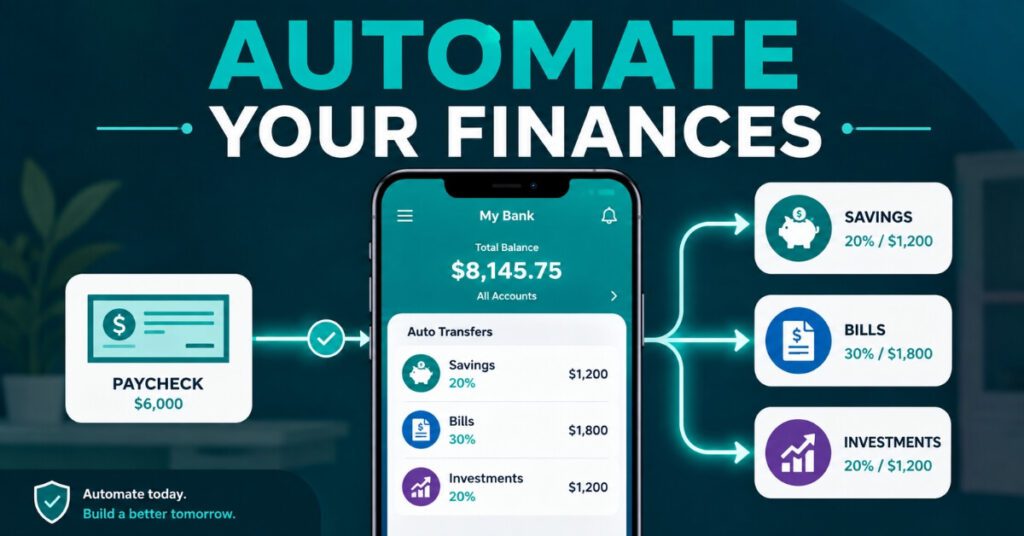
Managing money manually every month can feel exhausting. Between remembering due dates, tracking daily spending, and forcing yourself to save before you spend, it is easy to fall behind on your goals. This is exactly why learning how to automate your finances has become one of the most searched personal finance topics worldwide in recent years. Once you understand how to automate your finances, your bills get paid on time without reminders, your savings grow steadily without willpower, and your investments continue building wealth quietly in the background while you focus on your career, your family, and your everyday life.
This guide walks you through how to automate your finances step by step, using simple tools and habits that work whether you are salaried, self-employed, freelancing, or just starting your financial journey for the first time. You do not need to be tech-savvy, wealthy, or a finance expert to begin. In most cases, you only need about thirty to sixty minutes on a weekend to set up a system that quietly works for you for years, long after the initial effort is forgotten. By the end of this article, you will know exactly how to automate your finances in a way that fits your income, your lifestyle, and your long-term financial goals.
What Does It Mean to Automate Your Finances
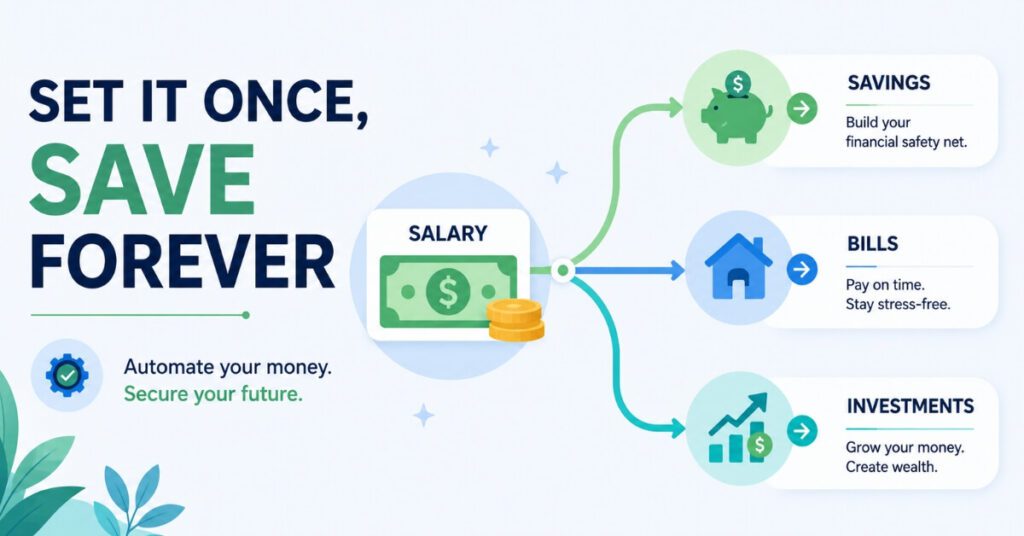
Learning how to automate your finances simply means removing yourself from repetitive, everyday money decisions by letting technology and pre-set instructions handle them for you. Instead of manually transferring money to savings every month, you set up a standing instruction once, and your bank does the rest automatically.
Instead of remembering to pay your credit card bill before the due date, you set up auto-pay and never worry about a missed payment again. The real goal of learning how to automate your finances is not to lose control of your money, but to actually protect your money from your own forgetfulness, your emotions, and your impulsive, in-the-moment decisions. Automation acts as a quiet financial assistant that never forgets, never gets tired, and never gets tempted by a flash sale.

Why You Should Learn How to Automate Your Finances Today
Life gets busy, and busy people forget things, no matter how organized they think they are. A single missed EMI payment can hurt your credit score for months. A missed savings transfer, repeated over several months, can quietly derail your long-term financial goals without you even noticing until much later. Understanding how to automate your finances solves both of these problems at the same time.
When your money moves automatically, you save more consistently, you avoid late fees and penalty charges, and you build long-term financial discipline without relying on daily motivation, which almost everyone struggles with sooner or later. Behavioral finance research consistently shows that automated systems outperform manual budgeting, mainly because automation removes the temptation to skip a step during a busy or emotionally difficult month.
Step-by-Step Guide: How to Automate Your Finances
Below is a practical, beginner-friendly roadmap that shows exactly how to automate your finances, broken down into manageable steps you can complete over a single weekend without any special software or financial background.
Step 1: List All Your Income and Fixed Expenses
Before you can automate your finances effectively, you first need a clear, honest picture of your monthly money flow. Write down your monthly salary or income sources, along with every fixed expense such as rent, EMIs, insurance premiums, and recurring utility bills. This simple list becomes the foundation for every automation rule you will set up in the following steps, so it is worth spending real time getting it right.
Step 2: Open a Separate Savings Account
One of the easiest ways to begin learning how to automate your finances is to physically separate your spending money from your saving money. Open a dedicated savings account or a high-interest account that you deliberately do not touch for daily expenses. When your salary is not sitting visibly in your main spending account, you are far less tempted to spend it impulsively on things you do not really need.
Step 3: Set Up Automatic Transfers on Salary Day
This step is the true heart of any system built around how to automate your finances. Schedule an automatic transfer from your salary account to your savings account for the same day your income actually arrives, before you have a chance to spend any of it. Even a modest amount, transferred consistently every single month, compounds significantly over the years. Most modern banking apps allow you to set up this kind of standing instruction in under five minutes.
Step 4: Automate Your Bill Payments
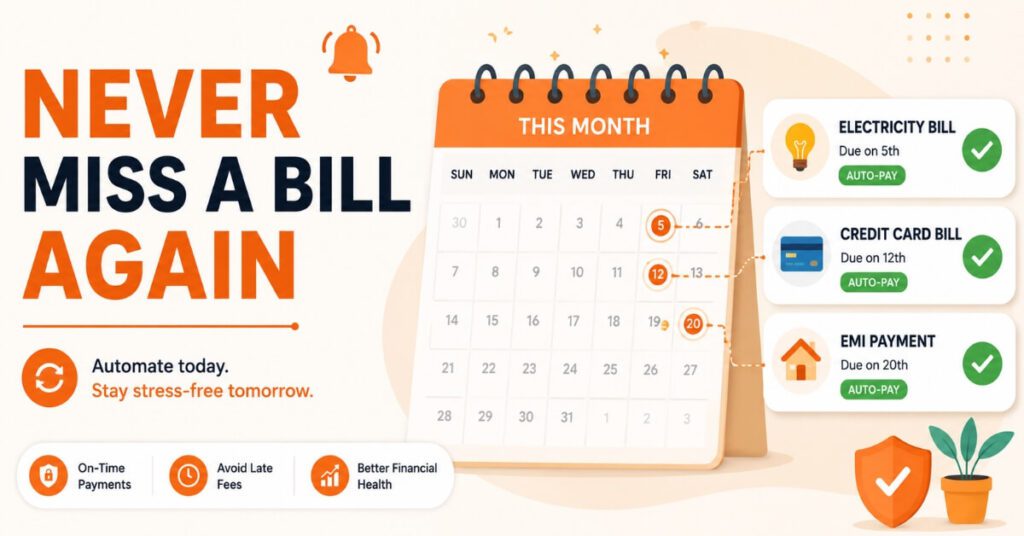
Late payments quietly damage your credit score and waste money on avoidable penalty charges. A core part of learning how to automate your finances is enabling auto-pay for every recurring bill you have, including credit cards, loan EMIs, electricity, mobile recharges, and insurance premiums. It is still wise to keep light reminders as a safety backup, even after full automation is active, just in case a card expires or a bank server has an issue.
Step 5: Automate Your Investments
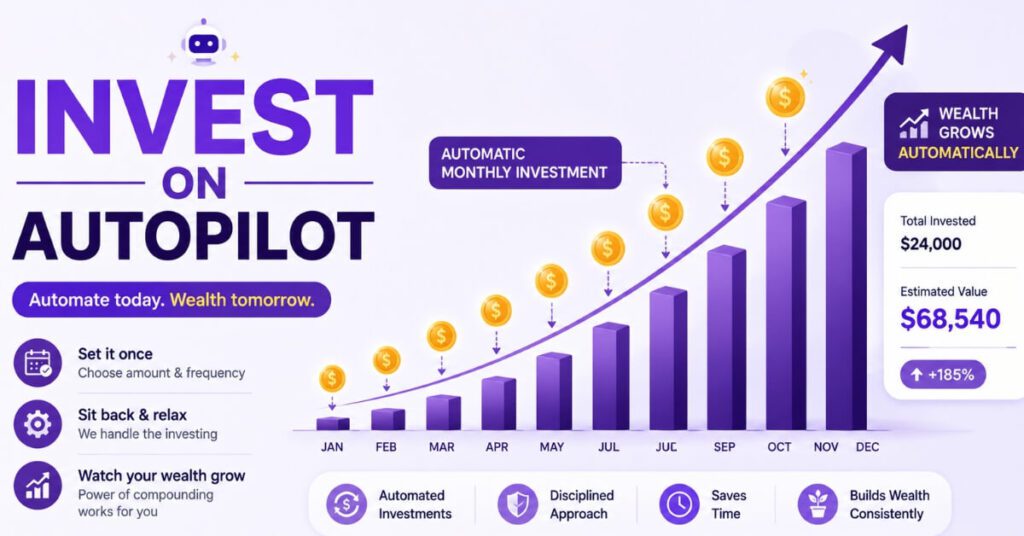
Once your savings and your bills are fully handled, the next logical step in how to automate your finances is investing consistently. Set up a systematic investment plan that debits your account automatically every month, regardless of whether the market is up or down. Automated investing removes emotional decision-making almost entirely, which is often the single biggest reason ordinary investors end up buying high and selling low.
Step 6: Automate Your Emergency Fund Contributions
A truly resilient approach to how to automate your finances always includes protection against sudden surprises. Direct a small, fixed percentage of every paycheck into a liquid emergency fund until it eventually covers at least three to six months of your essential living expenses. This one habit alone can prevent you from breaking your long-term investments during a sudden medical bill, job loss, or family emergency.
Step 7: Review Your Automated System Every Quarter
Automation does not mean you get to ignore your money forever and forget it exists. Set a recurring calendar reminder every three months to sit down and review exactly how you automate your finances. Check whether your income has increased since you last reviewed things, whether new expenses have appeared in your life, and whether your automated transfer amounts still genuinely make sense for your current situation.
Best Tools That Help You Automate Your Finances
Most banking apps today already offer standing instructions, auto-debit mandates, and bill-pay features built directly into their app, making it simple to learn how to automate your finances without needing to download any separate third-party software. Budgeting apps can also categorize your spending automatically, giving you full visibility into your money even when the actual movement of that money is completely hands-off. Choose tools that sync smoothly with your existing bank accounts, so your entire system to automate your finances stays connected in one place rather than scattered messily across five different apps that never talk to each other.
A well-designed automated system also gives you something harder to measure but just as valuable: peace of mind. Instead of opening your banking app with anxiety, wondering whether a bill slipped through unpaid, you open it with quiet confidence, knowing every essential payment and transfer is already handled. Over time, this shift changes your entire relationship with money, moving it from a constant source of low-level stress into something that simply runs in the background of a busy, productive life.
Common Mistakes to Avoid When You Automate Your Finances
Many people rush into how to automate your finances without first building a small buffer in their checking account, which can lead to embarrassing overdraft charges when several automated payments happen to hit on the exact same day. Another very common mistake is setting up automation once and then never reviewing it again, even after a salary hike, a job change, or a major life event like marriage or a new baby.
Finally, some people automate their bills carefully but completely forget to automate their savings and investments, which quietly defeats much of the original purpose. A truly complete system to automate your finances should cover spending, saving, and investing together, not just one piece of the puzzle.
The Long-Term Benefits of Learning to Automate Your Finances
When you successfully master how to automate your finances, you free up meaningful mental energy that would otherwise go into remembering due dates, calculating how much to save each month, and constantly worrying about whether you are on track. Over several years, this quiet consistency compounds into a noticeably larger emergency fund, a healthier credit score, and a steadily growing investment portfolio, all built with minimal daily effort on your part.
This is also closely connected to your overall financial planning, including protecting yourself against large unexpected medical costs; many people assume their employer-provided health cover is fully sufficient, but as explained in our detailed guide on why your corporate health insurance may not be enough, an automated emergency fund can quietly become the exact safety net that fills that gap.
Signs You Urgently Need to Automate Your Finances
Not everyone realizes how badly they need to learn how to automate your finances until small problems start piling up. If you regularly forget due dates, if your savings account balance barely moves month after month, or if you find yourself checking your bank balance anxiously before making a purchase, these are all clear signs that a manual system is failing you.
Another common sign is relying purely on end-of-month leftover money for savings, which almost always results in saving very little, because spending naturally expands to fill whatever is available. If any of this sounds familiar, it is a strong signal that you need to automate your finances sooner rather than later, rather than waiting for a financial emergency to force the change.
How Much Time It Really Takes to Automate Your Finances
One of the biggest myths that stops people from starting is the belief that it takes hours of complicated setup to learn how to automate your finances. In reality, most people can figure out how to automate your finances in a single sitting of thirty to sixty minutes. Logging into your banking app, setting up two or three standing instructions, and enabling auto-pay on your existing bills usually takes far less time than people expect. The upfront effort to automate your finances is genuinely small compared to the years of stress-free money management it delivers afterward.
Automate Your Finances at Every Life Stage
The way you approach how to automate your finances will naturally evolve as your life changes. A student or early-career professional might automate your finances with a very small, fixed transfer just to build the habit early. Someone with a growing family may need to automate your finances around larger fixed costs like school fees, home loan EMIs, and insurance premiums. Later in life, as income grows and goals shift toward retirement, you may automate your finances with a higher percentage directed toward long-term investments rather than short-term savings. The core principle to automate your finances stays the same throughout every stage: let the system run in the background so you are never solely dependent on remembering everything yourself.”
A Simple Real-Life Example
Consider a salaried professional earning a steady monthly income with no unusual advantages. Before learning how to automate your finances, they struggled to save consistently, often spending first and saving whatever happened to be left over, which was usually very little by month end. After setting up automatic transfers on salary day, automated bill payments for every recurring expense, and a monthly systematic investment plan, their overall savings rate more than doubled within a single year, without any real change in their income. This is the practical, everyday power of automation: it does not require earning more money, only organizing the money you already have more effectively and consistently.
Whichever stage you are in, the underlying goal never changes: build a system once, trust it to run quietly in the background, and check in periodically rather than daily. This single mindset shift is often what separates people who consistently reach their money goals from those who keep restarting the same budget every few months out of frustration. According to the Reserve Bank of India (RBI), digital payment infrastructure like NACH mandates and standing instructions has made this kind of automation more accessible and secure than ever before for everyday bank customers.
Frequently Asked Questions
Is it safe to automate your finances online?
Yes, it is generally very safe, as long as you use official banking apps and verified, regulated institutions. Most banks use strong encryption, and you can cancel or modify any standing instruction at any time without penalty.
How to automate your finances if I have an irregular income?
If your income varies from month to month, you can still automate your finances using a percentage-based rule instead of a fixed rupee amount, so your savings and investment transfers automatically scale up or down with whatever you actually earn that month.
Do I need a high salary to learn how to automate your finances effectively?
No, you do not. You can begin to automate your finances with even a small, modest, but consistent amount. The habit and the consistency matter far more than the size of the transfer when you are just starting out.
Which should I automate first, savings or investments?
Most financial planners recommend that you automate your finances by prioritizing your emergency fund and essential bill payments first, and only move on to automating long-term investments once that basic safety net is firmly in place.
Can automation completely replace a monthly budget?
Not entirely, no. While automation reliably handles the repetitive tasks, it is still wise to review your budget occasionally to make sure the amounts you automate your finances with are still realistic for your current lifestyle and income.
Is it safe to automate your finances online?
Yes, it is generally very safe, as long as you use official banking apps and verified, regulated institutions. Most banks use strong encryption, and you can cancel or modify any standing instruction at any time without penalty.
Do I need a high salary to learn how to automate your finances effectively?
No, you do not. You can begin to automate your finances with even a small, modest, but consistent amount. The habit and the consistency matter far more than the size of the transfer when you are just starting out.
Which should I automate first, savings or investments?
Most financial planners recommend that you automate your finances by prioritizing your emergency fund and essential bill payments first, and only move on to automating long-term investments once that basic safety net is firmly in place.
Conclusion
Learning how to automate your finances is genuinely one of the highest-leverage money habits you can build, regardless of how much you currently earn or how disorganized your finances feel today. By setting up automatic transfers, automated bill payments, and systematic investments together, you effectively remove the daily willpower that used to be required to stay financially disciplined. Start small, review your entire system every quarter, and simply let time and consistency do the heavy lifting for you. Once you fully automate your finances, you will very likely find yourself wondering why you waited so long to finally set it up.
Disclaimer
This article is for informational and educational purposes only and should not be considered personalized financial advice. Please consult a certified financial advisor before making any savings or investment decisions based on your own individual circumstances, especially if your income, expenses, or goals differ significantly from the general examples described in this article.

Pingback: NPS Pension Scheme for Gig Workers 2026: 7 Powerful Benefits