
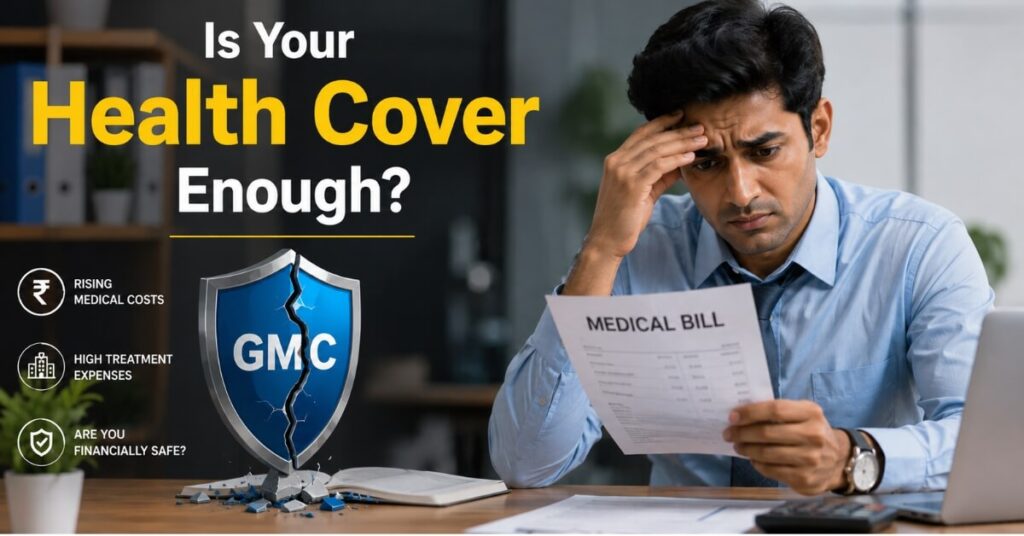
If you think your company’s corporate health insurance has you fully covered, a new industry survey suggests otherwise. According to Tata AIG General Insurance’s Corporate Health Protection Pulse 2026, 94% of employees in India say unexpected medical bills cause them financial stress — even though every single respondent already had this employer-provided cover in place.
The findings raise an uncomfortable question for millions of salaried professionals across India: is your employer’s health cover alone really enough to protect your family during a medical emergency, or is it time to rethink your health coverage strategy?
This article breaks down what the survey found, why employer-provided cover has real limitations, and what you can practically do to close the gap — without spending a fortune.
What Is Corporate Health Insurance?
This type of coverage, also known as Group Medical Cover (GMC) or Group Mediclaim, is a health policy that an employer purchases to cover its employees — and often their dependents — under a single master policy. Unlike individual health insurance, which you research, buy, and manage on your own, this cover is arranged and paid for (fully or partially) by your company as part of your overall employee benefits package.
Under a typical corporate health insurance policy, the employer works with an insurer to set the sum insured, the list of covered members, and the specific inclusions and exclusions. Employees are usually enrolled automatically when they join the company, and coverage often extends to a spouse and children, though parents and in-laws may or may not be included depending on the company’s policy design.
This type of cover typically includes:
In-patient hospitalisation expenses, including room rent, doctor’s fees, and surgery costs
Pre- and post-hospitalisation medical expenses within specified limits
Daycare procedures that don’t require a full 24-hour hospital stay
Ambulance charges in case of emergencies
In some cases, maternity benefits and newborn baby cover as optional add-ons
One of the biggest advantages of corporate health insurance over individual policies is that it usually comes with no waiting period for pre-existing conditions and no mandatory medical check-up before enrolment — something individual policies rarely offer, especially to older employees or those with existing health conditions. This is precisely why so many employees see this employer-provided cover as a complete solution.
However, as the Tata AIG survey shows, having employer-provided cover doesn’t automatically mean you’re financially protected in every situation.
What the Survey Found
The Corporate Health Protection Pulse 2026 surveyed more than 748 corporate employees aged 28 to 55 across major Indian cities — Mumbai, Delhi, Bengaluru, Hyderabad, Chennai, Ahmedabad, Pune, and Kolkata. Every single respondent was already covered under their employer’s corporate health insurance scheme, which makes the results even more revealing. This wasn’t a survey of uninsured people worrying about medical costs — these were people who already had a safety net, and they were still anxious.
Here are the key findings from the survey:
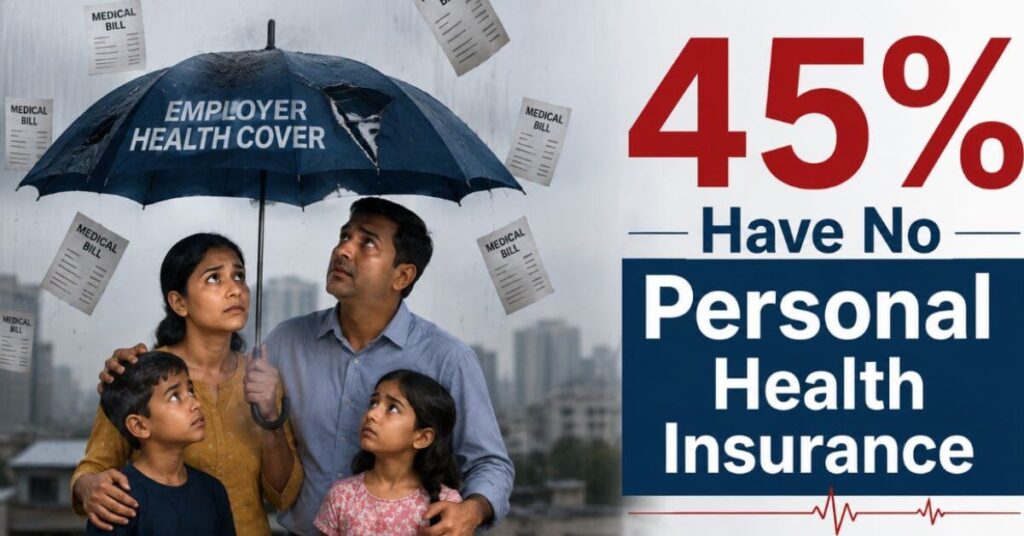
94% of employees said unexpected medical expenses cause them financial stress, despite having corporate health insurance
75% agreed that their employer-provided GMC alone may not be adequate in the event of emergency hospitalisation
Only 41% said they were fully aware of all the features and benefits available under their employer-provided plan
45% of employees had no personal health insurance beyond their corporate health insurance cover
84% said having additional health insurance beyond their employer-provided cover is important to them
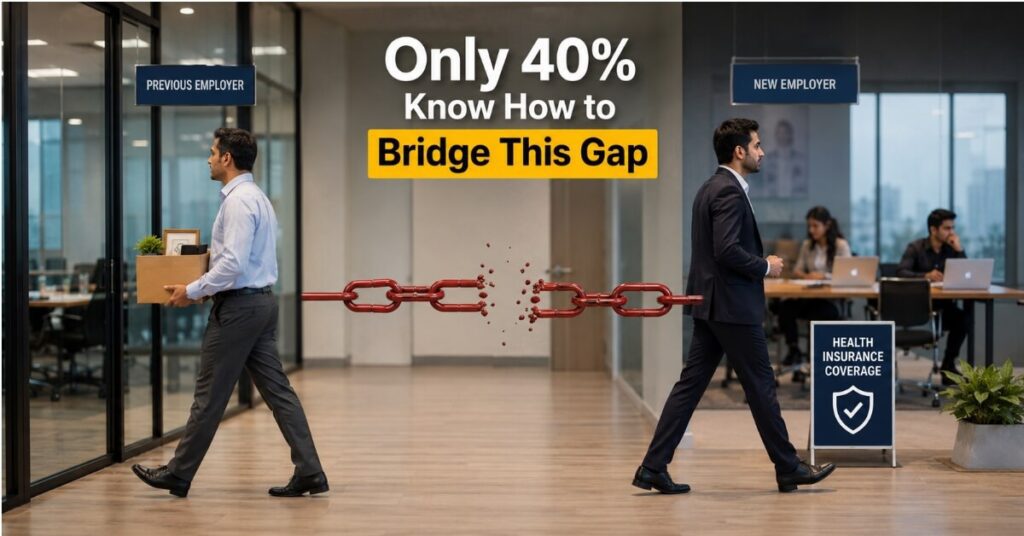
88% considered uninterrupted health insurance coverage during a job change important, but only 40% were aware of solutions to maintain medical cover during such a transition
Dr Santosh Puri, Head of Retail – Health Underwriting at Tata AIG General Insurance, commented that while Group Medical Cover remains an important pillar of employee wellbeing, the findings show that many individuals are still uncertain about the extent of their coverage and whether it would be adequate during a medical emergency or a job transition.
These numbers tell a clear story: corporate health insurance is widely available, but widely misunderstood — and that gap in understanding can be financially costly when a real emergency strikes.
Why Employer-Provided Health Cover May Not Be Enough
There are several structural reasons why relying solely on your employer’s cover can leave you financially exposed, even if you never think about it until you actually need to file a claim.
1. Limited and Fixed Sum Insured
Most corporate health insurance policies come with a fixed sum insured decided entirely by the employer, often based on your designation, grade, or seniority within the organisation. In metro cities where hospitalisation costs for even routine surgeries can run into several lakhs, this predetermined amount can be exhausted quickly during a serious illness like cancer treatment, cardiac surgery, or a prolonged ICU stay. Unlike a personal policy where you choose your own sum insured based on your needs, this employer-arranged cover leaves that decision entirely out of your hands.
2. Coverage Ends the Moment You Leave Your Job
Perhaps the single biggest risk of corporate health insurance is that it is directly tied to your employment status. The moment you resign, get laid off, retire, or switch jobs, your cover typically ends immediately — along with coverage for your spouse and children. The survey found that while 88% of employees considered uninterrupted coverage during a job change important, only 40% actually knew of solutions to bridge this gap. This means the vast majority of employees are unknowingly exposed during exactly the kind of life transition when financial stability already feels uncertain.
3. No Customisation for Individual Needs
Corporate health insurance plans are designed for an entire group of employees, not tailored to your specific health profile or family situation. You typically cannot select a higher sum insured for yourself, add specific riders like critical illness cover, or customise the policy to reflect your family’s actual healthcare needs — for instance, if you have ageing parents with chronic conditions who aren’t even covered under the plan.
4. Widespread Lack of Awareness
The survey’s finding that only 41% of employees were fully aware of all the features and benefits under their corporate health insurance plan is arguably the most concerning statistic of all. Many employees don’t read their policy documents in detail, assume “the company has it covered,” and only discover the actual limits, exclusions, and sub-limits when they’re in the middle of a stressful hospitalisation and trying to file a claim.
5. Family Coverage Gaps
Many corporate health insurance policies only extend to the employee and their immediate nuclear family — spouse and children. Parents and in-laws are frequently excluded unless the employer has specifically opted for extended family cover, which comes at an additional cost that not all companies choose to bear. For employees supporting ageing parents, this is a significant blind spot.
Benefits of Corporate Health Insurance
Despite these limitations, it’s important to recognise that this type of cover still offers genuine, meaningful value — which is exactly why it shouldn’t be dismissed, only supplemented.
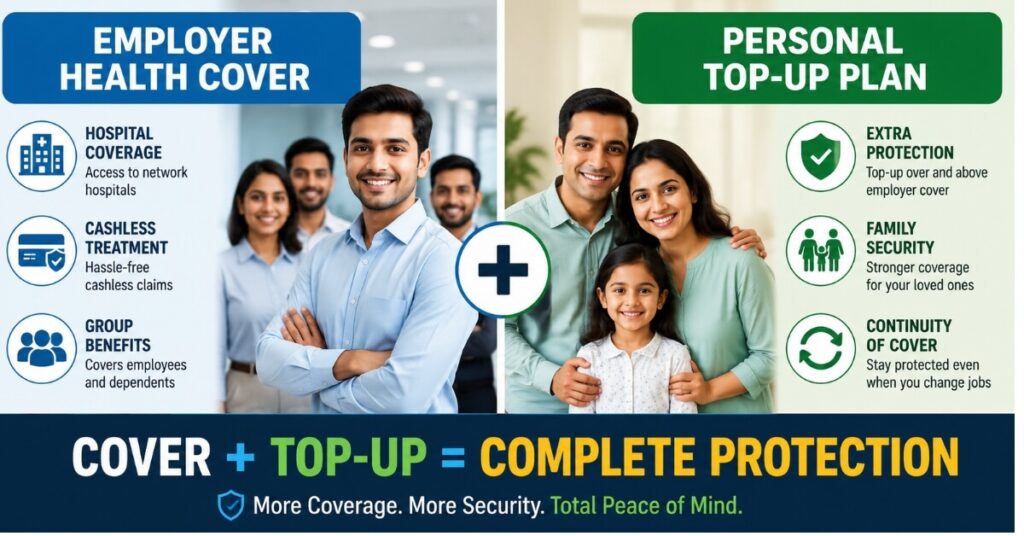
Cost-effective premiums: Because risk is spread across a large group of employees rather than assessed individually, group insurance premiums are significantly lower than what you’d pay for a comparable individual policy. In many cases, the employer bears the full premium cost, making this cover essentially free for the employee.
No waiting period for pre-existing conditions: Most such plans cover pre-existing conditions from day one of enrolment, unlike individual policies that often impose a waiting period of two to four years before such conditions are covered.
No medical check-up required: Employees can enrol in corporate health insurance without undergoing any health screening or medical tests, which is particularly valuable for older employees or those with health conditions that might otherwise lead to loading or rejection in the individual insurance market.
Cashless treatment facility: Most corporate health insurance policies offer cashless treatment at a network of hospitals, meaning the insurer settles bills directly with the hospital, reducing the immediate financial burden on the employee during a medical emergency.
Tax benefits for employers: Premiums paid by companies for this cover are typically treated as a business expense and are tax-deductible under Section 37(1) of the Income Tax Act, which is part of why many organisations are increasingly offering this benefit.
For many first-time earners in India, corporate health insurance is often their very first exposure to health insurance of any kind — which is exactly why understanding its limits matters so much before you assume you’re fully protected.
Common Limitations You Should Know About
Beyond the survey findings, there are several standard exclusions and limitations built into most group health policies that employees rarely check until it’s too late.
Outpatient (OPD) treatment is usually excluded. Most corporate health insurance plans only cover expenses related to hospitalisation of 24 hours or more. Routine doctor visits, diagnostic tests, and outpatient consultations are typically not covered, even though these can add up significantly over a year.
Room rent limits can trigger co-payment. Many policies cap the room rent that will be reimbursed — for example, at 1% or 2% of the sum insured per day. If you opt for a room that exceeds this limit, you may end up paying a proportionate share of the entire hospital bill out of pocket, not just the room difference.
Certain conditions have specified waiting periods. While many corporate health insurance policies waive standard waiting periods, some conditions like specific surgeries or treatments may still carry sub-limits or partial waiting periods depending on how the employer has structured the policy.
Non-payable items are never covered. Items like consumables, vitamins, tonics, and certain medical equipment such as walkers are typically listed as permanent exclusions in nearly every corporate health insurance policy, regardless of employer.
Employer decides the terms, not you. Because the company negotiates and structures the policy, individual employees have little to no control over these terms. This is precisely why such cover should be treated as a strong starting point for your health protection strategy — not a complete, standalone safety net.
The Hidden Risk: Job Transitions and Coverage Gaps
One of the most overlooked risks highlighted in the Tata AIG survey is what happens to your corporate health insurance cover the moment you change jobs. Healthcare expenses were identified by respondents as the biggest financial concern during a job transition — ranking even higher than loss of income or EMI obligations, which is a striking finding given how much attention those two issues typically receive in personal finance conversations.
This is a critical blind spot for most employees. Many assume their new employer’s health cover will kick in immediately upon joining, but in reality there is often a gap of several weeks or even months between leaving one job, completing paperwork with the new employer, and actually being enrolled in the new company’s GMC. During this window, if a medical emergency occurs, employees and their families could be forced to pay entirely out of pocket, precisely at a time when their income may also be in flux.
The survey’s finding that only 40% of employees are aware of solutions to bridge this gap suggests that most people are simply unaware this risk exists until they experience it firsthand — often at the worst possible time.
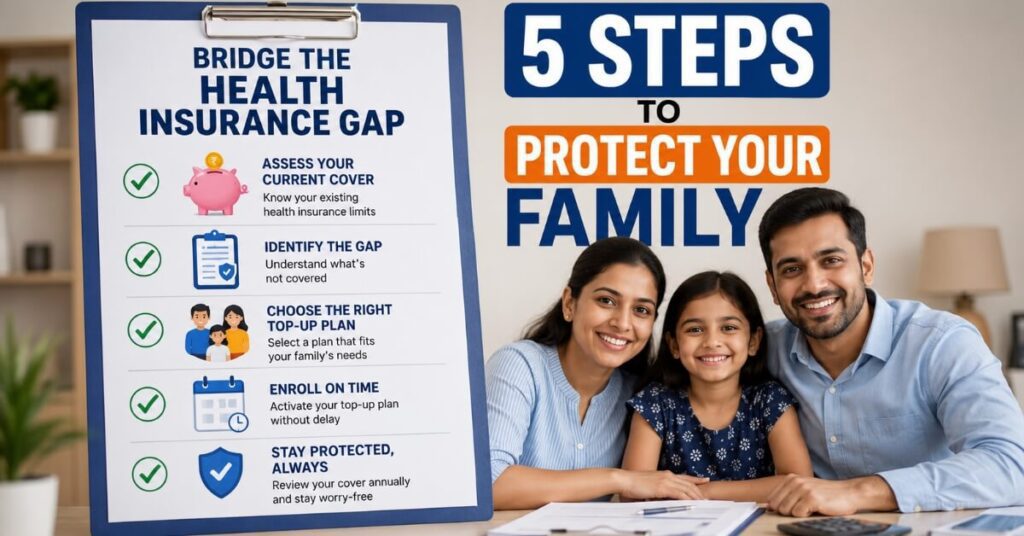
How to Bridge the Health Insurance Gap
Financial planning doesn’t stop at health cover — it should work alongside your broader money goals, whether that’s building long-term financial security through pension planning or savings or protecting your family from sudden medical shocks. Here are practical, actionable steps to strengthen your safety net beyond your workplace policy alone.
Buy a personal or top-up health plan. This is the single most effective step you can take. A personal health insurance policy, or a top-up plan that activates once your corporate health insurance sum insured is exhausted, continues regardless of your employment status. Even a modest personal policy can provide crucial continuity that your employer’s group cover cannot.
2. Read and understand your GMC policy document in detail. Don’t wait for a medical emergency to discover your policy’s limits. Ask your HR team for the complete policy document and understand your sum insured, room rent limits, exclusions, and which family members are actually covered under your corporate health insurance.
3. Plan proactively for job transitions. If you’re planning to switch jobs or anticipate a career change, consider purchasing a personal health policy in advance so there’s no coverage gap between leaving your current corporate health insurance and being enrolled in a new one.
4. Build a dedicated emergency fund. The survey found nearly 7 in 10 employees could sustain themselves for six months or less without a job, while only 12% could manage for more than a year. A personal financial cushion is just as important as insurance coverage when it comes to weathering both job loss and medical emergencies simultaneously.
5. Review and supplement family coverage separately. If your employer’s corporate health insurance doesn’t extend to your parents or in-laws, consider a standalone family floater or senior citizen health plan to ensure they aren’t left without protection.
6. Don’t ignore the “will buy later” trap. The Tata AIG survey specifically flagged a “will buy later” attitude, particularly among employees aged 28-34, as one of the biggest barriers to purchasing additional coverage. Healthcare costs and personal risk only increase with age — the earlier you supplement your corporate health insurance, the lower your premiums are likely to be.
According to IRDAI guidelines, any registered group can purchase group health insurance policies, though individual insurers set their own minimum group size requirements and underwriting criteria — which is why the specific structure of your workplace cover can vary significantly from one employer to another.
Conclusion
The Tata AIG Corporate Health Protection Pulse 2026 makes one thing unmistakably clear: corporate health insurance is a valuable, genuinely useful employee benefit, but it was never designed to be your only line of defence against India’s rising healthcare costs. With medical inflation climbing year after year and job transitions becoming an increasingly normal part of modern careers, relying entirely on your employer’s cover leaves real gaps — in sum insured, in continuity of coverage, and in family protection.
The smartest, most financially responsible approach is to treat your corporate health insurance as a strong foundation rather than the finish line. Build a personal health plan on top of it — one that stays with you regardless of where your career takes you, protects the family members your employer’s policy might exclude, and gives you genuine peace of mind rather than a false sense of security. As this survey shows, awareness is often the biggest gap of all — and closing it starts with simply understanding what your workplace cover does, and doesn’t, actually include.
Frequently Asked Questions
1. What is corporate health insurance?
Corporate health insurance, also called Group Medical Cover (GMC) or Group Mediclaim, is a health policy purchased by an employer to cover its employees and often their dependents under a single master policy, typically covering hospitalisation and related medical expenses.
2. Is corporate health insurance enough on its own?
Not always. According to the Tata AIG Corporate Health Protection Pulse 2026 survey, 75% of employees felt their employer-provided cover may not be adequate during emergency hospitalisation, which is why financial experts recommend supplementing it with a personal top-up plan.
3. What happens to my health cover when I change jobs?
Coverage typically ends immediately when you leave your employer. There can be a significant gap before your new company’s group medical policy begins, so it’s important to plan for continuity in advance.
4. Can I add my parents to my employer’s health plan?
This depends entirely on your specific company’s policy structure. Many group health plans only cover the employee, spouse, and children unless the employer has specifically opted to include parents or in-laws, often at an additional cost.
5. Should I buy a separate health insurance policy if I already have this cover through work?
Yes. Financial experts strongly recommend purchasing a personal or top-up health plan alongside your corporate health insurance to ensure continuous, adequate protection regardless of job changes or coverage limitations.
6. Does this type of cover include pre-existing diseases?
Most such policies cover pre-existing conditions from day one, without the multi-year waiting periods typically imposed by individual health insurance policies — this is one of its biggest advantages.
7. What does employer-provided health insurance typically not cover?
Common exclusions include outpatient (OPD) treatment, certain non-payable items like vitamins and consumables, and expenses beyond the policy’s room rent limits, which can trigger partial co-payment on the overall hospital bill.
8. How can I check what my group medical cover actually includes?
Request the complete policy document from your HR team, which should outline the sum insured, covered family members, exclusions, room rent limits, and any sub-limits specific to your company’s plan.
Disclaimer
This article is based on findings from Tata AIG General Insurance’s Corporate Health Protection Pulse 2026 survey, as reported by Livemint, along with general industry information on how group health insurance works in India. It is intended for informational purposes only and should not be treated as financial, medical, or insurance advice. Please consult a licensed insurance advisor or your HR department before making any coverage decisions.

Pingback: How to Automate Your Finances: 7 Powerful Stress-Free Steps