
Owning a home is a lifelong dream for almost every Indian family, and the government supports this dream by offering generous Home Loan Tax Benefits under the Income Tax Act, 1961. If you are planning to buy a house or are already repaying a home loan, understanding these benefits can help you save a significant amount of money every financial year. In this detailed guide, we explain every section, every rule, and every practical scenario related to this topic so that you can plan your finances smartly in FY 2026-27.
Whether you are a salaried employee, a self-employed professional, or someone paying rent in a different city while servicing a home loan EMI back home, these deductions apply differently to each situation. Let us break down everything you need to know, step by step, with real examples and practical tips.
What Are Home Loan Tax Benefits?
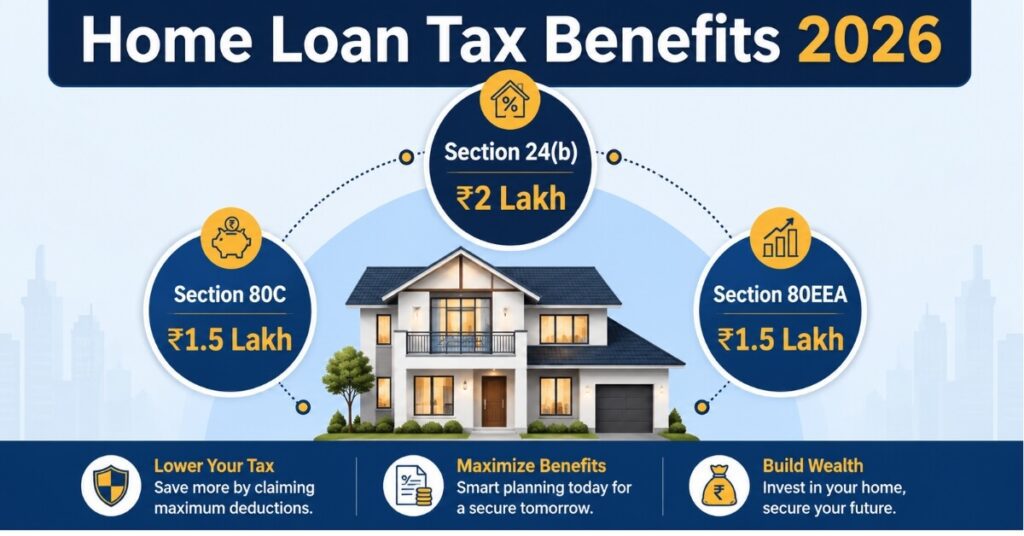
Home Loan Tax Benefits refer to the deductions and exemptions that the Income Tax Department allows on the principal repayment and interest payment of a home loan. These benefits are spread across multiple sections of the Income Tax Act — mainly Section 80C, Section 24(b), and Section 80EEA. Together, they can help a taxpayer reduce their taxable income by up to Rs 5 lakh in a single financial year under the old tax regime.
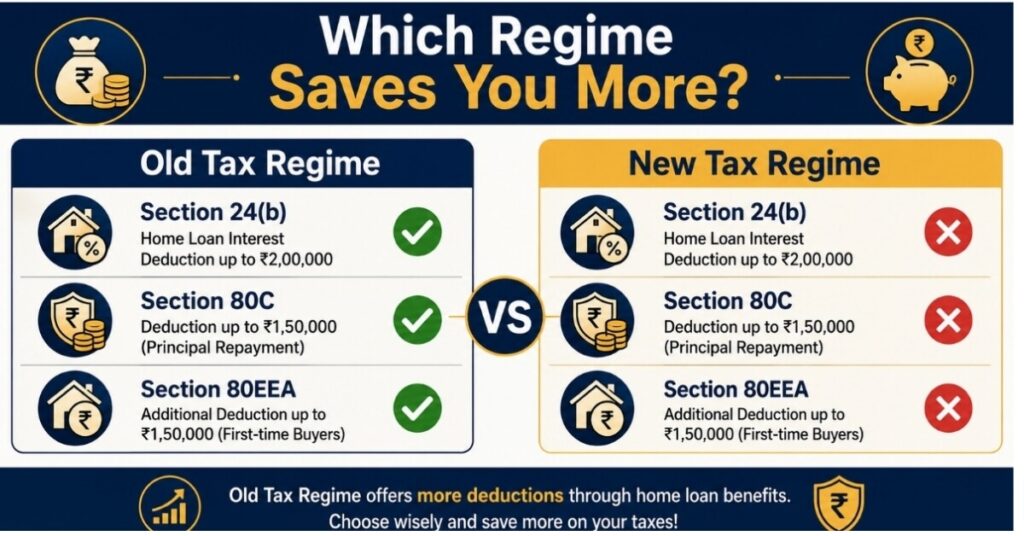
It is important to note that most home loan deductions are available only under the old tax regime. If you have opted for the new tax regime, most of these benefits, except a few specific cases, will not apply. So before filing your ITR, always evaluate which regime gives you maximum savings.
Why Home Loan Tax Benefits Matter for Indian Taxpayers
For a middle-class salaried employee, a home loan is often the single largest financial commitment of their life, running for 15 to 20 years. Over such a long tenure, the interest component alone can sometimes exceed the actual loan amount borrowed. This is exactly where structured tax relief becomes valuable — it reduces the effective cost of borrowing and makes homeownership more affordable. Millions of taxpayers across India rely on these provisions every year to lower their overall tax outgo, and understanding the fine print can mean the difference between a modest saving and a substantial one.

Section 24(b): Deduction on Home Loan Interest
One of the biggest components of Home Loan Tax Benefits comes from Section 24(b) of the Income Tax Act. Under this section, a taxpayer can claim a deduction of up to Rs 2,00,000 per financial year on the interest paid towards a home loan for a self-occupied property.
Key points to remember:
The property must be self-occupied, or the owner should not be able to occupy it due to employment, business, or profession carried on at another place.
For a let-out (rented) property, there is no upper limit on the interest deduction, making this one of the most powerful tax-saving tools for property investors.
The loan must be taken for purchase or construction of the house, and construction must be completed within 5 years from the end of the financial year in which the loan was taken.
If construction is not completed within this period, the deduction limit reduces to Rs 30,000 only.
This single provision makes Section 24(b) the backbone of Home Loan Tax Benefits for most salaried individuals in India.
Section 80C: Deduction on Principal Repayment
The second major pillar of these benefits is Section 80C. Under this section, a taxpayer can claim a deduction of up to Rs 1,50,000 per financial year on the principal component of the home loan EMI.
However, this deduction comes with an overall cap. Section 80C is a combined limit that includes other investments like PPF, ELSS, life insurance premium, and tax-saving fixed deposits. If you are also parking money in FDs, you may want to check current rates through our detailed guide on Tax Saving FD Interest Rate 2026 to plan your Section 80C basket efficiently alongside your Home Loan Tax Benefits.
A few conditions apply here too:
The house should not be sold within 5 years of possession. If sold earlier, the deduction claimed earlier gets reversed and added back to your income.
Registration charges and stamp duty paid for the property purchase can also be claimed once under Section 80C, within the same overall limit.
Section 80EEA: Extra Benefit for First-Time Home Buyers
Beyond the standard deductions under Section 24(b) and 80C, first-time home buyers of affordable housing can claim an additional deduction of up to Rs 1,50,000 under Section 80EEA. This is over and above the Rs 2 lakh limit under Section 24(b), making the total possible interest deduction go up to Rs 3.5 lakh — a substantial part of the overall tax relief available to eligible buyers.
Conditions for claiming this extra layer of relief:
The stamp duty value of the house should not exceed Rs 45 lakh.
The taxpayer should not own any other residential property on the date of loan sanction.
The loan must be sanctioned by a financial institution or housing finance company within the specified government notified period.
Old Regime vs New Regime: Where Do Home Loan Tax Benefits Apply?
This is one of the most searched questions around this topic, and rightly so. Under the old tax regime, taxpayers can claim all the deductions mentioned above — Section 24(b), Section 80C, and Section 80EEA. Under the new tax regime, most of these benefits are not available, with the exception of interest deduction on a let-out property, which can still be claimed against rental income.
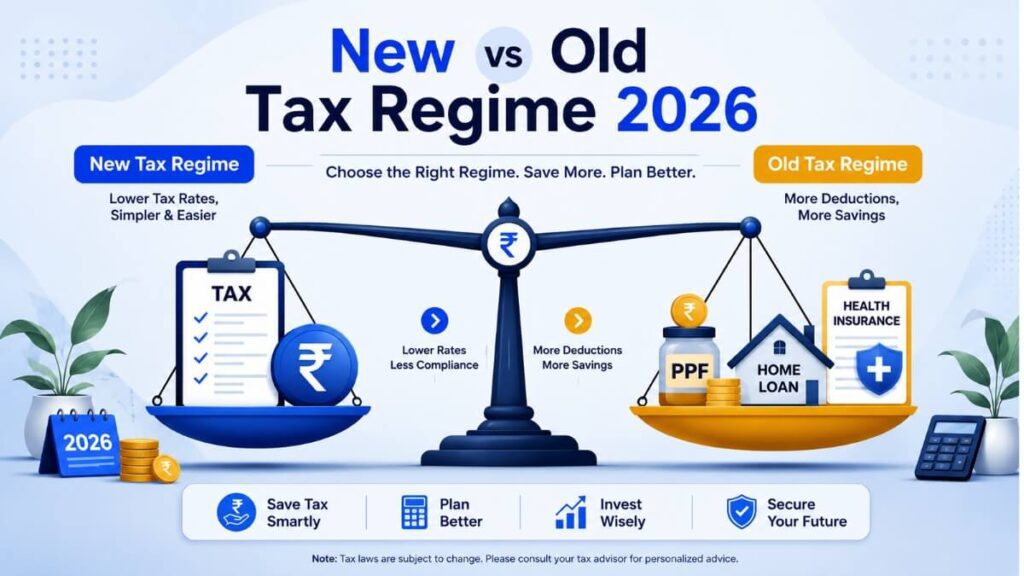
So, if you have a home loan and want to maximise your Home Loan Tax Benefits, the old regime usually works out better, especially if you also have other 80C investments and HRA exemptions to claim together. Every taxpayer should run a quick comparison between both regimes before finalising their ITR, since the right choice depends heavily on individual income levels and existing deductions.
The Double Tax Benefit: HRA Plus Home Loan Interest
A lesser-known but extremely useful aspect of Home Loan Tax Benefits applies to employees who have taken a home loan in one city but, due to their job, live on rent in another city. For example, if you have bought a house in Vijayawada through a home loan but are working and renting a flat in Hyderabad because of your job, you can claim both HRA exemption under Section 10(13A) and home loan interest deduction under Section 24(b) at the same time.
This double advantage is a genuine and legally valid combination, but it does come with a few practical requirements:
You must have a valid rent agreement and rent receipts for the house you are living in.
If your annual rent exceeds Rs 1 lakh, you must submit your landlord’s PAN details to your employer.
Rent payments should ideally be made through bank transfer for a clear audit trail.
You should be able to justify why you live in a rented house separate from your owned property — usually due to job location.
Even if your own house and your rented accommodation are in the same city, you may still be eligible for both benefits if the office is too far from your owned home to commute daily, but tax officers may scrutinise such claims more closely, so keeping proper documentation is essential when claiming these combined Home Loan Tax Benefits.

Home Loan Tax Benefits on Joint Home Loans
If a home loan is taken jointly — for instance, between spouses or family members — each co-borrower who is also a co-owner of the property can individually claim these deductions. This means both borrowers can claim up to Rs 2 lakh each under Section 24(b) and up to Rs 1.5 lakh each under Section 80C, effectively doubling the total tax relief available to the family.
To claim this, both applicants must be co-owners of the property and co-borrowers of the loan, and each should be contributing to the EMI from their own bank account or income source. This arrangement is increasingly popular among working couples in India, as it not only maximises tax savings but also improves loan eligibility and approval chances.
Home Loan Tax Benefits for Under-Construction Property
Many buyers ask whether these deductions apply while the property is still under construction. The answer is nuanced. During the construction phase, you cannot claim the interest deduction under Section 24(b) immediately. Instead, the interest paid during the pre-construction period gets accumulated and can be claimed in five equal instalments starting from the financial year in which construction is completed and possession is taken.
However, Section 80C benefits on principal repayment can only be claimed once the house is complete and possession has been handed over, since the deduction is linked to actual repayment of a loan on a ready property in most practical filing scenarios.
A Practical Example of Home Loan Tax Benefits
Consider a salaried individual who has taken a home loan of Rs 40 lakh for a self-occupied first home priced within the affordable housing limit. In a given financial year, suppose they pay Rs 1,90,000 as interest and Rs 1,40,000 as principal. Under Section 24(b), they can claim the full Rs 1,90,000 interest deduction. Under Section 80C, they can claim the full Rs 1,40,000 principal deduction, subject to the overall 80C cap. If they also qualify under Section 80EEA, they could claim additional interest relief. Added together, this example shows how the combined structure of Home Loan Tax Benefits can meaningfully lower a taxpayer’s total taxable income in a single year.

Documents Required to Claim Home Loan Tax Benefits
To smoothly claim these deductions while filing your Income Tax Return, keep the following documents ready:
Home loan interest certificate from your bank or housing finance company
Loan sanction letter showing the loan amount, tenure, and purpose
Possession certificate or completion certificate of the property
Property registration documents and stamp duty receipts
Rent agreement and rent receipts, if claiming HRA alongside home loan benefits
Bank statements showing EMI payments from your account
Keeping these documents organised ensures there is no last-minute stress while filing returns and maximising your Home Loan Tax Benefits.
How to Claim Home Loan Tax Benefits While Filing ITR
While filing your Income Tax Return, interest deduction under Section 24(b) is claimed under the head “Income from House Property,” while Section 80C and Section 80EEA deductions are claimed under the “Deductions” section of the ITR form. Salaried employees can also declare their expected tax deductions to their employer at the start of the financial year through Form 12BB, so that TDS on salary is calculated after considering these deductions, resulting in higher take-home pay throughout the year instead of waiting for a refund.
Common Mistakes to Avoid While Claiming Home Loan Tax Benefits
Many taxpayers lose out on legitimate savings due to small errors. Avoid these common mistakes:
Not maintaining the interest certificate from the lender, leading to rejected claims during scrutiny.
Claiming Section 80C benefit on principal repayment even after selling the property within 5 years, without adding back the previously claimed deduction.
Forgetting to claim Section 80EEA even when eligible, since many taxpayers are unaware of this additional layer of relief.
Not maintaining proper rent proof while claiming HRA along with home loan interest deduction.
Choosing the new tax regime without first comparing how much they would lose in terms of Home Loan Tax Benefits under the old regime.
Being aware of these pitfalls ensures you claim the full and correct amount of tax relief every year without facing issues during an income tax assessment.
Frequently Asked Questions on Home Loan Tax Benefits
Q1. Is a home loan tax deductible in India?
Yes, a home loan is tax deductible under the old tax regime. You can claim deductions on both principal repayment under Section 80C and interest payment under Section 24(b), forming the core of Home Loan Tax Benefits available to Indian taxpayers.
Q2. How much tax can I save with a home loan?
Depending on your income slab, you can reduce your taxable income by up to Rs 3.5 lakh to Rs 5 lakh annually by combining Section 24(b), Section 80C, and Section 80EEA, making this one of the most effective tax-saving tools available.
Q3. Can I claim both HRA and home loan interest deduction together?
Yes, if you live on rent in a different city or location due to your job while your own house financed through a home loan remains vacant or is occupied by family, you can claim both HRA exemption and home loan interest deduction simultaneously.
Q4. Are Home Loan Tax Benefits available under the new tax regime?
No, most of these deductions, including Section 80C and Section 24(b) for self-occupied property, are not available under the new tax regime. Only interest deduction on a let-out property can be claimed against rental income.
Q5. Can both husband and wife claim Home Loan Tax Benefits on a joint home loan?
Yes, if both are co-owners and co-borrowers, each can individually claim deductions under Section 24(b) and Section 80C, effectively doubling the total tax relief for the household.
Q6. What is the maximum deduction under Section 80EEA?
First-time home buyers of affordable housing can claim an additional deduction of up to Rs 1,50,000 under Section 80EEA, over and above the Section 24(b) limit, provided the property’s stamp duty value does not exceed Rs 45 lakh.
Q7. Do I need to submit documents every year to claim these benefits?
Yes, most employers require you to submit the interest certificate, rent receipts, and other relevant proofs every financial year, typically around January to March, to correctly account for Home Loan Tax Benefits in your salary TDS calculation.
Conclusion
Understanding these tax provisions thoroughly can help you save a substantial amount of tax every financial year while working towards owning your dream home. From Section 24(b) interest deductions to Section 80C principal repayment benefits and the additional Section 80EEA advantage for first-time buyers, there are multiple layers through which these provisions can reduce your overall tax liability.
If you are a working professional living away from your owned property due to your job, do not forget that you may be eligible to claim both HRA and home loan interest benefits together. As always, keep your documents organised, choose the right tax regime, and consult official resources or a tax professional to make the most of your Home Loan Tax Benefits this financial year.
Disclaimer
This article is for informational and educational purposes only and should not be considered as financial, tax, or legal advice. Tax laws and rules regarding Home Loan Tax Benefits are subject to change based on government notifications and Union Budget announcements. Readers are advised to consult a certified chartered accountant or tax advisor and refer to official Income Tax Department resources before making any financial decisions or filing their tax returns.

Pingback: New Labour Code Salary Rules 2026: Good News for Employees?