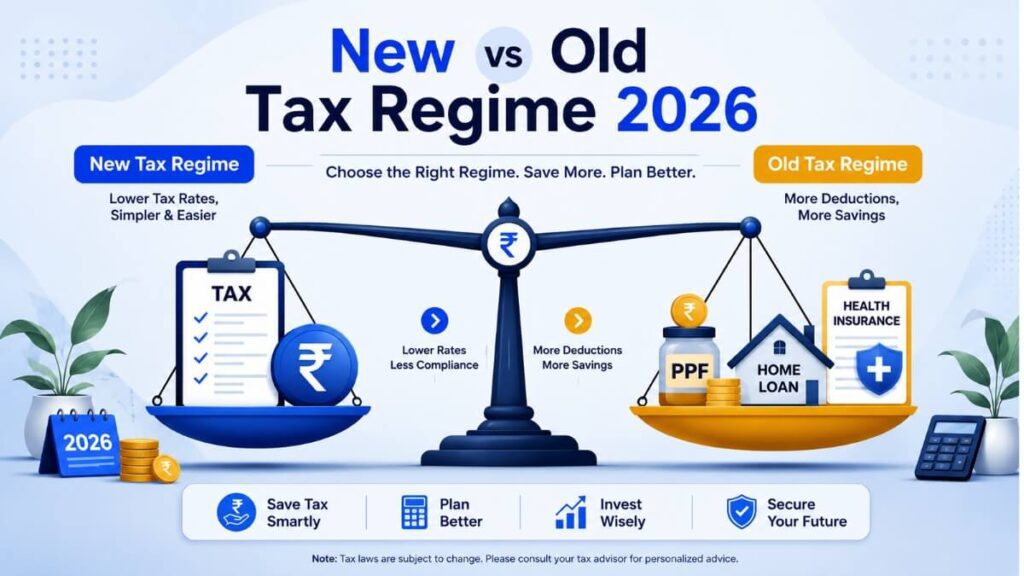

A recent ruling by the Delhi Income Tax Appellate Tribunal has brought fresh attention to how the ITR filing penalty is calculated and, more importantly, when it can be waived. The case involved a salaried individual earning more than ₹30 lakh a year who failed to file his income tax return on time. The tax department imposed a fine of ₹3.74 lakh for under-reporting income, but the tribunal eventually deleted the charge. This decision has left many taxpayers asking a simple question: if someone with a ₹30 lakh salary can avoid such a penalty, what does this mean for the rest of us?
Understanding how the ITR filing penalty works is not just useful for high earners. Anyone who has ever missed a filing deadline, made an error in their return, or worried about a notice from the tax department can benefit from knowing the rules. In this article, we break down the Delhi ITAT case, explain the legal provisions behind such penalties, and share practical steps you can take to avoid facing a similar situation in 2026.
What Is the ITR Filing Penalty in India?
The ITR filing penalty is a financial charge imposed by the Income Tax Department when a taxpayer fails to file their return on time, under-reports income, or misrepresents financial details. This provision exists under different sections of the Income Tax Act, with Section 234F covering late filing fees and Section 270A covering charges for under-reporting or misreporting of income.
For most taxpayers, a late filing fee of up to ₹5,000 applies if the return is filed after the due date but before the end of the assessment year. However, the ITR filing penalty becomes far more serious when the department believes income has been deliberately concealed or under-reported. In such cases, the amount can range from 50% to 200% of the tax that was evaded, depending on whether the case is treated as under-reporting or misreporting.
This is exactly the kind of situation the Delhi ITAT was asked to review. The taxpayer in question had a salary of over ₹30 lakh but did not submit his return within the prescribed timeline, which triggered scrutiny and eventually resulted in a heavy ITR filing penalty.
It is worth noting that this compliance framework in India has evolved over the years to distinguish between honest mistakes and deliberate tax evasion. Earlier provisions treated almost every discrepancy the same way, but the current structure under Section 270A tries to separate genuine errors from intentional concealment, which is precisely the distinction that became central to this case.

The Delhi ITAT Case: ₹30 Lakh Salary, No ITR Filed
According to the tribunal’s findings, the taxpayer had a gross annual salary exceeding ₹30 lakh but did not file his income tax return for the relevant assessment year. When the case came under the department’s review, officials noted that the income had not been formally declared through a return, and they proceeded to levy an ITR filing penalty of ₹3.74 lakh on the grounds of under-reporting.
The taxpayer challenged this charge, arguing that although the return itself was not filed on time, the income details had still been made available and were eventually accepted by the tax department without any additions or adjustments. In other words, once the full picture of his earnings was placed before the assessing officer, there was no dispute over the actual amount of income or tax payable.
This distinction became central to the case. The Delhi ITAT examined whether the ITR filing penalty was justified simply because the return was filed late, or whether it should only apply if there was an actual attempt to hide income from the tax authorities. The tribunal’s approach relied heavily on precedent, examining how similar cases involving late disclosure but full cooperation had been treated in the past.
Why the ₹3.74 Lakh Fine Was Deleted
The tribunal ultimately ruled in favor of the taxpayer and deleted the fine. The reasoning was straightforward: the ITR filing penalty under Section 270A is meant to punish under-reporting or misreporting of income, not merely a delay in filing. Since the department accepted the income figures as accurate and made no additions during assessment, the tribunal concluded there was no under-reporting to address.
This is an important clarification for taxpayers who worry that any late or missed filing automatically results in a heavy financial charge. The Delhi ITAT made it clear that an ITR filing penalty tied to under-reporting requires the tax department to establish that income was actually concealed or misrepresented, not just filed late.
At the same time, the ruling does not mean that late filing carries no consequences at all. Taxpayers can still face a separate late filing fee under Section 234F, along with interest on any unpaid tax under Sections 234A, 234B, and 234C. The deletion of the ITR filing penalty in this case applied specifically to the under-reporting charge, not to every possible consequence of missing the deadline. This nuance is often lost when such rulings are discussed casually, and it is important for taxpayers to understand that avoiding one type of charge does not mean avoiding all financial consequences of delayed filing.
Section 270A and How ITR Filing Penalty Works
To understand this case fully, it helps to look closely at how Section 270A defines the ITR filing penalty for under-reporting and misreporting of income.
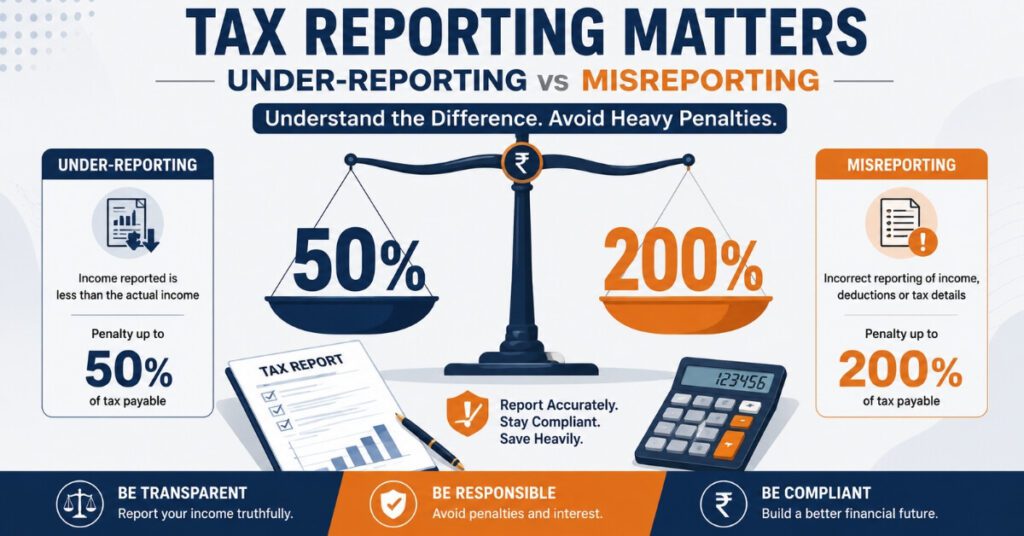
Under-reporting occurs when the income assessed by the department is higher than the income declared by the taxpayer, without any deliberate attempt to conceal facts. In such situations, the charge is generally 50% of the tax payable on the under-reported income.
Misreporting, on the other hand, involves more serious conduct such as failure to record investments in the books of accounts, claiming false deductions, or providing incorrect information about international transactions. The ITR filing penalty for misreporting can go up to 200% of the tax due, making it a much heavier consequence than a simple late filing fee.
In the Delhi ITAT case, the department had treated the situation as under-reporting since no return was filed at all. However, because the taxpayer’s income was ultimately accepted as declared, with the full amount available for assessment, the tribunal found that the basic condition for imposing an ITR filing penalty under Section 270A was not met. This case demonstrates that the burden of proof lies with the tax department to show concealment, rather than assuming it automatically from the absence of a filed return.
When Can You Escape a Penalty?
Based on this ruling and existing tax provisions, there are certain situations where a taxpayer may successfully argue against an ITR filing penalty, even if the return was filed late or not filed within the original deadline.
First, if the income figures submitted to the tax department are accepted without any additions, it becomes harder for the department to justify a charge for under-reporting. Second, if there is a reasonable explanation for the delay, such as a genuine oversight, technical issue, or documentation delay, tribunals have sometimes shown leniency, particularly when there is no evidence of intent to evade tax. Third, voluntary disclosure of income before detection by the department, even if late, can work in a taxpayer’s favor when explaining the circumstances of an ITR filing penalty notice.
That said, these are not guarantees. Every case is assessed on its specific facts, and taxpayers should not assume that simply because one high-profile case resulted in the charge being deleted, similar treatment will automatically apply to every situation involving an ITR filing penalty.
ITR Filing Penalty vs Other Tax Consequences
It is important to distinguish between the different types of financial consequences a taxpayer might face, since they are often confused with one another. The late filing fee under Section 234F is a fixed charge, capped at ₹5,000, that applies simply for missing the due date, regardless of whether income was correctly reported. Interest under Sections 234A, 234B, and 234C is calculated on unpaid tax and accrues over time, separate from any other consequence.
The ITR filing penalty under Section 270A, by contrast, is directly tied to the accuracy of the income declared, not the timing of the filing itself. This means a taxpayer could theoretically face a late filing fee and interest charges even if they successfully avoid the more serious under-reporting consequence, as happened in the Delhi ITAT case. Understanding this distinction helps taxpayers set realistic expectations about what outcomes are possible when disputing a notice.
Common Mistakes That Attract ITR Filing Penalty
Many taxpayers unintentionally invite scrutiny and increase their risk of facing an ITR filing penalty. Some of the most common mistakes include missing the filing deadline entirely, even when there is a genuine tax liability. This is one of the simplest triggers for both a late fee and, in more serious cases, further scrutiny that could lead to an ITR filing penalty.
Failing to report all sources of income, including interest from savings accounts, rental income, or capital gains from investments, is another frequent issue. Even small omissions can be flagged during assessment and treated as under-reporting.
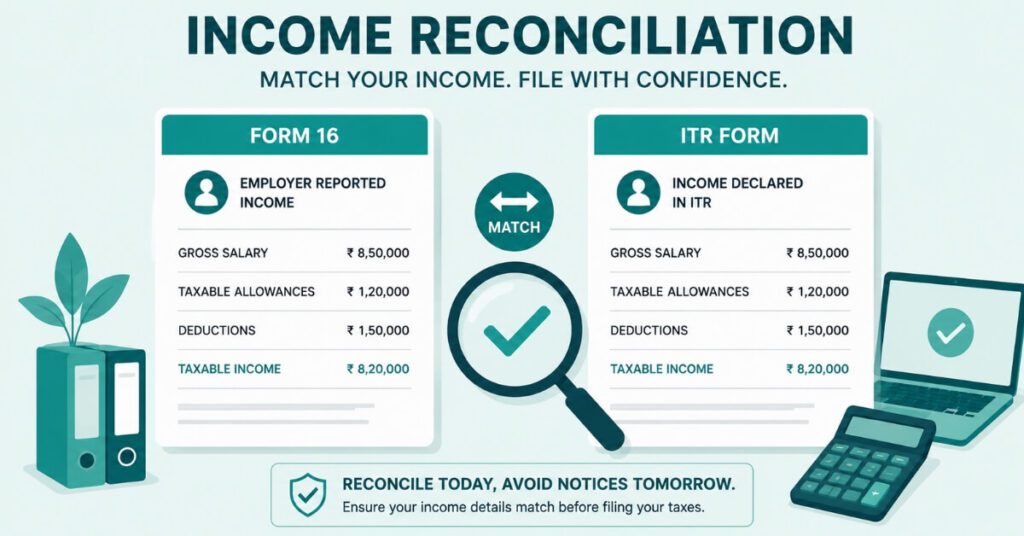
Claiming deductions without proper documentation can be treated as misreporting rather than a harmless error, significantly increasing the ITR filing penalty if detected. Not reconciling Form 26AS or the Annual Information Statement with the income declared in the return often creates mismatches that draw attention from the department. Assuming that a high salary automatically means taxes are fully settled through TDS, without checking whether additional income needs to be declared separately, is another common and costly assumption.
Documents You Need to Avoid an ITR Filing Penalty
Keeping the right documentation ready before filing can significantly reduce the chances of facing an ITR filing penalty. Salaried taxpayers should keep their Form 16 from all employers if they changed jobs during the year, along with bank interest certificates, capital gains statements from mutual fund or stock investments, and proof of any deductions claimed under sections like 80C or 80D. Rental income, if any, should be supported with rent agreements and receipts. Having these documents organized before the filing season begins makes it far easier to file an accurate return and avoid any dispute that could later escalate into a formal proceeding.
How to Avoid ITR Filing Penalty in 2026
Avoiding an ITR filing penalty largely comes down to discipline and accuracy rather than complex tax planning. A few practical habits can significantly reduce the risk.
File your return well before the due date rather than waiting until the last moment. This reduces the chance of technical errors or last-minute omissions that could later be interpreted as under-reporting. Cross-check your Form 16, Form 26AS, and Annual Information Statement before submitting your return, so that all income sources match what the department already has on record.
Maintain proper documentation for any deductions or exemptions you claim, since unsupported claims are one of the fastest ways to attract an ITR filing penalty during scrutiny. If you realize you have made an error after filing, use the revised return option rather than ignoring the mistake. Correcting an error voluntarily is generally viewed far more favorably than having it discovered later by the department.
Stay updated on regulatory changes and government initiatives that affect compliance requirements. For instance, the CBDT FAST-DS Scheme 2026 introduces faster dispute resolution mechanisms that can also be relevant if you ever find yourself contesting an ITR filing penalty or a related tax notice.
A Simple Compliance Calendar to Stay Penalty-Free
Building a habit around key dates can make a meaningful difference in avoiding an ITR filing penalty. Start reviewing your income documents as soon as the financial year ends, rather than waiting for the filing window to open. Reconcile your TDS details against Form 26AS at least once mid-year if you have multiple income sources, so surprises are minimized closer to the deadline. Set a personal filing target at least two to three weeks before the official due date, giving yourself a buffer for any last-minute corrections. This kind of proactive approach removes most of the pressure that leads to careless errors, which are often the real trigger behind formal notices.

What This Case Means for High-Income Taxpayers
The Delhi ITAT ruling is particularly relevant for salaried professionals earning well above the basic exemption limit, where even a minor compliance lapse can result in significant financial exposure. High-income taxpayers often assume that because their employer deducts TDS, their tax obligations are automatically fulfilled. This case is a reminder that filing the return itself remains a separate and essential requirement, regardless of income level or TDS deductions, and that an ITR filing penalty can still apply if the return is never submitted.
It also highlights the importance of transparency during assessment. The taxpayer in this case did not attempt to hide his income once the matter came under review, and this cooperation played a major role in the tribunal’s decision to delete the ITR filing penalty. Taxpayers facing similar situations should prioritize full disclosure rather than trying to minimize their exposure through incomplete information, since transparency tends to work in their favor during appeals.
For official guidance on filing procedures, penalty provisions, and deadlines, taxpayers can refer directly to the Income Tax Department’s e-filing portal, which provides updated rules on ITR filing penalty calculations and compliance requirements.
FAQs
1. What is the current ITR filing penalty for late filing?
Under Section 234F, a late filing fee of up to ₹5,000 applies if the return is filed after the due date but before the end of the relevant assessment year. This is separate from any ITR filing penalty imposed for under-reporting or misreporting of income.
2. Can an ITR filing penalty be waived completely?
Yes, in certain circumstances. As seen in the Delhi ITAT case, if the income declared is accepted without additions and there is no evidence of intentional concealment, tribunals can delete an ITR filing penalty imposed for under-reporting.
3. Does not filing an ITR always mean a heavy fine?
Not necessarily. While late filing fees and interest may still apply, a heavier ITR filing penalty under Section 270A specifically requires proof of under-reporting or misreporting, not just a delay in submission.
4. What is the difference between under-reporting and misreporting for penalty purposes?
Under-reporting generally results in a charge of 50% of the tax due, while misreporting, which involves more deliberate concealment, can attract an ITR filing penalty of up to 200% of the tax amount.
5. How can I check if I am at risk of an ITR filing penalty?
Review your Form 26AS and Annual Information Statement against your actual income sources before filing. Any mismatch increases the likelihood of scrutiny and a potential ITR filing penalty.
6. Is it better to file a late return than not file at all?
Yes. Filing late, even with a fee, is almost always better than not filing at all, since non-filing can lead to more serious consequences, including a higher ITR filing penalty if the department later determines that income was under-reported.
Conclusion
The Delhi ITAT’s decision to delete a ₹3.74 lakh ITR filing penalty despite a ₹30 lakh salary and a missed filing deadline offers an important lesson for taxpayers at every income level. Provisions under Section 270A are meant to address genuine under-reporting or misreporting of income, not simply punish a delay when the full income picture is eventually disclosed and accepted. However, this ruling should not be treated as a loophole. Timely, accurate filing remains the safest way to avoid both late fees and the more serious consequence tied to under-reporting. Staying informed about your obligations, reconciling your income details carefully, and disclosing information transparently will always be the most reliable protection against unnecessary tax disputes.
Disclaimer
This article is for informational purposes only and does not constitute tax, legal, or financial advice. Tax laws and tribunal rulings are subject to interpretation and change. Readers should consult a qualified chartered accountant or tax professional before making decisions related to penalty matters or any other income tax compliance.