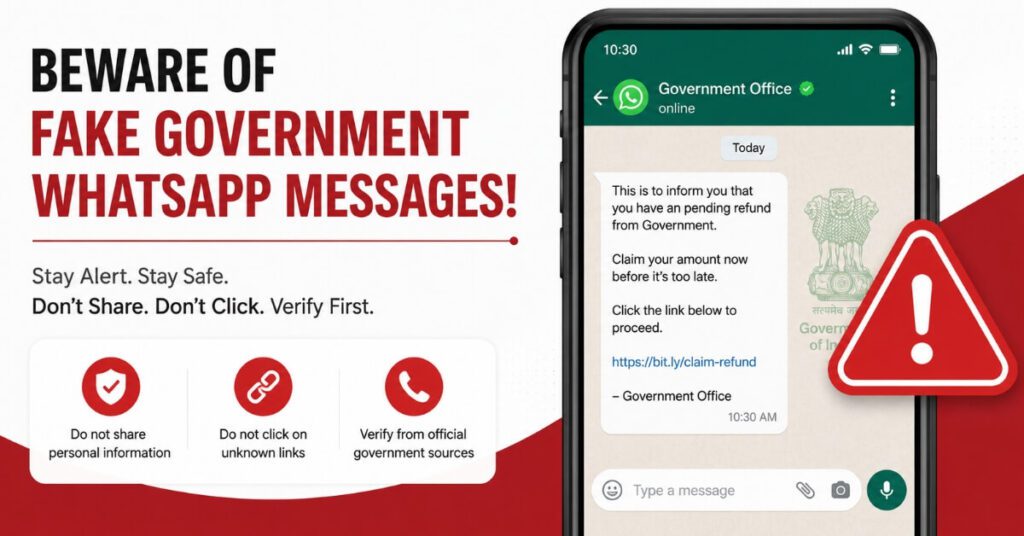
A Fake Income Tax Notice WhatsApp message has become one of the most common scams circulating across India during the ongoing ITR filing season. Taxpayers who are waiting for refunds or who have recently filed their returns are increasingly receiving alarming messages that claim to be official communication from the Income Tax Department. Cybersecurity experts and multiple advisories, including one issued by TaxGuru, confirm that this scam is spreading rapidly and tricking people into clicking malicious links or downloading dangerous files.
This guide explains exactly how the scam works, how to identify a Fake Income Tax Notice WhatsApp message, and what steps you should take if you ever receive one. By the end of this guide, you should be able to spot a Fake Income Tax Notice WhatsApp attempt within seconds and know exactly how to respond.
Why This Scam Is Spreading Right Now
Every year during the ITR filing window, millions of taxpayers across India file returns, track refunds, and worry about whether they have made a mistake somewhere in the process. This emotional state of uncertainty is exactly what cybercriminals rely on. A well-timed message that looks like it comes from a government authority can override a person’s usual caution, especially when it threatens penalties or legal action within a matter of hours. Reports from The Times of India,
The Quint, and multiple state cyber crime units confirm that fraudulent messages impersonating the Income Tax Department have surged in recent weeks, coinciding directly with the filing deadline. Understanding why this pattern repeats every year is the first step toward protecting yourself.
What Is the Fake Income Tax Notice WhatsApp Scam
The Fake Income Tax Notice WhatsApp scam involves cybercriminals impersonating the Income Tax Department by sending messages through WhatsApp that appear to carry official government branding. These messages often use the Income Tax Department emblem, official-sounding language, and references to sections of the Income Tax Act to appear legitimate. The goal is almost always the same: to frighten the recipient into taking immediate action, usually by clicking a link or downloading a file that installs malware on the device.
Unlike genuine communication from the government, this kind of message is sent from an unknown or unverified number, not from any official government channel. The Income Tax Department has repeatedly clarified that it does not issue statutory notices through WhatsApp or any other instant messaging platform. Any communication of this nature received on a personal chat app should be treated with immediate suspicion, regardless of how convincing the formatting or logo may appear.
How the Fake Income Tax Notice WhatsApp Scam Works
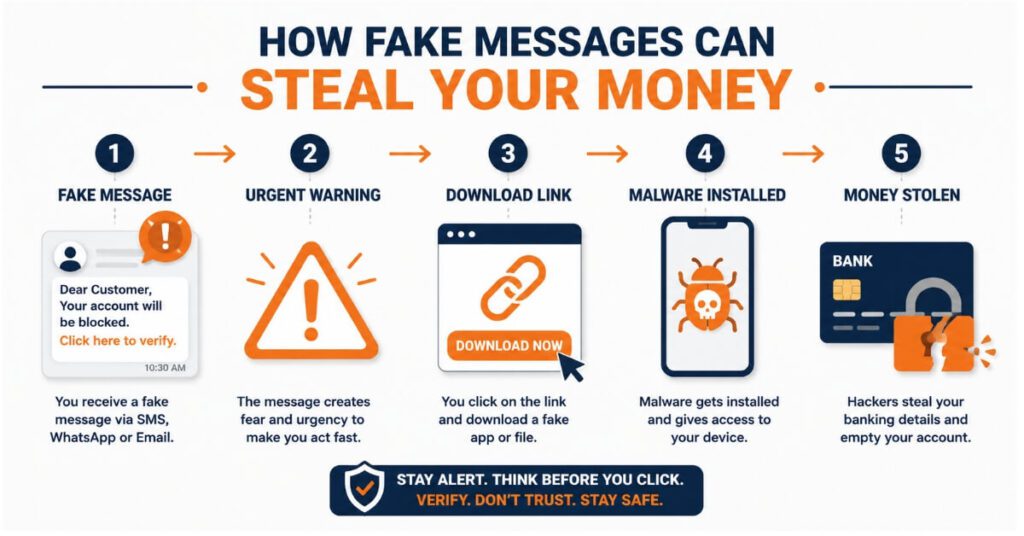
Understanding the mechanics of this scam can help you avoid falling victim to it. Here is the typical pattern scammers follow, step by step:
1.Impersonation: Scammers create a WhatsApp profile using the Income Tax Department’s logo or emblem, along with a display name such as “Income Tax Notice” or “IT Department Alert.” The profile picture and naming convention are designed to pass a quick glance test.
2.Urgency and Fear: The message usually claims there is a discrepancy in your filed return, an unpaid tax liability, or a legal deadline of 24 to 72 hours to respond, creating panic. This artificial urgency is a hallmark of a Fake Income Tax Notice WhatsApp attempt, since real government processes never operate on such compressed, threatening timelines through informal channels.
3.Malicious Attachment or Link: You are asked to download a ZIP file, an APK, or click on a link to “verify your details” or “view the notice.” This is the core delivery mechanism scammers rely on to install malware on your device.
4.Malware Installation: Once the file is downloaded and opened, malware silently installs itself on your phone. This malware can read your SMS messages, capture OTPs, and access saved banking credentials without your knowledge.
5.Financial Theft: With access to OTPs and banking apps, scammers can drain bank accounts or make unauthorized transactions before the victim even realizes what has happened. By the time most people notice, the damage from a Fake Income Tax Notice WhatsApp scam has often already been done.
Who Is Being Targeted by This Scam
The Fake Income Tax Notice WhatsApp scam specifically targets taxpayers who are emotionally primed to worry about their tax status. This includes:
People who have already filed their Income Tax Return and are anxiously waiting for a refund
Taxpayers who missed the ITR filing deadline and fear penalty notices
Salaried employees who are less familiar with official government communication channels
Elderly taxpayers who may be less aware of digital scam tactics and are more likely to trust an official-looking message
Small business owners juggling multiple compliance deadlines who may not immediately question an urgent-sounding notice
Because ITR season naturally creates anxiety around tax compliance, scammers running this scheme deliberately time their campaigns to coincide with filing deadlines, when people are most likely to react without verifying the source first.
Real Reports Confirming the Scale of the Problem
Multiple credible sources have confirmed the scale of this issue. TaxGuru issued a formal advisory warning taxpayers about fraudulent WhatsApp messages impersonating the Income Tax Department. News outlets including The Times of India and The Quint have also reported that cybercriminals are actively sending fraudulent tax notices via WhatsApp, using malware to steal banking credentials from unsuspecting victims.
Police departments in multiple states, including Uttarakhand and Odisha, have issued public advisories specifically warning residents about a Fake Income Tax Notice WhatsApp scam and urging citizens not to click on any suspicious links received through messaging apps.
The consistency of these reports across independent news organizations and law enforcement agencies indicates that this is a coordinated, large-scale fraud campaign rather than isolated incidents.
Case Examples of How the Scam Appears
Cyber crime advisories have documented several recurring formats of the Fake Income Tax Notice WhatsApp scam. In one common version, the message claims that a “mismatch” has been found between your PAN and Aadhaar records, and that failing to respond within 24 hours will result in account freezing. In another version, the message claims a pending refund is stuck because your bank details need to be “re-verified” through a linked form. Both formats share the same underlying structure seen across every reported Fake Income Tax Notice WhatsApp scam: an official-looking sender, a manufactured deadline, and a link or attachment designed to compromise your device the moment you interact with it.
How to Identify a Fake Income Tax Notice WhatsApp Message
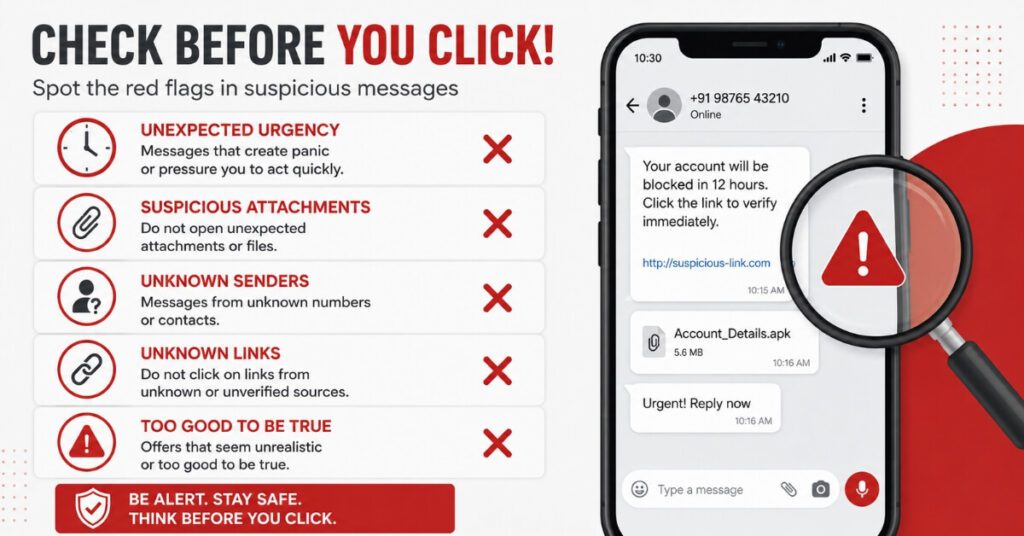
Recognizing this kind of message before it causes any damage comes down to knowing a few clear warning signs:
The message arrives via WhatsApp, SMS, or another messaging app rather than your registered email on the official e-filing portal
It creates a false sense of urgency, often demanding action within a few hours
It asks you to download a ZIP file or an APK, which government departments never do
It contains spelling errors, inconsistent formatting, or an unofficial-looking sender number
It requests personal or banking information directly through chat
It uses generic greetings instead of addressing you by your registered name or PAN details
If any message you receive matches these patterns, you are very likely looking at a Fake Income Tax Notice WhatsApp scam rather than genuine correspondence from the government.
What to Do If You Receive Such a Message
If you suspect you have received a fraudulent notice, follow these steps immediately:
1.Do Not Click Any Links: Never tap on links or download attachments included in the message, no matter how official it looks or how urgent the language sounds.
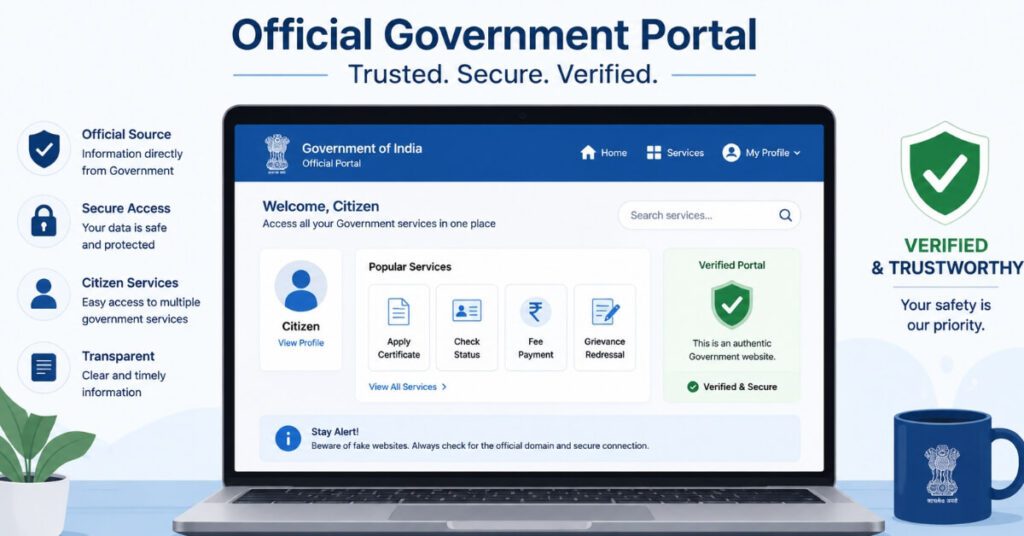
2.Verify Through Official Channels: Log in directly to the Income Tax e-filing portal to check your refund status or any pending notices. Genuine notices will always appear there and will also be sent to your registered email address.
3.Block and Report the Number: Block the sender immediately and report the contact within WhatsApp as spam. This helps prevent the same Fake Income Tax Notice WhatsApp scam from reaching others in your contact circle.
4.Do Not Share OTPs or Banking Details: Never share OTPs, PAN details, or banking credentials in response to any message, regardless of how it is worded or who it claims to be from.
5.Run a Security Scan: If you accidentally clicked a link or downloaded a file, run a full antivirus scan on your device immediately and change your banking passwords from a separate, secure device.
Official Channels the Income Tax Department Actually Uses
To avoid confusion around any suspicious message, it helps to know how the department genuinely communicates. Official notices are issued only through:
The registered email address linked to your PAN on the e-filing portal
The official Income Tax e-filing portal, where notices appear under your account dashboard
Postal mail for certain formal communications, in rare cases
The Income Tax Department does not send notices, penalty orders, or refund confirmations through WhatsApp, SMS links, or third-party messaging apps. Any message claiming otherwise should be treated as a Fake Income Tax Notice WhatsApp attempt and verified independently before you take any action.
How This Scam Connects to Other Digital Finance Frauds
Cybercriminals frequently reuse the same psychological playbook across different types of financial fraud, adapting the format to whichever topic is currently generating anxiety among taxpayers. Just as fraudsters exploit ITR season with a Fake Income Tax Notice WhatsApp campaign, similar tactics are increasingly being used around newer, less understood compliance areas. For instance, as regulatory frameworks evolve, such as the CBDT crypto guidance and new reporting rules for digital assets, scammers often try to create fake compliance notices around unfamiliar topics precisely because taxpayers are less confident about what genuine communication should look like.
Staying informed about how official tax communication actually works, across both traditional filing and newer digital asset reporting requirements, is one of the best long-term defenses against this pattern of fraud.
The Financial and Emotional Toll of Falling Victim
Beyond the direct financial loss, victims often describe a lingering sense of anxiety around every future notification they receive, whether from a bank, an app, or a government body. Rebuilding trust in digital communication takes time, and many people become overly cautious even with legitimate messages after an incident. This is precisely why prevention through awareness matters more than recovery after the fact: once banking credentials or OTPs are compromised, unauthorized transactions can happen within minutes, often before a victim has any chance to intervene. Financial institutions may eventually help recover some losses, but the process is rarely quick, and not all cases result in a full refund of stolen funds.
How to Report a Fraudulent Notice
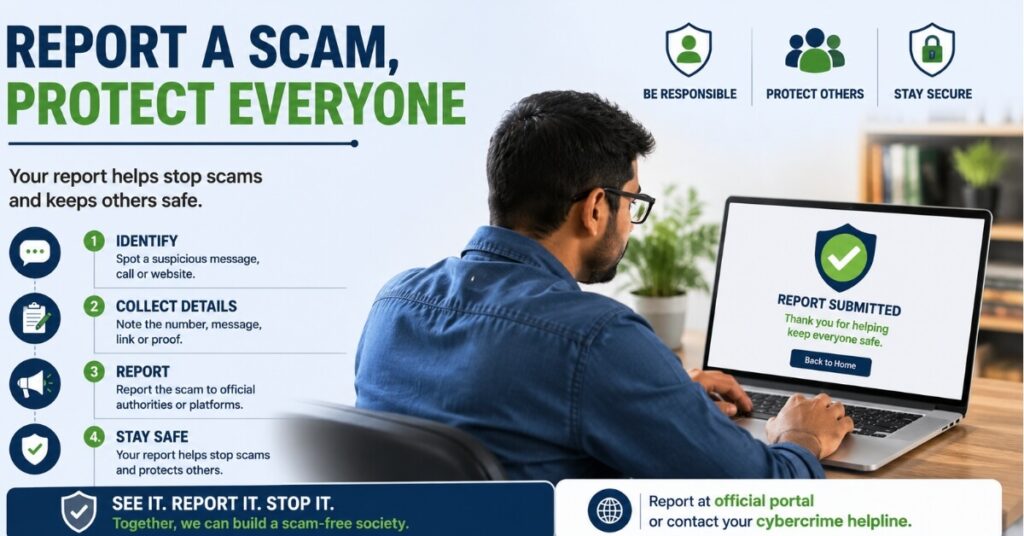
If you have identified a fraudulent message, reporting it helps protect other taxpayers as well. You can report such incidents through the National Cyber Crime Reporting Portal, or call the national cybercrime helpline. You can also forward details of the message to your local cyber crime cell, especially if you have already lost money or shared sensitive information. Reporting promptly not only helps you but also assists authorities in tracking patterns behind the wider Fake Income Tax Notice WhatsApp campaign currently active across the country.
Protecting Yourself From Future Scam Attempts
Staying safe from this kind of fraud requires ongoing awareness rather than a one-time check. Make it a habit to log in to the official e-filing portal periodically during ITR season to check your own status directly, rather than waiting for external notifications. Avoid saving unknown numbers claiming to represent government departments, and educate family members, especially elderly relatives, about how a Fake Income Tax Notice WhatsApp message typically looks so they do not panic if they receive one. Simple habits, such as verifying directly on the official portal before reacting to any urgent-sounding message, go a long way in preventing financial loss.
It is also worth building a broader habit of digital hygiene: avoid installing apps or files sent through chat platforms, keep your phone’s operating system updated, and enable two-factor authentication on your banking and email accounts wherever possible. These small steps significantly reduce the impact even if a fraudulent message does slip through your initial screening. Sharing this information with friends and colleagues can also help reduce the overall reach of the Fake Income Tax Notice WhatsApp scam within your own community.
Common Myths About This Scam
Several misconceptions make people more vulnerable to the Fake Income Tax Notice WhatsApp scam. One common myth is that scammers only target people who owe money to the government; in reality, the Fake Income Tax Notice WhatsApp scam just as often targets people expecting a refund, using the promise of faster processing as bait. Another myth is that official-looking logos and letterheads guarantee authenticity; logos are freely available online and are routinely copied in a Fake Income Tax Notice WhatsApp message to add false credibility.
A third myth is that only less tech-savvy users fall for such scams, but reports show that even digitally aware taxpayers have been deceived when a message arrives at a moment of genuine anxiety about their filing status. Recognizing these myths is an important part of building lasting resistance to a Fake Income Tax Notice WhatsApp attempt.
Frequently Asked Questions
Q1.Can the Income Tax Department send notices through WhatsApp?
No. The Income Tax Department does not send statutory notices through WhatsApp. Any such message you receive should be treated as fraudulent and verified independently.
Q2.How can I check if my tax notice is genuine?
Log in to the official Income Tax e-filing portal and check the notices section of your account dashboard. Genuine notices are also sent to your registered email address.
Q3.What should I do if I already clicked a link from a suspicious message?
Immediately run a security scan on your device, change your banking passwords from a different device, and monitor your bank statements closely for unauthorized transactions.
Q4.Where can I report a fraudulent tax notice scam?
You can report it through the National Cyber Crime Reporting Portal or by calling the national cybercrime helpline available for such complaints.
Q5.Why are scammers targeting taxpayers during ITR season?
Because ITR season creates natural anxiety around refunds and penalties, making people more likely to react quickly to an urgent-sounding message without verifying its authenticity first.
Q6.Is every tax-related WhatsApp message automatically fake?
Not necessarily every message is a scam, but any message claiming to be an official notice, penalty order, or refund confirmation from the Income Tax Department sent through WhatsApp should be treated as a Fake Income Tax Notice WhatsApp attempt until verified on the official portal.
Q7.Can antivirus software fully protect me from this scam?
Antivirus software helps reduce risk but is not a complete solution on its own. The most reliable protection against a Fake Income Tax Notice WhatsApp scam is avoiding the initial click or download altogether and verifying everything through official channels.
Conclusion
A Fake Income Tax Notice WhatsApp message can look convincing, but understanding how the scam operates makes it far easier to spot and avoid. The Income Tax Department never sends official notices through WhatsApp, so any such message should immediately raise suspicion. By verifying information only through the official e-filing portal, avoiding suspicious links and downloads, and reporting fraudulent messages when you encounter them, you can protect yourself and your finances from the scam currently circulating across India. Staying alert during ITR season, and reminding family members to do the same, remains the simplest and most effective defense against this growing wave of digital fraud.
Disclaimer
This article is for general informational purposes only and does not constitute legal, financial, or tax advice. For guidance specific to your situation, please consult the official Income Tax Department portal or a qualified professional.