
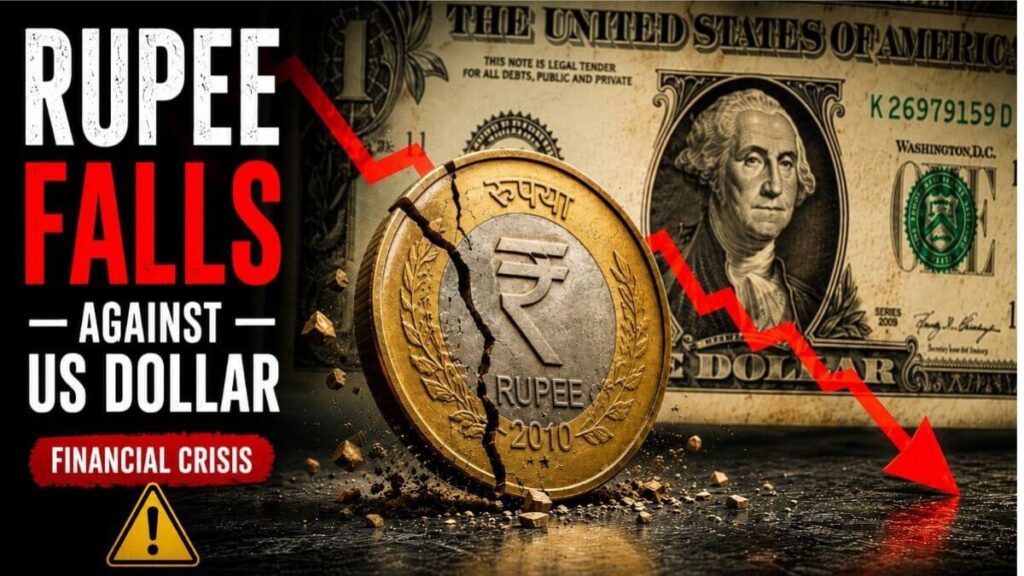
The why is indian rupee falling in 2026 question is on every Indian’s mind right now. Whether you are a salaried employee, a small business owner, or a regular investor, the sharp decline of the rupee against the US dollar is directly affecting your daily life — from rising fuel prices to expensive imported goods. In this article, we will explain exactly why is indian rupee falling in 2026, what forces are driving this fall, how it impacts common Indians, and most importantly, what you can do to protect your finances.
What Is the Current State of the Indian Rupee in 2026?
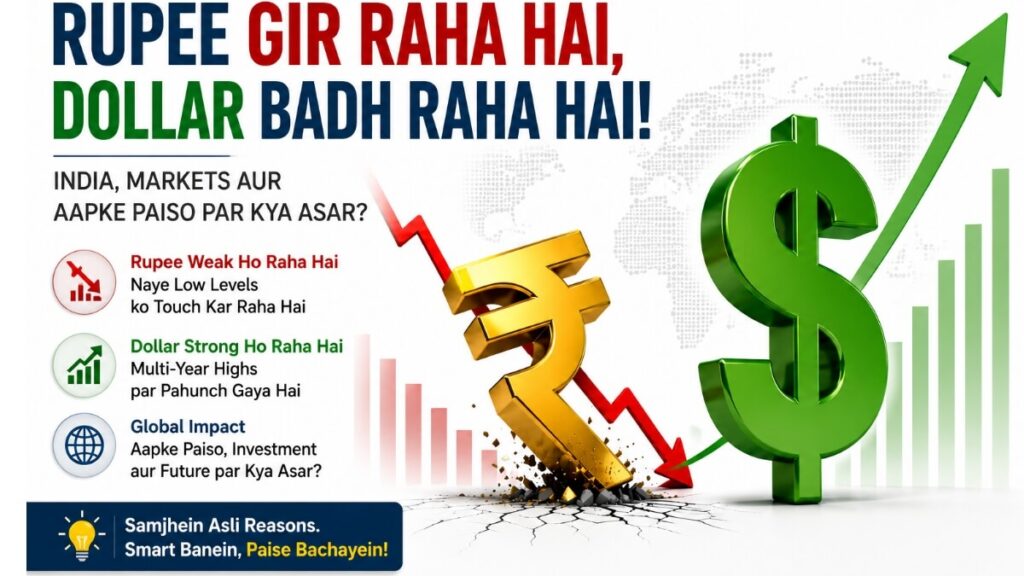
As of 2026, the Indian rupee has depreciated by approximately 7% against the US dollar, with the exchange rate touching around 96 rupees per dollar. This is one of the sharpest falls seen in recent years and has made the rupee one of the weakest-performing currencies among emerging market economies.
To understand why is indian rupee falling in 2026, we need to look at multiple factors — both domestic and global — that are putting pressure on the currency. Let us dive deep into the core issues to fully address the question of why is indian rupee falling in 2026 and analyze what is happening behind the scenes in the financial world.

Top Reasons Why Is Indian Rupee Falling in 2026
1. Low Capital Investment in India
One of the biggest reasons behind the rupee’s fall is low domestic capital investment. According to a recent report by leading US financial services firm Jefferies, the current account deficit (CAD) did not put pressure on the rupee alone — the main culprit was the low level of capital investment happening inside India.
When businesses and industries do not invest heavily in infrastructure, manufacturing, and expansion, it slows down economic productivity. This makes India less attractive for foreign capital, which directly weakens the currency and explains a major part of why is indian rupee falling in 2026.
2. Massive Foreign Capital Outflow
Foreign investors have been pulling money out of Indian markets at an alarming rate. According to Jefferies, foreign capital has moved out of Indian equity markets by a total of $78 billion (approximately Rs 7.49 lakh crore) in just the last two years.
This massive outflow of foreign portfolio investment (FPI) puts enormous pressure on the currency. When foreign investors sell Indian stocks and bonds, they convert rupees back into dollars — this increases demand for dollars and reduces demand for rupees, causing the currency to crash. This heavy sell-off is a critical pillar in understanding why is indian rupee falling in 2026.
3. Domestic SIP Investments Absorbing the Shock
Interestingly, one reason why is indian rupee falling in 2026 has not caused a complete market collapse is because domestic investors have been consistently investing through SIPs (Systematic Investment Plans). According to the Association of Mutual Funds in India (AMFI), net inflows into equity mutual fund schemes hit a record high of Rs 38,503 crore in March 2026 and Rs 38,410 crore in April.
These domestic SIP investments have provided a cushion — absorbing the selling pressure from foreign investors and preventing a deeper market crash. However, they have not been able to fully stop the currency slide, which keeps the debate around why is indian rupee falling in 2026 very active among macroeconomic analysts.
“SIP ke baare mein aur detail mein samajhna chahte hain? Hamara yeh article zaroor padhein: SEBI Salary Mutual Fund Investment — Ab Salary Se Seedha MF Mein Invest Kar Sakte Hain”
4. AI-Driven Changes in Global Investment Patterns
Another key factor in understanding why is indian rupee falling in 2026 is the global shift in investment towards Artificial Intelligence (AI). The current global investment in AI is slowing down in some regions, but in Indian markets, AI-based trading and investment patterns are increasing.
According to Jefferies, the reduction in AI-based trading, the start of traffic in the Strait of Hormuz, and corrections in global market valuations may reduce foreign investment withdrawals going forward — but right now, these global tech trends are still creating massive currency uncertainty, adding to the reasons why is indian rupee falling in 2026.
5. Rising Trade Deficit
India imports significantly more than it exports. Key imports like crude oil, gold, electronics, and industrial machinery are all priced in US dollars. When the dollar strengthens globally, India’s import bill increases automatically, widening the trade deficit and putting more pressure on the rupee.
With crude oil prices remaining elevated and India being one of the largest oil importers in the world, this structural issue continues to weaken the currency year after year. This structural deficit is a primary reason why is indian rupee falling in 2026 so consistently in the high-commodity era.
6. Global Dollar Strength
The US Federal Reserve’s interest rate policies have kept the dollar strong globally. When the US raises interest rates, global investors prefer to park their money in US assets because they offer better returns. This leads to a global sell-off of emerging market currencies — including the Indian rupee.
This is a global phenomenon that is not unique to India, but it significantly contributes to why is indian rupee falling in 2026. Whenever the US Fed delays rate cuts, emerging markets bleed capital, which directly clarifies why is indian rupee falling in 2026 under global macroeconomic shifts.
7. Easy Exit for Foreign Investors
Jefferies’ report also noted that domestic investments through SIPs have provided an easy exit route for foreign investors looking to cash out of expensive markets. When domestic money keeps flowing into mutual funds and stocks through SIPs, foreign investors find it easier to sell their holdings without crashing the market — and they take their dollars with them, further explaining why is indian rupee falling in 2026.

How Does Rupee Depreciation Affect Common Indians?
Understanding why is indian rupee falling in 2026 is important, but understanding how it affects YOUR life is even more critical.
1. Higher Fuel Prices
India imports nearly 85% of its crude oil requirements. When the rupee falls, the cost of importing oil increases in rupee terms, which leads to higher petrol and diesel prices. This increases transportation costs, which then increases the prices of almost everything you buy — vegetables, groceries, goods, and services. Therefore, the microeconomic effects of why is indian rupee falling in 2026 are felt directly at the kitchen table.
2. Expensive Foreign Education
If you or your child is planning to study abroad, a weaker rupee means you will need to pay significantly more in rupee terms for tuition fees, accommodation, and living expenses priced in dollars or euros. The practical impact of why is indian rupee falling in 2026 means families have to arrange extra lakhs of rupees for international degrees.
3. Costlier Foreign Travel
International holidays become more expensive as your rupee buys fewer dollars, euros, or pounds. Flight tickets, hotels, and daily spending abroad all cost more, making international vacations a luxury impacted heavily by the factors behind why is indian rupee falling in 2026.
4. Higher EMIs on Import-Linked Products
Products like smartphones, electronics, and vehicles that depend on imported components become costlier. This can translate into higher EMIs if you are financing these purchases, showing how why is indian rupee falling in 2026 hits your technology and luxury upgrade budgets.
5. Impact on Your Mutual Fund and Stock Portfolio
While a weaker rupee can sometimes benefit export-oriented companies (IT, pharma), it creates overall market uncertainty. SIP investors should not panic — the structural reasons explaining why is indian rupee falling in 2026 prove that rupee cost averaging through SIPs actually helps in such volatile times.
6. Inflation Increases
Import-driven inflation is a direct consequence of rupee depreciation. As the cost of imported goods rises, overall inflation increases, reducing your purchasing power. This widespread inflation is why the core question of why is indian rupee falling in 2026 matters to every citizen.
Will the Rupee Continue to Fall in 2026?
This is the most important question when discussing why is indian rupee falling in 2026.
According to Jefferies’ analysis, the rupee rebounded unexpectedly three times in the past when it depreciated by more than 10% in a 12-month period. Each time, foreign portfolio investment (FPI) bounced back strongly in the subsequent 12 months. This historical cyclicality gives a fresh perspective to why is indian rupee falling in 2026 and when it might stop.
There are also positive signs on the horizon:
Record SIP inflows show strong domestic investor confidence.
Increasing allocation to equities through EPFO and NPS is helping offset foreign sales.
India’s GDP growth remains one of the strongest among large economies.
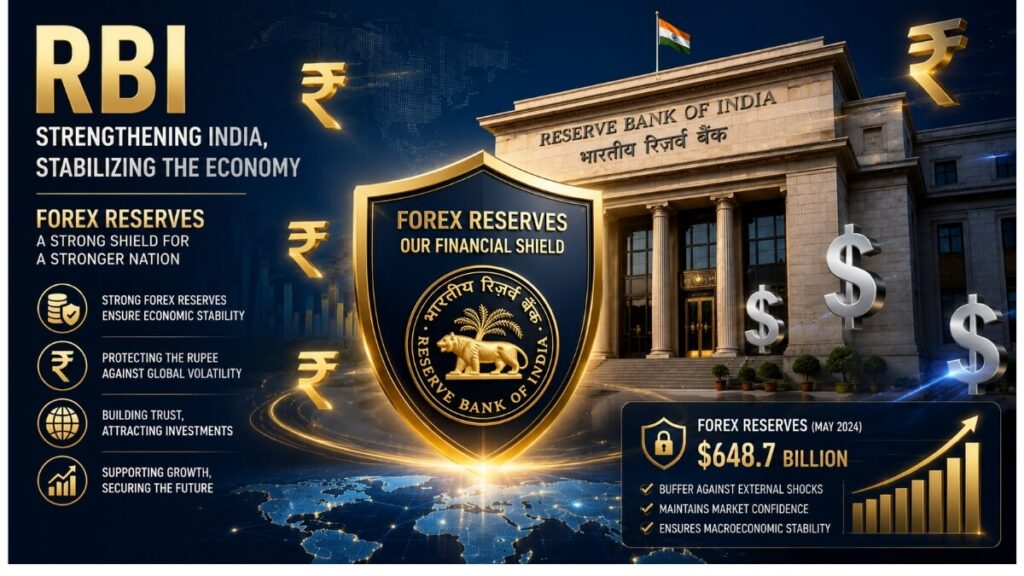
Forex reserves provide a buffer against extreme currency volatility.
The balance of payments has been negative for the last two years but is expected to stabilize in the coming year.
However, experts caution that without a significant increase in domestic capital investment and a reduction in the trade deficit, the currency will remain under pressure, making why is indian rupee falling in 2026 a continuing topic of study for the rest of the fiscal year.
What Should You Do as an Investor When the Rupee Falls?
Now that you understand why is indian rupee falling in 2026, here is what you should practically do to protect and grow your wealth:
1. Continue Your SIPs — Do Not Stop
This is the single most important advice. SIPs work on the principle of rupee cost averaging. When markets fall due to currency weakness, your SIP buys more units at lower prices. When the market recovers, you benefit more. Stopping your SIP during a downturn is the biggest financial mistake you can make, regardless of the noise surrounding why is indian rupee falling in 2026.
2. Invest in Export-Oriented Sectors
When the rupee falls, companies that earn in foreign currencies — like IT companies (TCS, Infosys, Wipro) and pharmaceutical exporters — benefit because their dollar earnings convert to more rupees. Consider increasing your exposure to these sectors to turn the challenges of why is indian rupee falling in 2026 into an investing opportunity.
3. Consider Gold Investment
Gold is a traditional hedge against currency depreciation. When the rupee falls, gold prices in India tend to rise. Allocating 10-15% of your portfolio to gold (through Gold ETFs or Sovereign Gold Bonds) can provide excellent protection against the forces driving why is indian rupee falling in 2026.
4. Avoid Unnecessary Foreign Currency Loans
If you have foreign currency loans or are planning to take one, be cautious. Rupee depreciation increases your repayment burden significantly, making debt management tough when analyzing why is indian rupee falling in 2026.
5. Diversify Into International Funds
If you want to benefit from global markets while hedging against rupee depreciation, consider international mutual funds that invest in US or global companies. Your returns will naturally be higher in rupee terms when the currency is weak, shielding you from the domestic pressures of why is indian rupee falling in 2026.
6. Build an Emergency Fund
Economic uncertainty caused by currency volatility is a good reminder to have at least 6 months of
expenses saved in a liquid emergency fund.

Government and RBI’s Role in Managing Rupee Depreciation
The Reserve Bank of India (RBI) actively intervenes in the foreign exchange market to prevent excessive volatility. Key tools the RBI uses to address why is indian rupee falling in 2026 include:
Selling US dollars from India’s foreign exchange reserves to increase dollar supply in the market.
Adjusting interest rates to attract foreign investment.
Moral suasion — guiding banks and financial institutions on currency management.
Import restrictions on non-essential goods to reduce dollar outflow.
India’s forex reserves give the RBI significant firepower to defend the currency against speculative attacks and extreme volatility, keeping a tab on why is indian rupee falling in 2026.
Is topic ko aur gehrai se samajhne ke liye yeh authoritative analysis padhein: Indian Rupee Fall 2026 — RBI Policy Explained”https://www.finnovate.in/learn/blog/indian-rupee-fall-2026-policy-story-explained
Historical Perspective: Has the Rupee Always Been Falling?
To fully understand why is indian rupee falling in 2026, it helps to look at history. The Indian rupee has been on a long-term depreciation trend against the dollar:
2013: Rupee fell to 68 per dollar during the “Taper Tantrum”
2018: Rupee crossed 74 per dollar due to oil price surge
2020: COVID-19 pushed rupee to 76 per dollar
2022: Rupee crossed 83 per dollar due to global dollar surge
2026: Rupee now at approximately 96 per dollar
Despite this long-term trend, the Indian economy has continued to grow, stock markets have delivered strong returns, and SIP investors have consistently created wealth. This historical perspective shows that while the currency dips, smart investors who understand why is indian rupee falling in 2026 and stay invested have always come out ahead.
FAQs: Why Is the Indian Rupee Falling in 2026?
Q1. Why is the Indian rupee falling against the dollar in 2026?
The Indian rupee is falling in 2026 primarily due to massive foreign capital outflow of $78 billion from Indian markets, low domestic capital investment, a widening trade deficit, and global dollar strength driven by US Federal Reserve policies.
Q2. How much has the rupee fallen in 2026?
The Indian rupee has depreciated by approximately 7% against the US dollar in the calendar year 2026, with the exchange rate touching around 96 rupees per dollar.
Q3. Does rupee depreciation affect SIP investors?
Rupee depreciation creates short-term market volatility, but SIP investors actually benefit from this through rupee cost averaging — buying more units when prices are low. Long-term SIP investors should continue their investments and not panic.
Q4. Will the Indian rupee recover in 2026?
According to financial analysts at Jefferies, the rupee has historically rebounded when it depreciates more than 10% in a 12-month period. With record SIP inflows and expected stabilization of the balance of payments, there is reason for cautious optimism about rupee recovery.
Q5. How can I protect my money when the rupee is falling?
You can protect your money by continuing SIPs, investing in export-oriented sectors like IT and pharma, allocating some funds to gold, building a solid emergency fund, and considering international mutual funds for currency diversification.
Q6. Is it a good time to invest in mutual funds when the rupee is weak?
Yes, a weak rupee and falling markets actually create better entry points for long-term investors. Continuing or even increasing your SIP during such periods can significantly boost your long-term wealth creation.
Q7. What is the current account deficit and how does it affect the rupee?
The current account deficit (CAD) occurs when India’s imports exceed its exports. A higher CAD means more dollars are flowing out of India than coming in, which increases demand for dollars and reduces demand for rupees — causing the rupee to weaken.
Conclusion
Understanding why is indian rupee falling in 2026 is not just an academic exercise — it has real consequences for your daily expenses, investments, and financial planning. The fall is driven by a combination of foreign capital outflow, low domestic investment, global dollar strength, and India’s structural trade deficit.
However, the situation is not all doom and gloom. India’s strong domestic investment culture — powered by record SIP contributions — is absorbing much of the shock. The economy continues to grow, and historical patterns suggest the rupee tends to recover after sharp falls.
The smartest thing you can do right now is stay invested, continue your SIPs, diversify smartly, and build financial resilience through an emergency fund and a well-balanced portfolio. Do not make panic-driven financial decisions based on short-term currency movements or surface-level news about why is indian rupee falling in 2026.
If you found this article helpful, share it with your family and friends who may be worried about the falling rupee. And for more such finance tips and guides, keep visiting juzbuzz.site!
Disclaimer: This article is for educational and informational purposes only. It does not constitute financial advice. Please consult a certified financial advisor before making any investment decisions

Pingback: RBI Credit Score Rules 2026: Important Weekly Updates