
Introduction
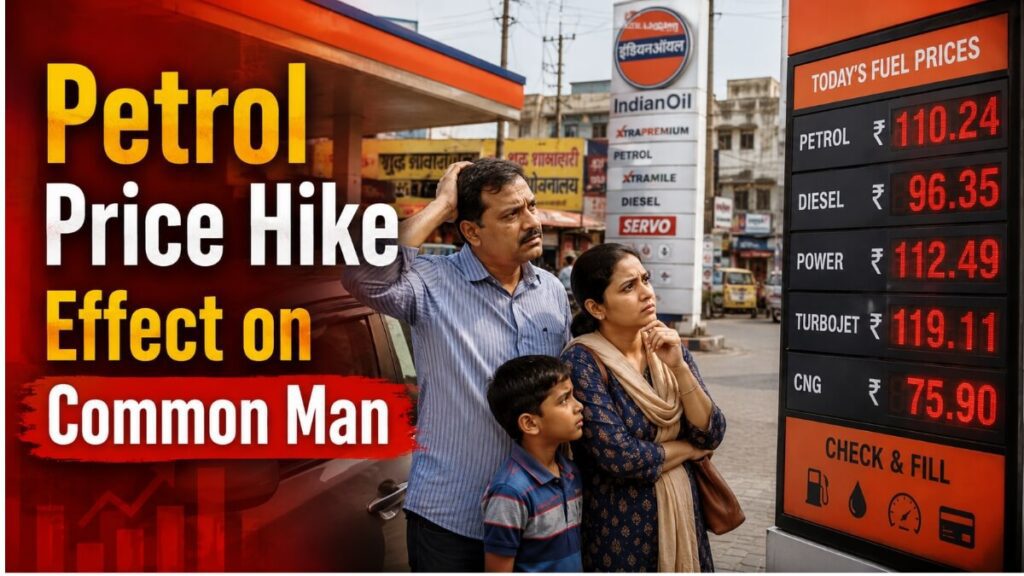
The petrol price hike effect on common man has become the most talked about topic across India in May 2026. After nearly four years of stable fuel prices, state-owned oil marketing companies — Indian Oil Corporation, Bharat Petroleum, and Hindustan Petroleum — raised petrol and diesel prices by ₹3 per litre on May 15, 2026. This was the first petrol price hike in over 49 months, and the petrol price hike effect on common man has been immediate and widespread.
In Delhi, petrol now costs ₹97.77 per litre while diesel is ₹90.67 per litre. Mumbai petrol has crossed ₹106 per litre. But beyond just the pump price, the petrol price hike effect on common man goes much deeper — impacting grocery bills, transport costs, household budgets, and overall inflation. In this article, we will break down exactly how this fuel price increase is affecting every Indian household and what you can do to manage your finances smartly during this period.
Why Did Petrol Diesel Prices Increase in 2026?
Before understanding the petrol price hike effect on common man, it is important to know why prices were increased in the first place.
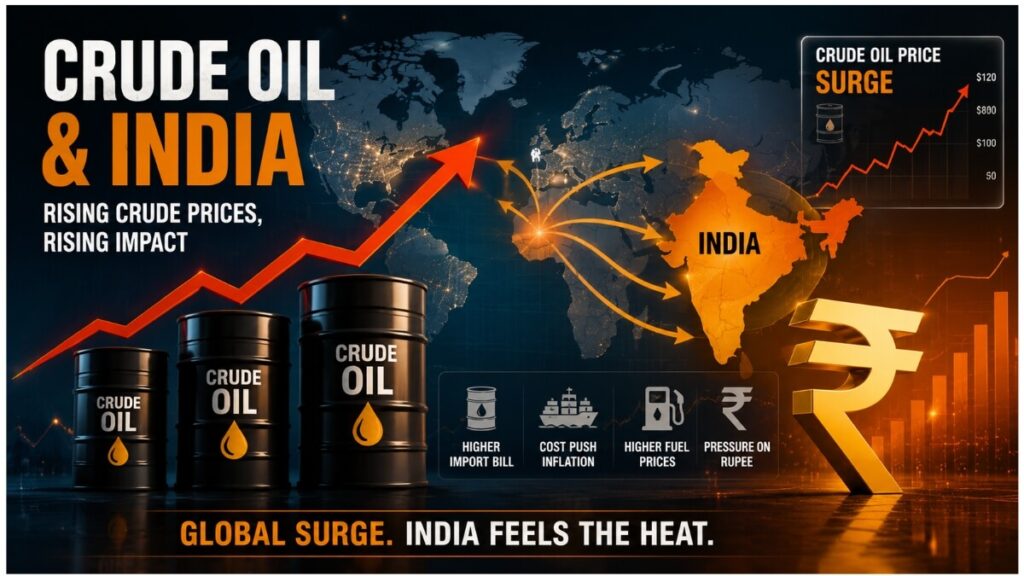
1. Crude Oil Price Surge Due to West Asia Crisis
India imports nearly 96% of its crude oil requirement. When the West Asia conflict escalated in early 2026, global crude oil prices surged from approximately $69 per barrel in February 2026 to $113-114 per barrel within weeks — a jump of over 50%. This massive surge in international crude prices made it financially impossible for Indian oil companies to continue selling fuel at old prices.
2. Massive Losses by Oil Marketing Companies
State-owned oil companies were absorbing losses of approximately ₹100 per litre on diesel and ₹20 per litre on petrol at prevailing prices before the hike. These companies absorbed losses for nearly 11 weeks before the ₹3 per litre increase became financially unavoidable. The daily loss had reached an unprecedented ₹1,000 crore per day — totaling over ₹1 lakh crore in a single quarter.
3. Assembly Elections Were Over
Fuel prices had been held artificially steady through the entire assembly election period in Assam, Kerala, Tamil Nadu, and West Bengal. The hike came exactly 16 days after elections concluded — a pattern that has been observed in Indian fuel pricing policy before.
4. Only the Beginning
Many industry sources warn that the ₹3 per litre hike is only about one-tenth of the full correction actually needed. This means the petrol price hike effect on common man could intensify further if global crude prices remain elevated.
Petrol Price Hike Effect on Common Man — Direct Impact
The petrol price hike effect on common man is felt immediately at multiple levels of daily life. Here is a detailed breakdown:
1. Higher Daily Commute Cost
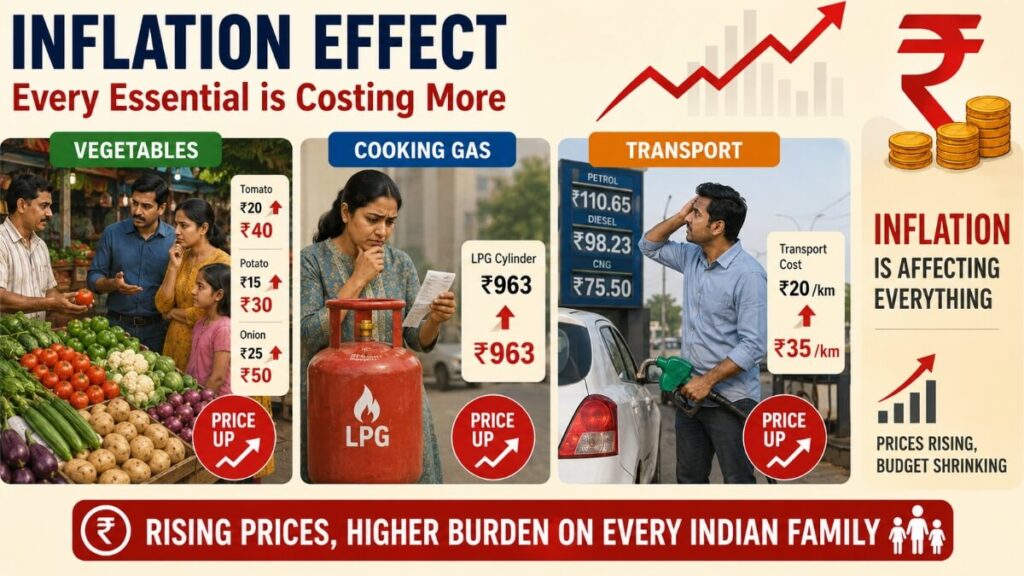
The most direct petrol price hike effect on common man is the increased cost of daily commuting. A person filling 5 litres of petrol daily will now spend ₹15 more per day — which adds up to ₹450 per month and ₹5,400 per year. For two-wheeler users, who form over 60% of fuel consumers in India, this is a significant addition to monthly expenses.
2. Auto and Cab Fares Going Up
The petrol price hike effect on common man extends beyond personal vehicle owners. Auto rickshaw and cab fares are directly linked to fuel prices. When petrol and diesel prices rise, transport operators pass on the cost to passengers through higher fares. Expect auto and cab fares to increase by 10-15% in the coming weeks across most Indian cities.
3. Grocery and Food Prices Rising
One of the most severe petrol price hike effects on common man is the indirect rise in food and grocery prices. Vegetables, fruits, dairy products, and packaged goods all depend on road transport for distribution. When diesel prices rise, freight and logistics costs increase immediately. These higher transport costs are directly passed on to consumers at retail markets. Expect grocery bills to rise by 5-10% over the next 2-3 months.
4. LPG and Cooking Gas Prices
The petrol price hike effect on common man also includes pressure on LPG cylinder prices. When crude oil prices rise globally, the price of LPG — which is a petroleum byproduct — also comes under upward pressure. Households that depend on cooking gas for daily meals will likely see further increases in LPG prices in the coming months.
5. School Fees and Transportation Costs
School buses and private transport services run on diesel. The petrol price hike effect on common man includes increased school transportation fees as operators raise charges to cover higher fuel costs. This affects middle-class families with school-going children disproportionately.
Petrol Price Hike Effect on Common Man — Indirect Economic Impact
Beyond direct household expenses, the petrol price hike effect on common man has broader economic consequences that affect everyone indirectly.
1. Rising Inflation
The Wholesale Price Index already hit a 42-month high of 8.3% in April 2026, driven by a 24.71% surge in fuel and power prices at the wholesale level. Economists estimate that even the ₹3 per litre hike will add approximately 15 basis points to Consumer Price Index inflation directly — but the indirect petrol price hike effect on common man through transport costs, logistics, food prices, and manufacturing inputs could push inflation significantly higher by July-August 2026.
2. Higher Manufacturing Costs
Industries that depend on fuel for production and transportation face higher operating costs when petrol and diesel prices rise. These increased manufacturing costs are eventually passed on to consumers in the form of higher product prices. The petrol price hike effect on common man therefore includes a gradual increase in prices of electronics, appliances, clothes, and other manufactured goods.
3. Impact on Agriculture
Farmers use diesel extensively for irrigation pumps, tractors, and transport of produce. The petrol price hike effect on common man in rural areas is particularly severe because diesel price increases directly raise the cost of farming. Higher farming costs lead to higher food prices — which again circles back to urban consumers facing more expensive grocery bills.
4. Reduced Disposable Income
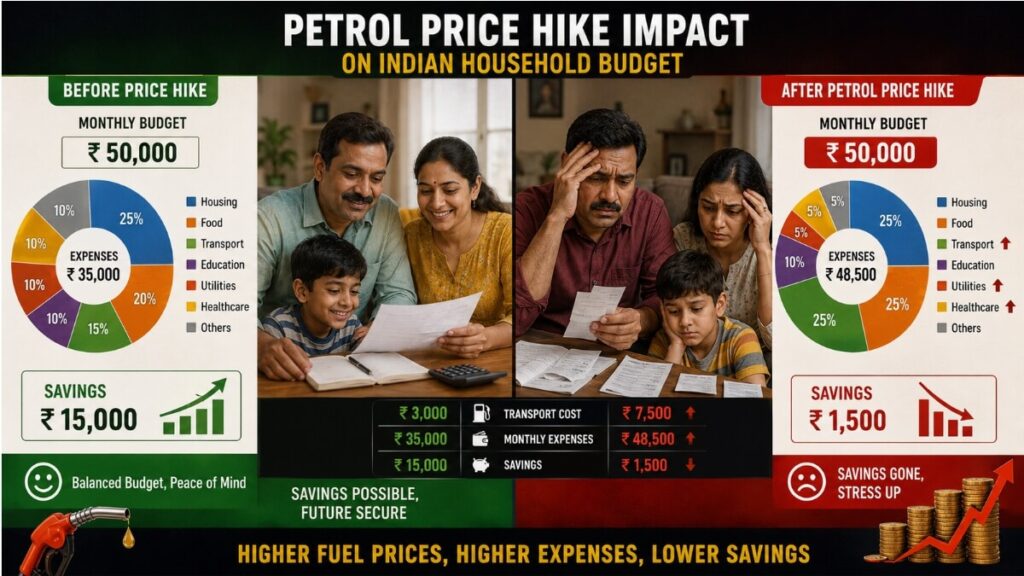
Every rupee spent extra on fuel is a rupee less available for savings, investments, or other expenses. The petrol price hike effect on common man results in reduced household disposable income. For a family spending ₹3,000-5,000 on fuel monthly, a price hike means ₹300-500 less every month for savings or discretionary spending.
5. Pressure on Small Businesses
Small business owners — delivery agents, truck drivers, small shop owners, and street vendors — are among the most vulnerable to petrol price hike effect on common man. Their operational costs rise immediately while their ability to pass on costs to customers is limited by competition. This squeezes their already thin profit margins further.
City-Wise Petrol Diesel Prices After May 2026 Hike
| City | Petrol Price | Diesel Price |
| Delhi | ₹97.77 | ₹90.67 |
| Mumbai | ₹106.68 | ₹94.58 |
| Kolkata | ₹108.74 | ₹95.22 |
| Chennai | ₹103.67 | ₹93.40 |
| Bangalore | ₹102.86 | ₹88.94 |
Price differences across cities are driven by state-level taxes and VAT, which vary significantly from state to state.
For the latest official petrol and diesel price data across all Indian cities, visit the Petroleum Planning and Analysis Cell (PPAC) — the official Government of India source for fuel price information.
How to Reduce Petrol Price Hike Effect on Common Man — Smart Money Tips
While you cannot control fuel prices, you can take smart steps to reduce the petrol price hike effect on common man on your personal finances:
Rising fuel prices directly impact your monthly savings. If you are also worried about your investments during this economic uncertainty, read our complete guide on Should You Stop or Continue SIP Investments to protect your financial future.
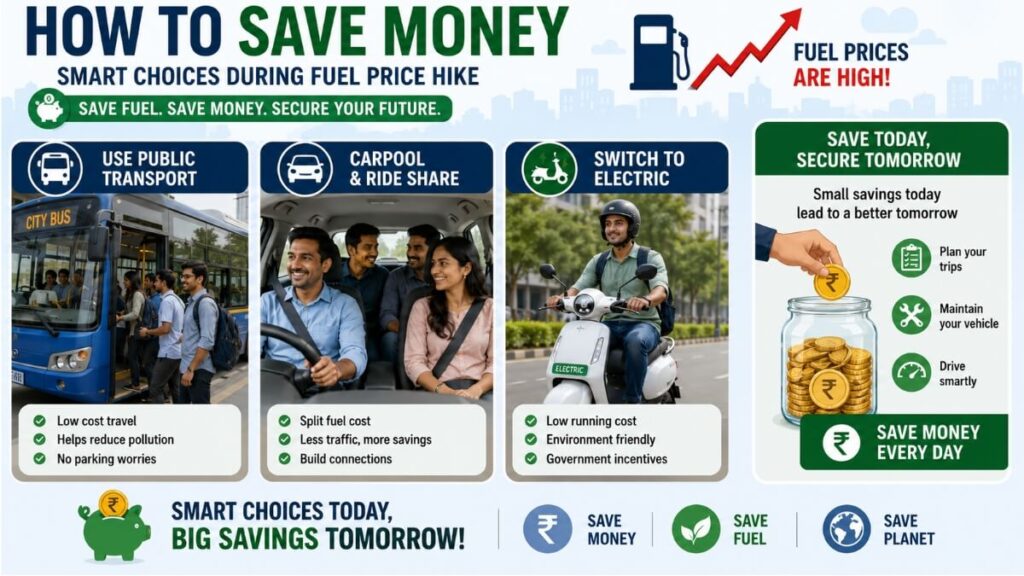
1. Switch to Public Transport Where Possible
Using metro, bus, or local trains for daily commuting can significantly reduce your personal fuel consumption. Even using public transport 2-3 days a week can reduce your monthly fuel bill by 30-40%, directly reducing the petrol price hike effect on common man on your household budget.
2. Practice Carpooling
Sharing rides with colleagues or neighbors going in the same direction is one of the smartest ways to reduce the petrol price hike effect on common man. Splitting fuel costs among 3-4 people can reduce individual fuel expenses by 60-70% immediately.
3. Consider Electric Vehicles
If you are planning to buy a new vehicle, this is the right time to seriously consider an electric scooter or electric car. EVs have zero fuel costs and significantly lower running costs compared to petrol vehicles. Government subsidies under FAME scheme make EV purchases more affordable than ever.
4. Maintain Your Vehicle Properly
A well-maintained vehicle gives better fuel efficiency. Regular tyre pressure checks, timely engine servicing, air filter cleaning, and using the recommended engine oil can improve your vehicle’s mileage by 10-15%, directly reducing the petrol price hike effect on common man on your fuel bills.
5. Plan Trips Efficiently
Combining multiple errands into a single trip, avoiding rush hour traffic, and using GPS navigation to take the shortest route can meaningfully reduce fuel consumption. These simple habits can reduce your monthly fuel expense by 15-20% without any additional cost.
6. Review and Adjust Your Monthly Budget
The petrol price hike effect on common man requires every household to review and adjust their monthly budget. Identify discretionary expenses that can be temporarily reduced to offset the higher fuel and grocery costs. Building a revised budget that accounts for higher transport and food costs will protect your savings rate.
Will Petrol Diesel Prices Increase Further in 2026?
This is the most critical question regarding the petrol price hike effect on common man going forward. The answer depends on global crude oil prices, which in turn depend on the West Asia conflict situation and OPEC production decisions.
Industry sources have warned that the ₹3 per litre increase is only about one-tenth of the full correction needed. If global crude prices remain above $100 per barrel, oil marketing companies will continue facing losses even after the May 2026 hike, making further price increases likely.
The RBI has projected inflation to rise toward 4.6% for FY27, primarily driven by crude oil prices. This means the petrol price hike effect on common man is likely to continue through 2026 unless global crude prices moderate significantly.
Financial experts recommend building an emergency fund of at least 6 months of expenses to cushion against such economic shocks. Read our complete guide on TDS on Rent FY 2026-27 to understand how to manage your overall tax and financial planning better this year.
Government Response to Petrol Price Hike Effect on Common Man
The BJP government defended the ₹3 per litre hike, arguing that India recorded the lowest increase in petrol and diesel prices among major economies despite the global crude surge. According to government data, India’s retail fuel price rise remained among the smallest increases compared to other major economies during the February to May 2026 period.
However, Opposition parties have criticized the timing and magnitude of the hike, with Congress leader Jairam Ramesh calling it “inevitable but politically timed” and warning that it would lead to further inflation projected close to 6% for this financial year.
The government has not announced any relief measures specifically targeting the petrol price hike effect on common man so far, though analysts expect possible excise duty cuts if global crude prices remain elevated for an extended period.
Frequently Asked Questions (FAQs)
Q1. What is the petrol price hike effect on common man in daily life?
The petrol price hike effect on common man includes higher commuting costs, increased auto and cab fares, rising grocery and food prices, higher LPG costs, and increased school transport fees. The ₹3 per litre hike translates to approximately ₹450-500 extra monthly expense for an average household.
Q2. Why did petrol diesel prices increase in May 2026?
Petrol diesel prices increased in May 2026 because global crude oil prices surged from $69 to $113-114 per barrel due to the West Asia conflict. State-owned oil companies were absorbing losses of ₹1,000 crore per day before the hike became unavoidable.
Q3. How does petrol price hike effect on common man impact food prices?
The petrol price hike effect on common man impacts food prices through higher transportation and logistics costs. When diesel prices rise, freight costs increase and these are passed on to consumers as higher vegetable, fruit, and grocery prices within 2-3 months.
Q4. Will petrol prices increase further in 2026?
The petrol price hike effect on common man may worsen further in 2026 if global crude prices remain elevated above $100 per barrel. Industry sources warn the May 2026 hike is only about one-tenth of the full correction actually needed.
Q5. How can common man reduce petrol price hike effect on monthly budget?
To reduce petrol price hike effect on common man on monthly budget — use public transport, practice carpooling, maintain vehicle properly for better mileage, plan trips efficiently, and consider switching to electric vehicles for long-term savings.
Q6. What is the petrol price hike effect on common man in rural areas?
The petrol price hike effect on common man in rural areas is particularly severe because farmers use diesel for irrigation, tractors, and transport. Higher diesel costs directly increase farming expenses, which leads to higher food prices affecting both rural and urban consumers.
Key Takeaways
The petrol price hike effect on common man goes far beyond just higher pump prices — it impacts groceries, transport, food, and overall inflation.
Oil companies were losing ₹1,000 crore daily before the May 2026 hike — making the increase unavoidable.
Further petrol price increases in 2026 are possible if global crude stays above $100 per barrel.
Smart budgeting, carpooling, public transport use, and vehicle maintenance can significantly reduce petrol price hike effect on common man on personal finances.
Every household should review and revise their monthly budget immediately to account for higher fuel and food costs.
Conclusion
The petrol price hike effect on common man in 2026 is real, widespread, and likely to intensify before it eases. From higher commuting costs to rising grocery bills and increased inflation, every Indian household is feeling the pressure of this fuel price increase. Understanding the petrol price hike effect on common man is the first step toward managing your personal finances smartly during this challenging period.
The key is not to panic but to plan. Use public transport, carpool, maintain your vehicle, and revisit your monthly budget. Build an emergency fund, reduce unnecessary expenses, and stay informed about further price changes. Smart financial planning today will help you absorb the petrol price hike effect on common man without derailing your long-term financial goals.
Disclaimer: This article is for educational purposes only. Fuel prices mentioned are as of May 2026 and may change. Please verify current prices at your local fuel station.
Pingback: SEBI Salary Mutual Fund Investment 2026: Best New Rule