
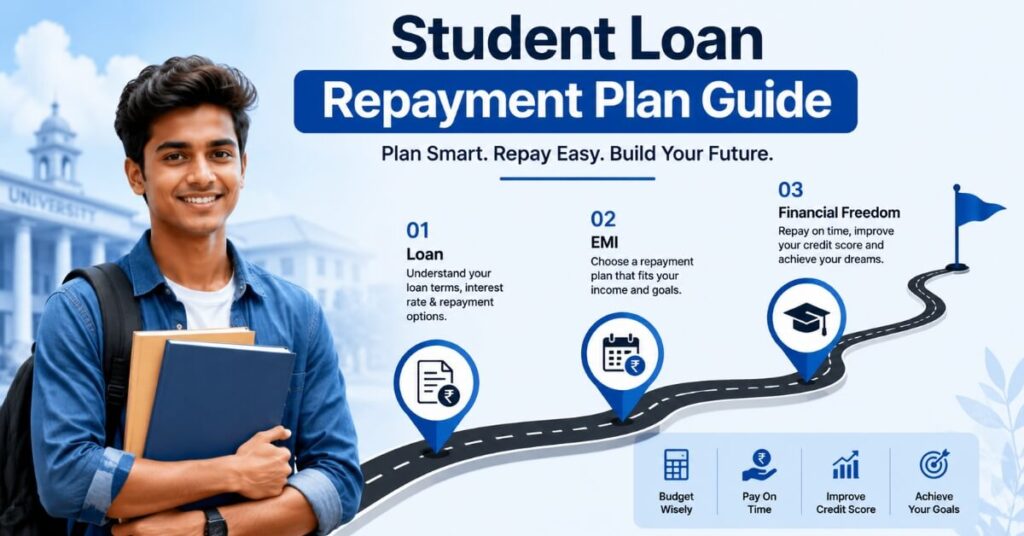
Managing education debt can feel overwhelming, and that is exactly why a proper Student Loan Repayment Plan Guide matters more today than ever before. Whether you are studying in India, planning to study abroad, or already repaying an education loan, understanding your options can save you thousands of rupees in interest and stress. This Student Loan Repayment Plan Guide breaks down every important step in simple language, so you can make confident financial decisions without feeling lost in banking jargon.
Education loans have become a common way for students and families to fund higher studies, both in India and abroad. But once the course ends, repayment begins, and many borrowers are unsure where to start. That is the core purpose of this Student Loan Repayment Plan Guide: to walk you through the entire repayment journey step by step, from understanding your loan terms to choosing the right repayment strategy for your income and goals.
Why You Need A Proper Student Loan Repayment Plan Guide
Most students take an education loan without fully understanding how repayment works. Interest often starts accumulating during the study period itself, even though monthly payments may not be required until after graduation. Without a clear Student Loan Repayment Plan Guide, borrowers can end up paying far more than expected simply because they did not plan ahead.
A good repayment plan does three things. First, it helps you understand exactly how much you owe, including principal and interest. Second, it helps you choose a repayment method that fits your income level. Third, it helps you avoid penalties, defaults, and unnecessary stress. This Student Loan Repayment Plan Guide is designed to cover all three areas in detail.
Step 1: Know Your Total Loan Amount And Interest Rate
The first step in any Student Loan Repayment Plan Guide is understanding exactly what you owe. Log into your bank’s net banking portal or loan servicing app to check your outstanding principal, applicable interest rate, and current EMI amount. Indian banks such as SBI, ICICI, and Bank of Baroda typically offer education loans with interest rates ranging between 8 percent and 12 percent, depending on the course, collateral, and credit profile.
Knowing your numbers is the foundation of any repayment plan. Without this clarity, it becomes difficult to compare repayment options or calculate how much you can realistically save through prepayment or refinancing. This is why the first section of every Student Loan Repayment Plan Guide always starts with a full loan audit.
Step 2: Understand The Moratorium Period
Most education loans in India come with a moratorium period, which is the course duration plus an additional six months to one year after completing studies. During this time, some banks charge simple interest only, while others may allow a complete payment holiday. Understanding how your bank structures this moratorium is a critical part of any Student Loan Repayment Plan Guide, because paying even a small amount during this period can significantly reduce your total interest burden later.
If you can afford to pay simple interest during your moratorium period, doing so is one of the smartest financial decisions you can make. It prevents interest from compounding into your principal once regular EMIs begin, which is a detail many borrowers overlook.
Step 3: Choose The Right Repayment Plan For Your Income
Not every borrower has the same income level, and that is why repayment plans are not one-size-fits-all. A thoughtful Student Loan Repayment Plan Guide should always present multiple options so you can pick what suits your situation best.
Standard Repayment Plan: This involves fixed EMIs over a set tenure, usually between five and fifteen years. It is simple and predictable, making it a popular choice for borrowers with stable income.
Step-Up Repayment Plan: Some lenders allow smaller EMIs in the early years, gradually increasing as your income grows. This works well for fresh graduates who expect salary hikes over time.
Income-Based Repayment: While more common internationally, some Indian NBFCs and private lenders are beginning to offer income-linked repayment structures where your EMI is a percentage of your monthly earnings.
Choosing the right structure is one of the most important decisions covered in this Student Loan Repayment Plan Guide, because the wrong choice can either strain your monthly budget or extend your loan tenure unnecessarily, increasing total interest paid.
Step 4: Set Up Automatic Payments
One of the simplest tips in any Student Loan Repayment Plan Guide is to automate your EMI payments. Missing even one payment can hurt your credit score and may trigger penalty charges. Setting up an auto-debit mandate from your salary account ensures you never miss a due date, and some lenders even offer a small interest rate discount for enrolling in automatic payments.
Step 5: Consider Prepayment When Possible
If you receive a bonus, increment, or any lump sum amount, using it to prepay part of your education loan can significantly reduce your total interest outflow. Most Indian banks do not charge prepayment penalties on education loans with floating interest rates, which makes this one of the most effective strategies in any Student Loan Repayment Plan Guide.
Even a partial prepayment early in the loan tenure can shave months, sometimes years, off your total repayment period. This is because interest is calculated on the outstanding principal, so reducing the principal early has a compounding positive effect over time.
Step 6: Track Your Credit Score Throughout Repayment
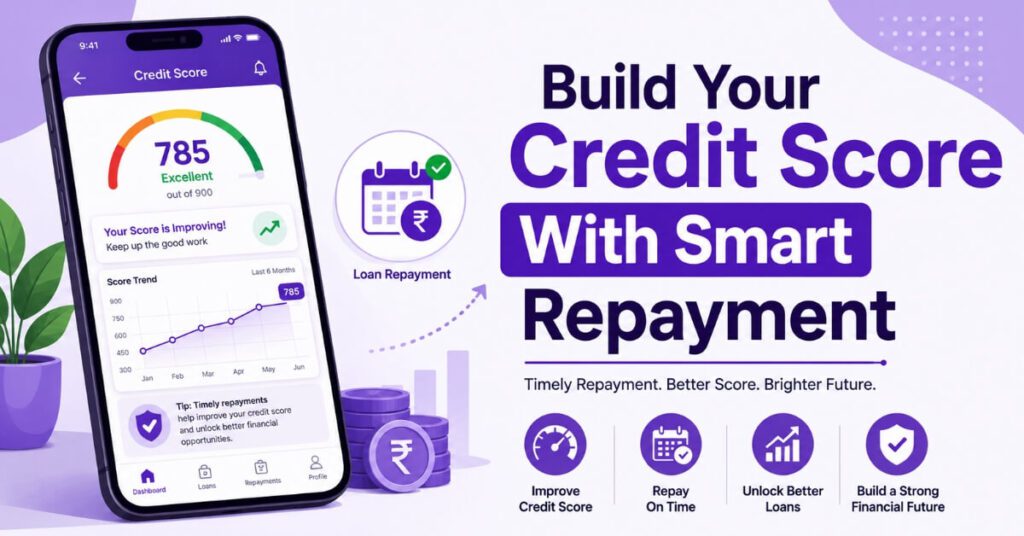
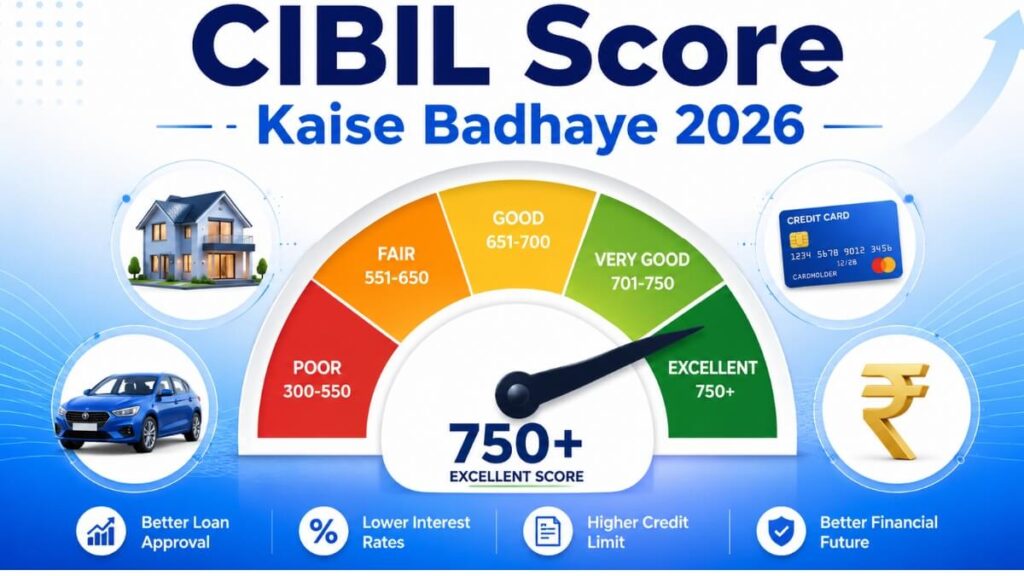
Your education loan repayment history directly impacts your credit score, which affects your ability to get future loans such as a home loan or car loan. A responsible Student Loan Repayment Plan Guide always includes credit score monitoring as an ongoing habit, not a one-time task. Checking your CIBIL score every few months helps you catch errors early and stay motivated as you see your score improve with consistent, on-time payments.
Step 7: Explore Tax Benefits Under Section 80E
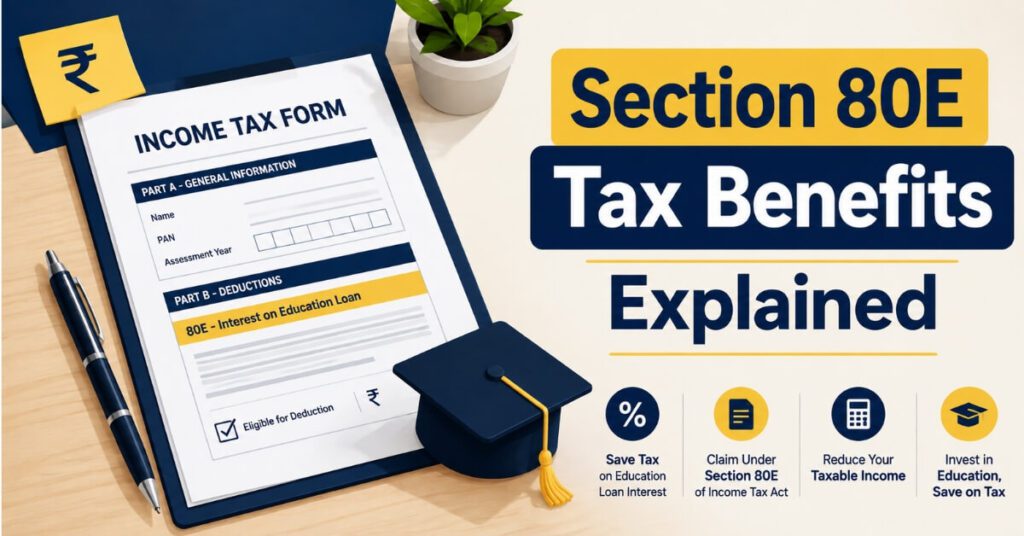
Many borrowers forget that education loan interest payments qualify for tax deduction under Section 80E of the Income Tax Act. There is no upper limit on the deduction amount, and it can be claimed for up to eight years from the year repayment begins. Including this tax benefit in your Student Loan Repayment Plan Guide can meaningfully reduce your effective interest cost, making repayment more manageable each financial year.
Before finalizing your repayment strategy, it also helps to revisit your original loan choice. If you are still comparing your options or want to understand the fundamental cost differences between loan types, our detailed comparison on Education Loan vs Personal Loan in India explains which option works better for different financial situations.
Common Mistakes To Avoid During Repayment
Even with a solid Student Loan Repayment Plan Guide in hand, borrowers often make avoidable mistakes. Ignoring the moratorium interest, ignoring communication from the lender, switching jobs without informing the bank, and delaying EMI payments due to poor budgeting are among the most common issues. Staying organized and reviewing your loan statement every quarter helps you stay ahead of these problems.
Another mistake is assuming that all lenders offer the same terms. Comparing multiple banks before finalizing your repayment structure, and even considering a balance transfer to a lender offering a lower interest rate, can be a smart move covered in any thorough Student Loan Repayment Plan Guide.
How Global Trends Are Shaping Repayment Conversations
Recent global news about student loan forgiveness programs, defaulted borrower numbers, and policy changes in countries like the United States has brought renewed attention to education debt management everywhere. While Indian borrowers are not directly affected by foreign policy changes, the growing global conversation highlights just how important it is to have a personal Student Loan Repayment Plan Guide that keeps you financially secure regardless of external economic shifts.
For readers who are also exploring safer alternative savings and investment options alongside their loan repayment journey, comparing schemes like the Senior Citizens Savings Scheme against a Bank Fixed Deposit can offer useful context on balancing debt repayment with disciplined saving. You can read more in our detailed guide on SCSS vs Bank FD 2026 for a broader perspective on structured financial planning.
Building A Personal Repayment Budget
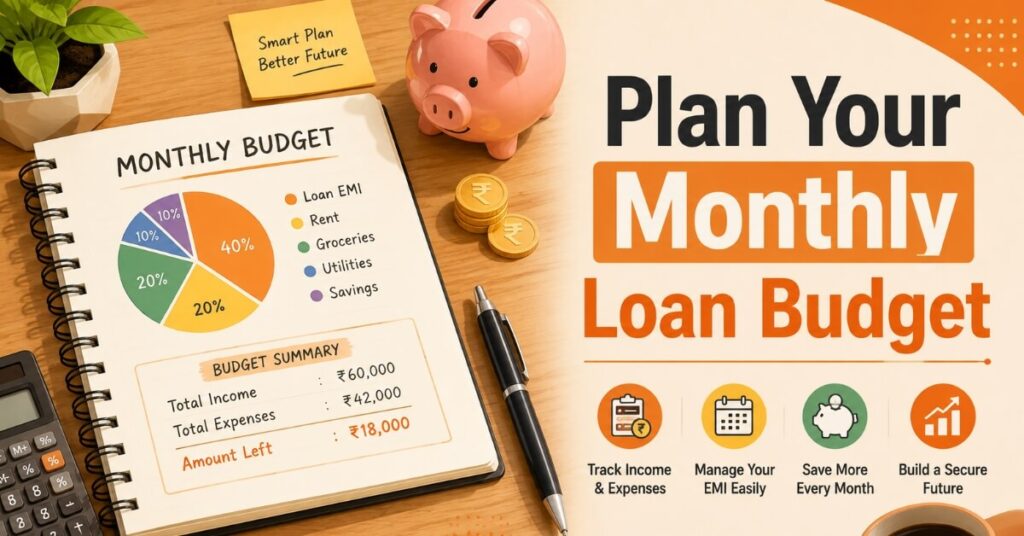
A practical Student Loan Repayment Plan Guide is incomplete without a monthly budget. Start by listing your take-home income, followed by fixed expenses such as rent, groceries, and utilities. Next, allocate your EMI amount as a non-negotiable expense, ideally not exceeding 30 to 40 percent of your monthly income. Whatever remains can be split between savings, emergency funds, and discretionary spending.
This simple budgeting exercise, when followed consistently, prevents the financial strain that often leads to missed payments or the need for high-interest personal loans to cover EMI shortfalls. It is one of the most underrated pieces of advice in any Student Loan Repayment Plan Guide, yet one of the most effective.
Comparing Repayment Plans: A Quick Reference Table
To make decisions easier, here is a simple comparison of the repayment structures discussed in this Student Loan Repayment Plan Guide.
Standard Repayment: Fixed EMI, predictable budgeting, best for stable salaried income, typically five to fifteen years tenure.
Step-Up Repayment: Lower EMI initially, gradually increasing, best suited for fresh graduates expecting steady salary growth over the first few years.
Prepayment Strategy: Not a separate plan but a technique layered on top of any repayment plan, best used whenever surplus funds like bonuses or increments become available.
Balance Transfer Option: Switching to a lender offering a lower interest rate on the remaining principal, useful when market rates drop significantly after loan disbursement.
Reviewing this comparison periodically, ideally once every year, keeps your repayment strategy relevant as your income, expenses, and financial goals evolve over time.
The Role Of Emergency Funds During Loan Repayment
An often overlooked part of any Student Loan Repayment Plan Guide is maintaining a small emergency fund even while repaying debt. Life events such as job loss, medical emergencies, or unexpected expenses can disrupt your EMI schedule if you have no buffer savings. Financial experts generally recommend keeping at least three to six months of essential expenses in a liquid, easily accessible account, separate from your regular savings or investment goals.
Building this buffer does not mean delaying your loan repayment. Instead, it means allocating a small, consistent portion of your income toward an emergency fund alongside your EMI payments, so that a single unexpected event does not derail your entire repayment plan.
Understanding EMI Calculation Basics
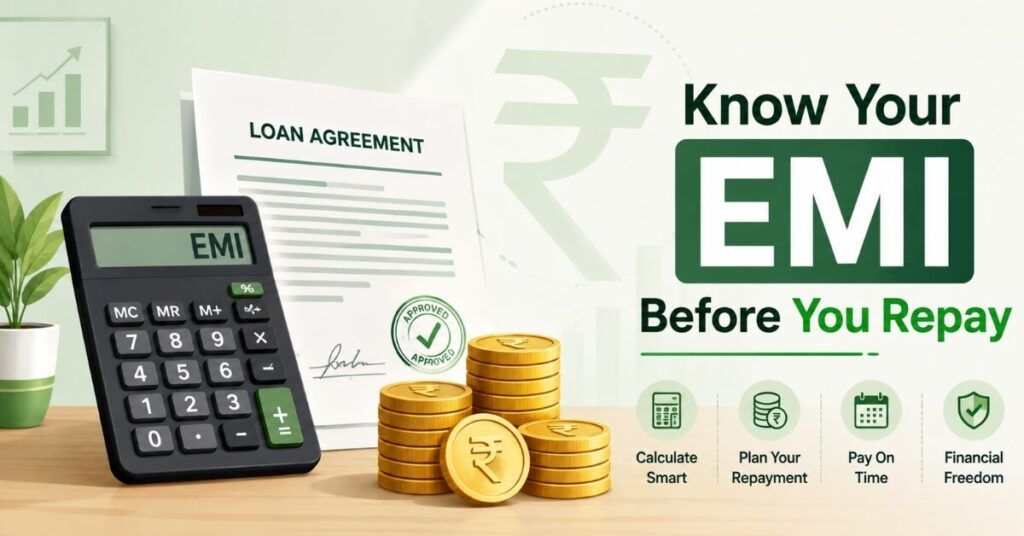
Many borrowers sign loan agreements without fully understanding how EMI amounts are calculated. In simple terms, your monthly installment is derived from three factors: the principal amount borrowed, the applicable interest rate, and the total tenure chosen for repayment. A longer tenure reduces your monthly EMI but increases the total interest paid over the life of the loan, while a shorter tenure does the opposite.
Using an online EMI calculator before finalizing your repayment tenure can help you visualize different scenarios. Adjusting the tenure by even one or two years can change your total interest outgo significantly, so it is worth spending a few minutes comparing options before committing to a final structure.
Documents And Records You Should Keep Organized
Throughout your repayment journey, keeping certain documents organized will save you time and reduce stress. These include your original loan sanction letter, repayment schedule, interest certificates issued annually by your lender, EMI payment receipts, and any correspondence related to restructuring or rate changes. Interest certificates are particularly important because they are required when claiming tax deductions under Section 80E during income tax filing season.
Digital copies stored securely in cloud storage, along with physical copies in a dedicated folder, ensure you are never scrambling to find paperwork when it matters most, whether that is during a bank audit, a loan transfer request, or tax filing.
What To Do If You Are Struggling With Payments
If you find yourself unable to keep up with EMIs, contact your lender immediately rather than avoiding calls or letters. Most banks offer restructuring options, including extended tenure or temporary EMI reduction, for genuine financial hardship cases. According to guidance published by the official Federal Student Aid website, communication with your loan servicer is always the first recommended step when repayment becomes difficult, a principle that applies to borrowers everywhere, including India.
Ignoring the problem only leads to penalty charges, a damaged credit score, and increased stress. A responsible Student Loan Repayment Plan Guide always emphasizes early communication as the single most important action during financial difficulty.
Long-Term Benefits Of Following A Structured Repayment Plan
Borrowers who follow a structured Student Loan Repayment Plan Guide from the beginning of their loan tenure tend to finish repayment faster, pay less total interest, and maintain healthier credit scores. This financial discipline often carries forward into other areas of life, including better budgeting habits, stronger emergency funds, and more confident investment decisions once the loan is fully repaid.
Ultimately, education debt is an investment in your future earning potential. Managing it wisely through a clear Student Loan Repayment Plan Guide ensures that this investment pays off without becoming a long-term financial burden.
Patience and consistency matter far more than trying to rush repayment through unaffordable EMIs. Slow and steady progress, backed by regular reviews of your loan statement and periodic reassessment of your income and expenses, will always outperform a rushed approach that risks default. Treat repayment as a long-term financial habit rather than a short-term obligation, and the entire process becomes far less stressful over time.
Frequently Asked Questions
Q1.What is the best repayment plan for a student loan?
The best plan depends on your income stability. Borrowers with steady income often prefer the standard fixed EMI plan, while those expecting income growth may benefit from a step-up repayment structure.
Q2.Can I prepay my education loan without penalty?
Most Indian banks do not charge prepayment penalties on floating-rate education loans, making early repayment a smart way to reduce total interest.
Q3.Does education loan interest qualify for tax deduction?
Yes, under Section 80E of the Income Tax Act, the entire interest amount paid on an education loan is deductible for up to eight years, with no upper limit.
Q4.What happens if I miss an EMI payment?
Missing an EMI can lead to penalty charges and a drop in your credit score. Contact your lender immediately to discuss restructuring options if you anticipate difficulty paying.
Q5.How long is the moratorium period for education loans in India?
Typically, the moratorium period covers the course duration plus six months to one year after course completion, though this varies by lender.
Conclusion
A well-thought-out Student Loan Repayment Plan Guide can make the difference between years of financial stress and a smooth, manageable repayment journey. By understanding your loan terms, choosing the right repayment structure, automating payments, using prepayment opportunities wisely, and claiming eligible tax benefits, you can repay your education loan efficiently while staying financially secure. Start applying the steps in this Student Loan Repayment Plan Guide today, and take control of your education debt with confidence.
Disclaimer
This article is for informational and educational purposes only and should not be considered professional financial or legal advice. Interest rates, tax benefits, and repayment terms mentioned here are subject to change and may vary by lender and individual circumstances. Please consult a certified financial advisor or your loan provider before making any financial decisions.

Pingback: ITR Filing Mistakes To Avoid 2026: 7 Costly Errors