
Introduction
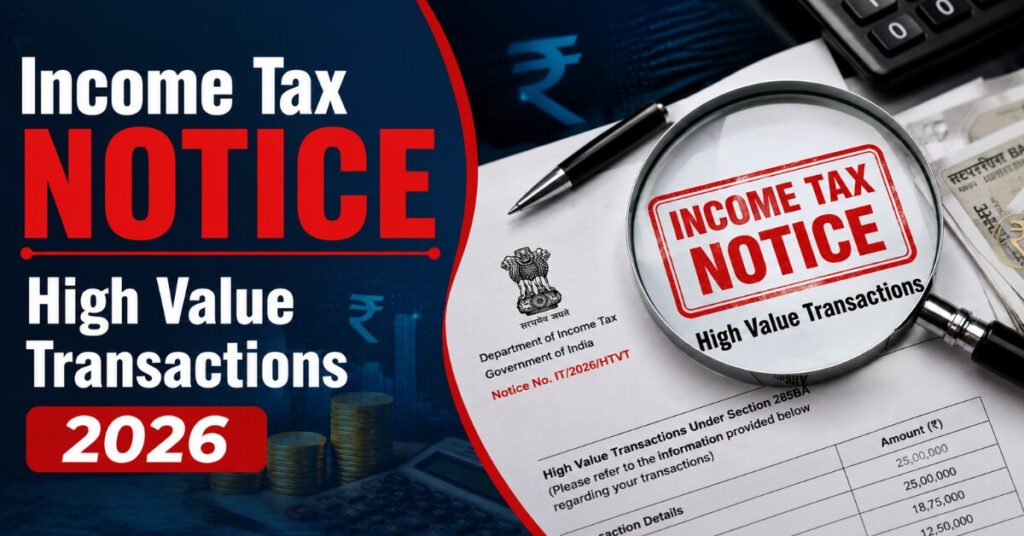
Every year, thousands of Indian taxpayers get a scare when they hear about an Income Tax Notice High Value Transactions case in the news or among friends. Whether it is a large cash deposit, a big UPI transfer, or a property purchase, many people start wondering if their own bank activity could trigger a notice from the Income Tax Department. In 2026, with digital payments growing rapidly across India, this concern has become even more common among salaried employees, business owners, and freelancers alike.
The truth is that an Income Tax Notice High Value Transactions situation does not arise simply because you made a big transaction. It arises when your reported income does not match the financial activity visible to the department through banks, mutual fund houses, registrars, and other reporting entities. Understanding exactly how this system works can save you from unnecessary stress and help you stay fully compliant.
In this complete guide, we will break down what counts as a high value transaction, why an Income Tax Notice High Value Transactions alert gets issued, how the Annual Information Statement (AIS) and Statement of Financial Transactions (SFT) work, and what steps you should take if you ever receive such a notice. By the end of this article, you will clearly understand how an Income Tax Notice High Value Transactions case is triggered and how to avoid it altogether.
What Exactly Is a High Value Transaction?
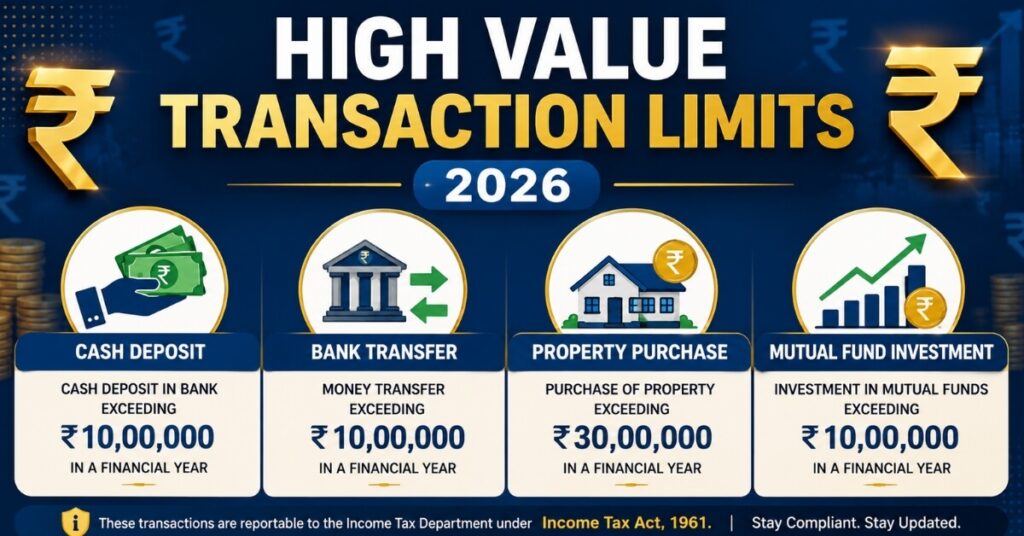
A high value transaction is any financial activity that crosses a specific threshold set by the Income Tax Department. These thresholds exist so that the government can track significant movements of money and match them against the income declared in your Income Tax Return (ITR). When there is a mismatch, the possibility of an Income Tax Notice High Value Transactions case increases significantly.
Common examples of high value transactions monitored by the department include:
Cash deposits exceeding Rs. 10 lakh in a savings account during a financial year
Cash deposits or withdrawals exceeding Rs. 50 lakh in a current account
Credit card bill payments exceeding Rs. 1 lakh in cash or Rs. 10 lakh through other modes
Purchase or sale of immovable property valued at Rs. 30 lakh or more
Investment in mutual funds, shares, bonds, or debentures exceeding Rs. 10 lakh
Fixed deposits totaling Rs. 10 lakh or more in a financial year
Foreign currency sale or purchase exceeding Rs. 10 lakh
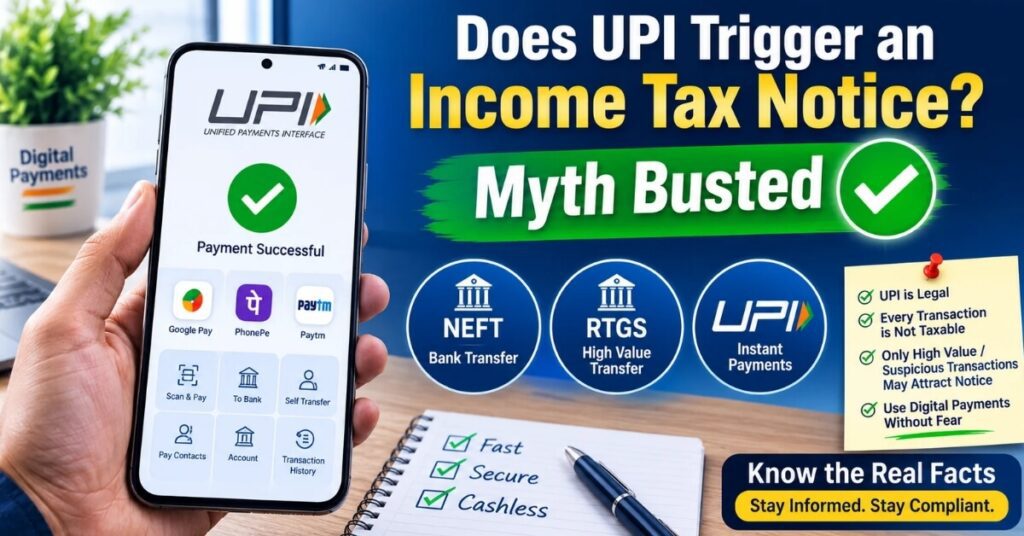
It is important to note that UPI, NEFT, RTGS, and IMPS are simply modes of transferring money. Using these digital payment methods does not, by itself, cause an Income Tax Notice High Value Transactions alert to be generated. What matters is the underlying source and purpose of the money, not the channel used to move it.
Why Does the Income Tax Department Track These Transactions?
The Income Tax Department relies on a reporting mechanism called the Statement of Financial Transactions, commonly known as SFT. Banks, mutual fund companies, property registrars, and other financial institutions are legally required to report specified high value transactions to the department. This data then flows into your Annual Information Statement, which you can view on the income tax portal.
An Income Tax Notice High Value Transactions case typically arises when the data reported through SFT does not align with the income you have declared in your ITR. For example, if your ITR shows an annual income of Rs. 6 lakh but your bank account shows cash deposits of Rs. 25 lakh during the same year, this discrepancy is likely to draw attention. The department is not trying to penalize legitimate financial activity; it is simply verifying that reported income and actual financial behavior are consistent.
Situations That Commonly Lead to a Notice
There are several specific scenarios where the risk of receiving an Income Tax Notice High Value Transactions communication becomes higher. Understanding these can help you stay prepared and avoid confusion later.
The first situation is a mismatch between declared income and bank transactions. If you show a modest salary in your ITR but your bank statements reflect frequent large deposits, the system may flag this automatically. The second situation involves unexplained cash deposits. Large cash deposits without a clear, traceable source are one of the most common triggers for scrutiny. The third situation is business income that goes unreported. Freelancers, consultants, and small business owners who receive payments through UPI or bank transfer but do not declare this income properly in their ITR are at higher risk.
The fourth situation involves property transactions. Buying or selling property above the specified threshold generates a report from the registrar, and if the declared source of funds does not match your income profile, questions may follow. The fifth situation is investment activity that outpaces income. If you invest heavily in mutual funds or fixed deposits while your declared income remains low, this inconsistency can also lead to an Income Tax Notice High Value Transactions inquiry.
Understanding AIS and How to Check It Yourself
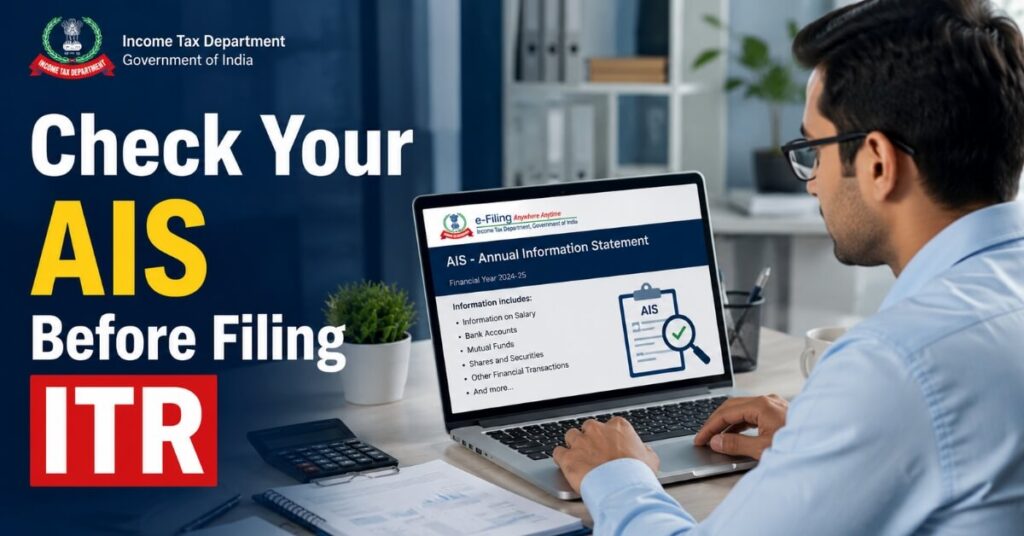
The Annual Information Statement is one of the most useful tools available to taxpayers today. It consolidates information about your financial transactions as reported by various entities, including banks, mutual fund houses, and stock exchanges. You can access your AIS by logging into the income tax e-filing portal and navigating to the AIS section under the “Services” tab.
Reviewing your AIS before filing your ITR is one of the smartest habits you can develop. If you spot any discrepancy between what is reported and your actual records, you can raise feedback directly on the portal. This proactive step significantly reduces the chances of facing an Income Tax Notice High Value Transactions situation later, because you get the opportunity to correct or clarify data before the department flags it independently. In fact, most taxpayers who regularly reconcile their AIS never end up receiving an Income Tax Notice High Value Transactions communication at all.
How to Respond If You Receive a Notice
If you do end up receiving an Income Tax Notice High Value Transactions communication, it is important not to panic. In most cases, the notice simply asks you to explain or provide documentation for a specific transaction. Here is how you should approach the response process.
First, read the Income Tax Notice High Value Transactions carefully and identify exactly which transaction or financial year it relates to. Second, gather all relevant supporting documents, such as bank statements, sale deeds, investment receipts, gift deeds, or loan agreements that explain the source of funds. Third, log in to the income tax e-filing portal and submit your response through the compliance portal within the deadline mentioned in the notice. Fourth, if the transaction relates to business income, ensure your books of accounts and invoices are organized and readily available. Fifth, if you are unsure about how to draft your explanation, consider consulting a chartered accountant, especially for complex cases involving multiple transactions.
Ignoring a notice is never advisable. Even if you believe the transaction is completely legitimate, failing to respond within the given timeframe can lead to further complications, including penalty proceedings or a best judgment assessment by the assessing officer.
Documents You Should Always Keep Ready
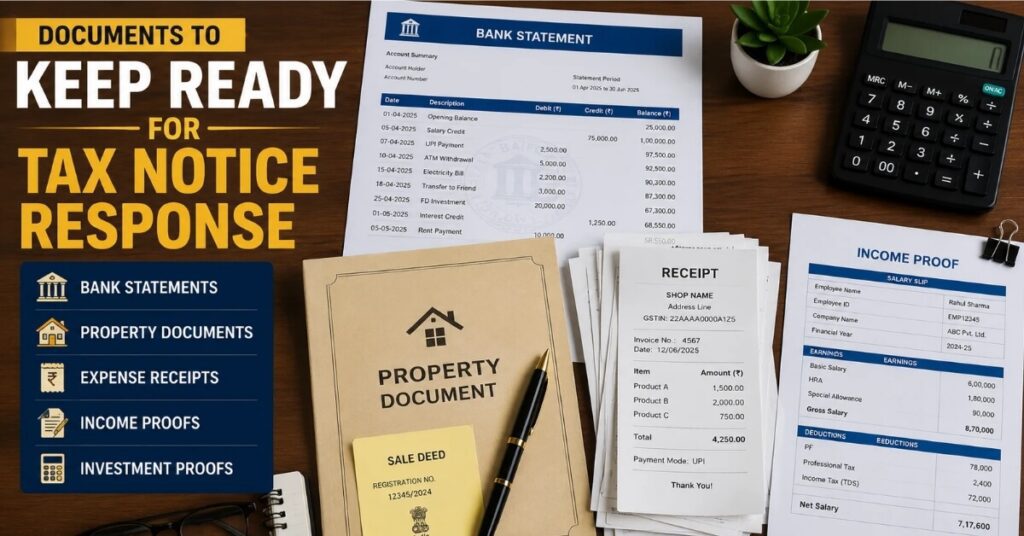
Being prepared in advance is the best way to avoid stress related to an Income Tax Notice High Value Transactions case. Maintain organized records of the following documents throughout the year: bank statements for all accounts, proof of source for any large cash deposits, sale and purchase deeds for property transactions, gift deeds if you have received money as a gift from relatives, loan agreements if funds were borrowed, salary slips and Form 16 for salaried individuals, and profit and loss statements along with invoices for business owners and freelancers.
Keeping these records organized not only helps if you ever need to respond to a notice, it also makes your annual ITR filing process smoother and more accurate, and it significantly lowers the odds of ever facing an Income Tax Notice High Value Transactions query in the first place.
Common Mistakes People Make
Many taxpayers unknowingly increase their risk of facing an Income Tax Notice High Value Transactions situation due to a few avoidable mistakes. One common mistake is mixing personal and business income in the same bank account without clear documentation. Another is depositing cash gifts from relatives without maintaining a gift deed or written acknowledgment. A third mistake is underreporting freelance or side income received through UPI, assuming that small individual transactions will not be noticed collectively.
Some people also delay their ITR filing significantly beyond the due date, which can complicate matters further if a query arises. Filing your return well before the deadline gives you more time to review your AIS and correct any discrepancies. For guidance on filing dates and extensions, you can refer to our detailed article on ITR filing deadline extension 2026, which explains the latest updates on due dates for the current assessment year.
The Difference Between Cash Transactions and High Value Transactions
It is worth clarifying that cash transactions are only one category within the broader umbrella of high value transactions. While cash deposits and withdrawals above certain limits are closely monitored, the concept of high value transactions also includes non-cash activities like large mutual fund investments, property deals, and credit card payments. If you specifically want to understand the rules around cash transaction limits and penalties, our guide on cash transaction limit income tax rules covers this topic in detail, including the specific thresholds and compliance requirements you need to be aware of.
Understanding this distinction is important because many taxpayers assume that avoiding cash altogether protects them from any scrutiny. In reality, an Income Tax Notice High Value Transactions alert can be triggered by digital transactions just as easily if the income-transaction mismatch is significant enough.
Real Examples of How an Income Tax Notice High Value Transactions Case Unfolds
To understand this topic better, it helps to look at a few realistic examples. Consider a salaried employee who declares an annual income of Rs. 8 lakh but deposits Rs. 20 lakh in cash into their savings account over the year, claiming it came from family savings kept at home. Without documentation proving the source, this pattern is a classic trigger for an Income Tax Notice High Value Transactions inquiry, and the individual would need to provide credible evidence, such as old bank withdrawal records or a written family declaration, to satisfy the assessing officer.
Now consider a freelance graphic designer who receives Rs. 15 lakh through UPI payments from various clients over the year but files an ITR showing only Rs. 4 lakh in income. Even though every transaction was digital and traceable, the mismatch between reported income and actual receipts can still result in an Income Tax Notice High Value Transactions query, because the department cross-verifies UPI-linked bank data with ITR filings.
A third example involves a small business owner who purchases a property worth Rs. 45 lakh in cash from accumulated business profits that were never fully declared. In this case, the registrar’s SFT report on the property purchase, combined with the mismatch in declared business income, creates a strong likelihood of scrutiny. These examples highlight that the trigger is rarely the transaction itself, but almost always the gap between what is declared and what is verifiable.
Penalties and Consequences of Non-Compliance
While receiving an Income Tax Notice High Value Transactions communication does not automatically mean you will be penalized, failing to respond appropriately can lead to serious consequences. If the assessing officer is not satisfied with your explanation, the unexplained amount may be added to your income under provisions such as Section 68 or Section 69 of the Income Tax Act, which deal with unexplained cash credits and investments. This added income can be taxed at a significantly higher rate under Section 115BBE, along with applicable penalties.
Additionally, repeated non-compliance or failure to respond to notices within the stipulated timeframe can result in a best judgment assessment, where the department estimates your income based on available data, often to your disadvantage. This is precisely why taking any Income Tax Notice High Value Transactions communication seriously, and responding within the deadline with proper documentation, is so important for every taxpayer.
Tips to Stay Safe and Compliant
Avoiding an Income Tax Notice High Value Transactions situation altogether is possible, and staying on the right side of tax compliance does not require complicated strategies. It simply requires consistency and honesty in your financial reporting. Always declare your true income in your ITR, including income from all sources such as freelance work, rental income, and capital gains. Avoid large unexplained cash transactions wherever possible, and if you must deal in cash for a legitimate reason, keep clear documentation.
Review your AIS every year before filing your return, and reconcile it with your own financial records. If you notice any transaction reported that does not belong to you or seems incorrect, raise feedback immediately through the portal rather than ignoring it. Maintain separate accounts for personal and business transactions if you run a business or work as a freelancer, as this makes it far easier to explain your financial activity if questioned.
Finally, remember that receiving communication about high value transactions does not automatically mean you have done something wrong. The Income Tax Department uses this system primarily to verify consistency, not to penalize legitimate financial growth. Being transparent and organized is your best protection against any future Income Tax Notice High Value Transactions concern.
For official and updated information on reporting requirements and thresholds, you can visit the Income Tax Department’s official website at incometax.gov.in, where the department publishes detailed guidance on SFT reporting and compliance procedures.
Frequently Asked Questions
Q1. Can I get an Income Tax Notice High Value Transactions alert just for using UPI frequently?
No, simply using UPI, NEFT, RTGS, or IMPS does not trigger a notice. These are only payment modes. A notice is more likely when the total value of transactions does not match your declared income.
Q2. What is the cash deposit limit that can lead to a notice?
Cash deposits exceeding Rs. 10 lakh in a savings account, or Rs. 50 lakh in a current account, during a financial year are reported under SFT and can increase the likelihood of scrutiny if they do not match declared income.
Q3. How can I check if my transactions have been reported to the Income Tax Department?
You can log in to the income tax e-filing portal and check your Annual Information Statement, which lists all transactions reported by banks, mutual funds, and other entities.
Q4. What should I do if I receive an Income Tax Notice High Value Transactions communication by mistake?
Respond through the compliance portal with the correct explanation and supporting documents, or raise feedback on the AIS if the transaction does not belong to you.
Q5. Does receiving such a notice always mean I will face a penalty?
No, in most cases the department is simply seeking clarification. Providing a clear, documented explanation usually resolves the matter without any penalty.
Q6. Are business owners and freelancers at higher risk of receiving such notices?
Yes, because their income can vary and often flows through digital modes, freelancers and business owners should be extra careful to declare all income accurately and maintain proper documentation.
Conclusion
An Income Tax Notice High Value Transactions case is nothing to fear as long as your financial reporting is honest and well documented. The key lies in understanding what counts as a high value transaction, regularly reviewing your Annual Information Statement, and keeping your income declarations consistent with your actual financial activity. By staying organized throughout the year and responding promptly if a query does arise, you can navigate the Indian tax system with confidence and avoid unnecessary stress.
Disclaimer
This article is for informational and educational purposes only and does not constitute professional tax or financial advice. Tax rules and thresholds are subject to change, and individual circumstances vary. Please consult a qualified chartered accountant or tax professional before making any financial or tax-related decisions.

Pingback: Why Is Crude Oil Price Increasing Today? 7 Reasons