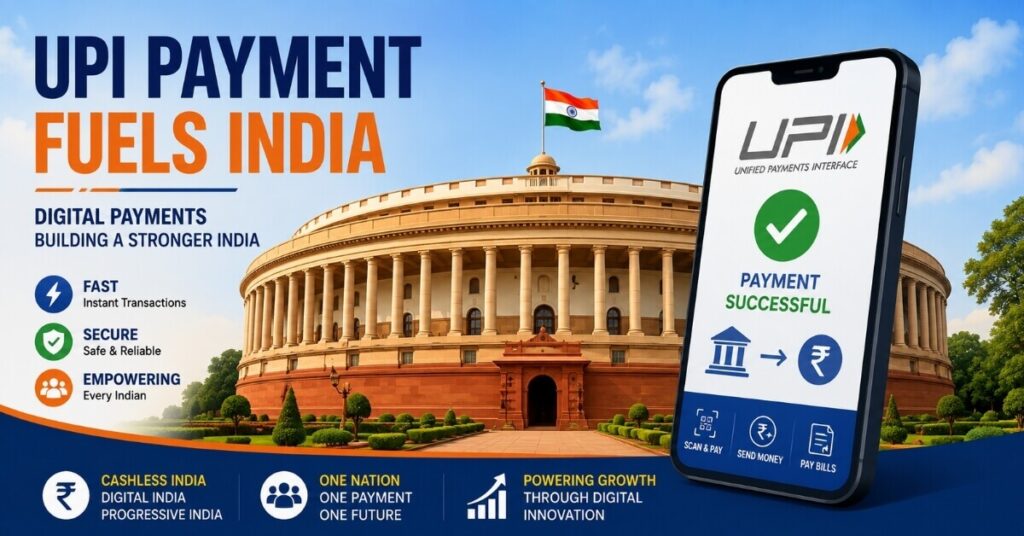
If you have been scrolling social media or reading the news this week, you have probably seen heated debates about UPI MDR charges. A new bill passed by the Lok Sabha has triggered fresh speculation about whether the free UPI payments Indians have enjoyed for years are about to change. In this article, we break down exactly what UPI MDR charges mean, why the government made this move, who will actually be affected, and what it means for the future of digital payments in India.
Let us clear the air right away: UPI MDR charges are not being imposed on regular users today. But the legal framework now exists for the government to introduce them selectively in the future, and that is exactly why this topic has become one of the most searched financial questions this week.
What Are UPI MDR Charges?
MDR stands for Merchant Discount Rate. It is essentially a small fee that banks, payment processors, and card networks charge merchants every time a digital transaction is processed. Historically, MDR has existed on credit cards and debit cards, but UPI and RuPay debit cards have enjoyed a zero-MDR policy since 2020, meaning no charges apply to either merchants or customers.
This proposed fee refers to the possibility of reintroducing a merchant charge specifically for UPI transactions. The recently passed Payment and Settlement Amendment Bill, 2007 gives the central government the legal option to impose UPI MDR charges on digital payments in the future, if it is deemed necessary. This is not an immediate rollout of fees, but rather a policy tool that the government can now use whenever the situation demands it.
Why Is the Government Considering UPI MDR Charges Now?
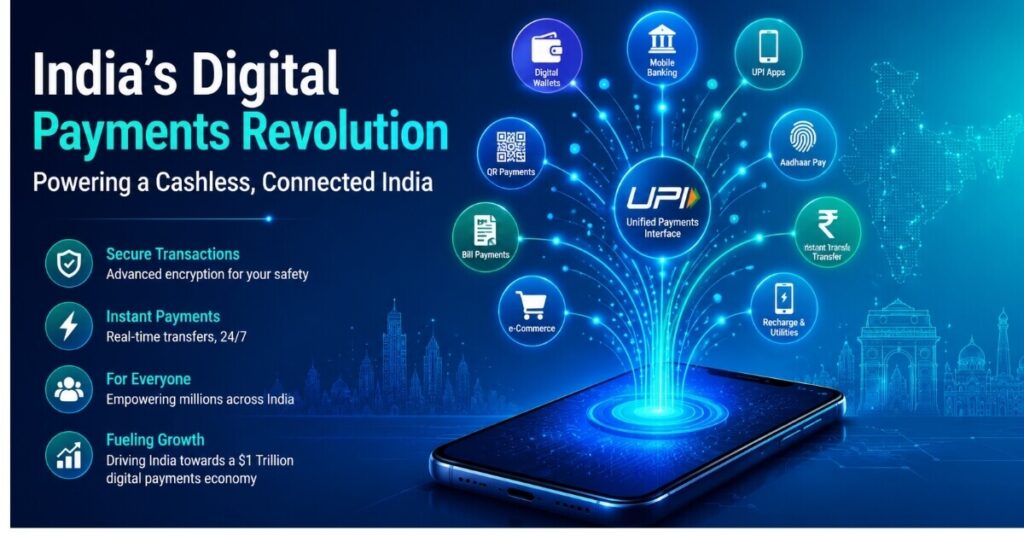
The zero-MDR policy has been a major reason behind UPI’s massive success story. Street vendors, small traders, and everyday consumers have been able to use digital payments without any additional financial burden. This helped India become one of the largest real-time payment markets in the world.
However, running the UPI ecosystem is not free for the institutions behind it. Banks, the National Payments Corporation of India, and fintech companies have had to make continuous investments in areas such as cybersecurity, fraud prevention, server infrastructure, dispute resolution, and network expansion. Without any such merchant fee, these institutions have had limited direct revenue streams from the very system they maintain and secure.
Finance Minister Nirmala Sitharaman has clarified in Parliament that UPI MDR charges, if ever applied, would be limited to merchants and not to everyday customers. This distinction is important because it directly addresses the biggest fear among the public: that ordinary UPI users sending money to friends and family would suddenly have to pay a fee.
The US Pressure Angle
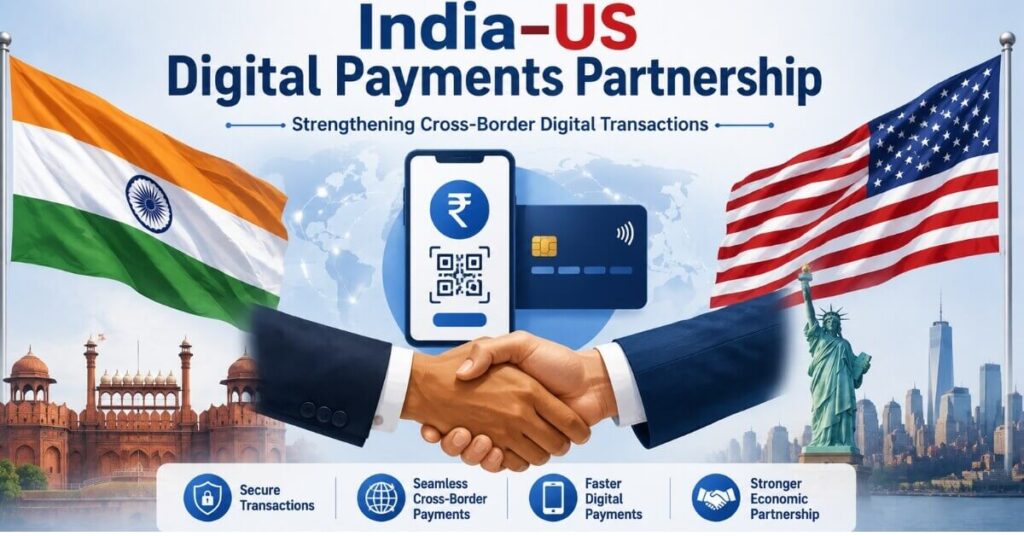
Another important layer to this story involves international trade pressure. In the 2026 National Trade Estimate Report released by the US Trade Representative, objections were raised against India’s UPI and RuPay systems, along with Brazil’s Pix digital payment system. The US argued that the zero-MDR policy does not offer a level playing field to foreign payment institutions such as Visa and Mastercard, which typically earn revenue through merchant fees on card transactions.
This has led trade policy experts to question whether the introduction of this merchant fee is a response to genuine domestic infrastructure costs or an attempt to accommodate foreign pressure, and the debate has since spread widely across financial news channels, social media platforms, and parliamentary discussions alike. The Global Trade Research Initiative, a prominent trade policy think tank, has publicly urged the government not to change UPI’s fee structure simply to satisfy US demands. According to the organisation, India should protect its own competitiveness and the autonomy of its payment systems rather than yielding to external pressure.
What the New Bill Actually Says
The Payment and Settlement Amendment Bill, 2007 passed by the Lok Sabha does not immediately introduce UPI MDR charges. Instead, it grants the government legal authority to impose such charges selectively in the future, if the situation requires it. Under the current rules, banks and payment service providers are not permitted to levy any charges on UPI or RuPay debit card transactions.
Reports suggest that even if such fees are eventually introduced, they may be limited to large commercial transactions above a certain threshold, potentially in the range of 0.25 percent to 0.5 percent, while leaving person-to-person transfers completely untouched. This means that if you send money to a friend or family member through UPI, you should not expect to pay anything extra under the proposed framework.
Who Will Actually Pay UPI MDR Charges?
Based on official statements and available reports, here is how UPI MDR charges are likely to work if they are ever implemented:
Person-to-person UPI transfers are expected to remain completely free, just as they are today. Small merchants and neighbourhood shops accepting everyday UPI payments are also expected to remain exempt from any new fees, protecting the small trader community that has benefited enormously from digital payments. Large commercial transactions above a specified value, potentially above two thousand rupees, could see a limited merchant fee applied only to bigger merchants who process high transaction volumes. Regular retail customers making purchases are not expected to see any direct charge added to their bill.
This selective approach appears designed to balance the financial sustainability of the payment ecosystem with the government’s broader goal of continued digital payment adoption across the country.
It is also worth noting that India’s digital payments landscape has grown at an extraordinary pace over the last few years, with UPI now processing billions of transactions every month. This scale is precisely why any policy change, however small, tends to generate widespread public interest and debate. A fee structure that seems minor on paper can have a meaningful impact when applied across a system of this size, which is why the government appears to be moving cautiously rather than announcing a blanket rollout overnight.
Alternatives Suggested Instead of Blanket UPI MDR Charges
The Global Trade Research Initiative has suggested that imposing this fee across all merchants is not the only solution to fund the ecosystem. Alternative approaches that have been proposed include direct financial incentives from the government to banks and fintech companies, limited charges applied only to large commercial transactions rather than all merchants, and cross-subsidisation through other financial services offered by banks and payment companies.
These alternatives aim to preserve the accessibility that has made UPI so popular among low-income users and small businesses, while still addressing the genuine cost of running a massive digital payments infrastructure.
The Data Localisation and National Interest Argument
Beyond the fee debate, there is also a national interest dimension to this conversation. Experts have pointed out that UPI transaction data is extremely valuable, and that India’s data localisation policy of storing this information domestically should continue regardless of any changes to this policy. Keeping this data within India is seen as important for fraud detection, cybersecurity, and national security.
Trade policy voices have also stressed that any decision on this issue should be based on the actual operating costs and long-term sustainability of the UPI system, not simply as a concession to foreign trade pressure. It has also been noted that international payment companies already have significant opportunities within India’s digital payments market, which adds another layer to the ongoing debate about whether further concessions are necessary.
What This Means for Small Businesses and Everyday Users
If you run a small shop, a food stall, or a home-based business that accepts UPI payments, the current signals suggest you are unlikely to be affected by this new fee in the near term. The government’s stated intention is to protect small traders and street vendors from any additional burden.
If you are a regular UPI user sending money for groceries, splitting a bill with friends, or paying your monthly rent, you should also not expect any change to your everyday payment experience. This proposed fee, based on current government statements, is targeted at large commercial transactions rather than routine consumer spending.
For larger businesses and high-volume merchants, however, it may be worth monitoring this space closely, since future notifications could introduce specific charges once the legal framework enabled by this bill becomes operational. Business owners in this category may want to keep an eye on official circulars, factor a small potential cost into their pricing models, and avoid making major changes to their payment acceptance methods until a clear notification is issued.
Financial advisors generally recommend waiting for concrete government announcements rather than reacting to speculation, since the exact rate, threshold, and applicability could still change before any final rollout.
How This Compares to Other Digital Payment Costs
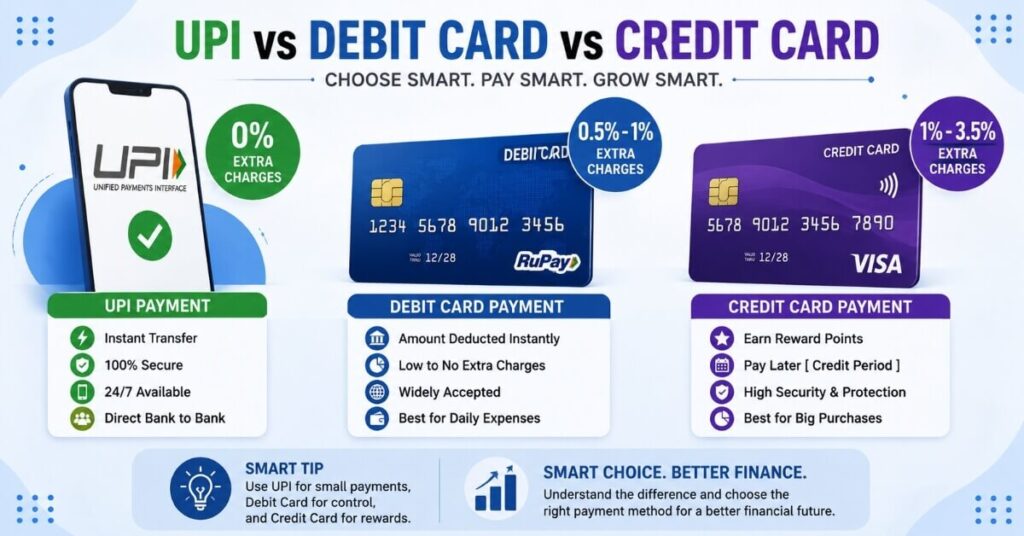
It is worth remembering that other forms of digital payment already carry some form of MDR in India. Domestic credit card transactions typically involve MDR ranging between 1.5 percent and 2.2 percent, while non-RuPay debit cards can carry MDR between 0.4 percent and 0.9 percent of the transaction value. Compared to these figures, even a future limited UPI MDR charges structure targeting only large merchant transactions would remain significantly lower, keeping UPI one of the most cost-effective payment methods available in India.
This context is helpful for anyone comparing digital payment options, especially small business owners who also rely on credit and other financial tools to manage cash flow. Understanding how different payment methods are priced can also help merchants decide which options to promote at checkout, particularly if certain payment modes eventually carry a small processing cost while others remain free. If you are exploring ways to build credit without a strong credit history, you may also find it useful to read our detailed guide on how to get an FD-backed credit card without a CIBIL score, which explains another practical financial option available to Indian consumers.
For readers who want to track official updates directly from the source, the Reserve Bank of India’s official website regularly publishes circulars and notifications related to digital payment regulations, including any future changes connected to this policy.
The Road Ahead for UPI MDR Charges
The passing of the Payment and Settlement Amendment Bill, 2007 marks a significant shift in the legal landscape of India’s digital payments ecosystem, even though it does not immediately trigger new fees. Whether or not this merchant fee is eventually introduced will depend on future government notifications, industry consultations, and ongoing debate about balancing accessibility with financial sustainability.
Industry observers also point out that similar fee debates have played out in other countries as their digital payment systems matured. Brazil’s Pix system, for instance, has faced comparable questions about long-term funding despite starting out as a completely free service. This suggests that the tension between accessibility and sustainability is not unique to India, but rather a common challenge faced by any government-backed instant payment system as it scales to serve hundreds of millions of users.
For now, the safest takeaway for everyday users and small merchants is that nothing changes immediately. UPI remains free for person-to-person transfers and for the vast majority of small merchant transactions. The bigger question of whether large commercial merchant fees will actually be notified, and at what rate, remains something to watch closely in the coming months.
Frequently Asked Questions About UPI MDR Charges
Q1.Will I have to pay UPI MDR charges when I send money to a friend?
No. Person-to-person UPI transfers are expected to remain completely free. The government has clarified that any future UPI MDR charges would apply only to specific merchant transactions, not to regular peer-to-peer payments.
Q2.Are UPI MDR charges already being applied today?
No, not yet. The Payment and Settlement Amendment Bill, 2007 only gives the government the legal option to introduce UPI MDR charges in the future. As of now, UPI and RuPay debit card transactions continue to carry a zero-MDR policy.
Q3.Who will have to pay UPI MDR charges if they are introduced?
Based on current reports, UPI MDR charges are likely to apply only to large commercial transactions above a certain threshold, potentially affecting bigger merchants rather than small shopkeepers or everyday consumers.
Q4.Why does the government want to introduce this fee?
The government and industry stakeholders argue that banks, NPCI, and fintech companies need sustainable revenue to fund cybersecurity, fraud prevention, and infrastructure expansion for the UPI ecosystem, which is why UPI MDR charges are being considered as one possible funding mechanism.
Q5.Is the introduction of UPI MDR charges linked to US trade pressure?
This is a debated point. The US Trade Representative’s 2026 National Trade Estimate Report criticised India’s zero-MDR policy on UPI and RuPay. However, Indian officials and trade experts have stated that any decision on this matter should be based on domestic infrastructure costs rather than foreign pressure.
Q6.Will small shopkeepers have to pay UPI MDR charges?
Current government statements suggest that small merchants and street vendors are expected to remain protected from UPI MDR charges, with any future fees likely limited to large commercial transactions only.
Q7.How does UPI’s fee structure compare with credit and debit cards?
UPI currently remains free or near-free compared to cards, where domestic credit card transactions typically carry MDR between 1.5 percent and 2.2 percent, and non-RuPay debit cards carry MDR between 0.4 percent and 0.9 percent. Even if a limited version of this merchant fee is introduced for large merchants in the future, it is expected to remain well below these card-based rates, keeping UPI one of the most affordable digital payment options in India.
Q8.When can we expect an official decision on this matter?
There is no confirmed timeline yet. The bill only creates the legal framework, and any specific notification about the new fee would likely follow further consultations between the Ministry of Finance, the Reserve Bank of India, and industry stakeholders such as NPCI and major banks.
Conclusion
The conversation around UPI MDR charges reflects a larger balancing act that the Indian government must manage: keeping digital payments accessible for millions of small merchants and everyday users while ensuring the institutions that run this massive infrastructure remain financially sustainable. While the Payment and Settlement Amendment Bill, 2007 has opened the legal door for UPI MDR charges to be introduced in the future, official statements so far indicate that ordinary users and small businesses will largely be protected from any direct impact.
As this story continues to develop, it is worth keeping an eye on official announcements from the Ministry of Finance and the Reserve Bank of India before making any assumptions about how UPI MDR charges might affect your daily transactions.
Disclaimer:
This article is for informational purposes only and does not constitute financial or legal advice. UPI MDR charges, related policies, and government regulations are subject to change. Readers are advised to verify the latest updates from official government sources such as the Reserve Bank of India, the Ministry of Finance, and the National Payments Corporation of India before making any financial decisions.